

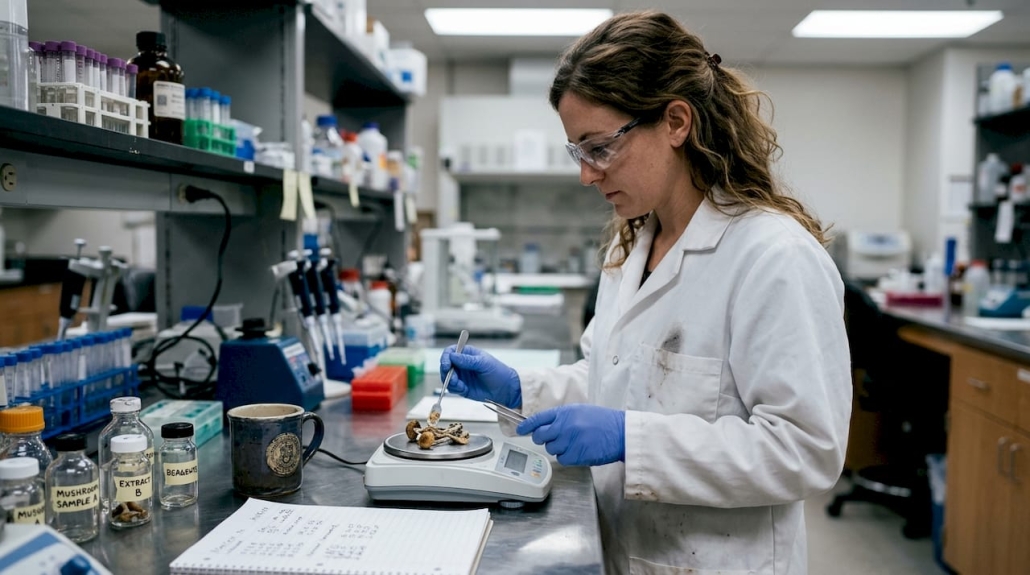
Why mushroom potency varies: factors behind every dose
TL;DR:
- Mushroom potency varies up to sixfold within the same strain due to chemistry, environment, and handling.
- Genetics influence maximum potential, but growing conditions and harvest timing greatly impact actual potency.
- Proper post-harvest handling and choosing standardized sources are crucial for consistent, reliable dosing.
Two mushrooms from the same bag, grown from the same spores, can produce completely different experiences. That’s not a myth or a rare edge case. Psilocybin potency can vary up to sixfold even within a single strain, which makes dosing by intuition genuinely risky. For Canadians using psilocybin to microdose, support mental health, or explore recreationally, understanding what drives these differences is not optional. It’s the foundation of safe, effective use. This article breaks down the chemistry, genetics, environment, and handling factors that shape every dose, so you can make smarter, safer decisions.
Table of Contents
- The science behind mushroom potency
- How genetics and strain types shape potency
- Environmental factors: why your growing method matters
- Post-harvest handling: preserving or degrading potency
- Testing and estimating potency for Canadian users
- Perspective: What most people miss about potency variability
- Reliable options for Canadians: Consistent potency, safer outcomes
- Frequently asked questions
Key Takeaways
| Point | Details |
|---|---|
| Potency isn’t just genetics | Growing conditions and handling can influence mushroom strength more than strain selection alone. |
| Standardization matters for dosing | Consistent cultivation, harvest, and storage are essential for therapeutic and microdosing reliability. |
| Testing offers real confidence | Lab-tested or standardized products are the safest option for accurate dosing in Canada. |
| Potency can vary 6x within a batch | Even mushrooms from the same harvest can have dramatically different active compound levels. |
| Careful handling preserves actives | Proper drying and storage prevent loss of potent compounds post-harvest. |
The science behind mushroom potency
Now that you know just how unpredictable potency can be, let’s look at what makes up these differences on a chemical level.
Psilocybin mushrooms contain several psychoactive compounds, not just psilocybin. The main players are psilocybin, psilocin, and baeocystin. Each one hits differently, and their relative concentrations shift depending on the mushroom, the batch, and even the individual fruiting body. Potency is typically measured in milligrams per gram (mg/g) of dried material.

Here’s a general reference for what researchers have found across Psilocybe cubensis samples:
| Compound | Typical range (mg/g dried) |
|---|---|
| Psilocybin | 0.14 to 0.85 mg/g |
| Psilocin | 0.01 to 0.36 mg/g |
| Baeocystin | 0.02 to 0.15 mg/g |
Those ranges are wide. A mushroom at the high end of psilocybin content could be six times stronger than one at the low end, even if both came from the same cultivation run. Psilocybin, psilocin, and baeocystin content can vary dramatically between and within strains.
What most people overlook is that psilocybin and psilocin are not the whole story. A recent analysis of 42 strains identified a wide range of tryptophan-derived indolamines beyond psilocybin and psilocin, many of which likely contribute to the overall psychoactive effect. This is sometimes called the “entourage effect” in mushroom science, similar to how cannabis researchers describe the interaction between cannabinoids and terpenes.
Key compounds worth knowing:
- Psilocybin: The primary compound. Converted to psilocin in the body.
- Psilocin: Directly psychoactive. More unstable than psilocybin and degrades faster.
- Baeocystin: A minor alkaloid with potential psychoactive properties, though less studied.
- Norbaeocystin and aeruginascin: Trace compounds that may modulate the overall experience.
For those interested in how specific strains like Melmac mushrooms express these compounds, strain-level chemistry is a fascinating starting point, but it’s only one piece of the puzzle.
How genetics and strain types shape potency
With complex chemistry at play, genetic factors are the next crucial variable in potency.
Not all Psilocybe cubensis strains are created equal. Some, like Penis Envy and its close relative Melmac, have developed reputations for above-average potency. Others, like Golden Teacher, are known for a milder, more manageable experience. These differences are real, but they’re also frequently overstated in online communities.
Strain variability leads to both inter- and intra-strain differences in active compound levels. Inter-strain means the difference between, say, Jack Frost and Penis Envy. Intra-strain means the difference between two Penis Envy mushrooms from the same grow. Both types of variation exist and both matter.
Here’s a rough comparison of popular strains by reported potency:
| Strain | Relative potency | Notes |
|---|---|---|
| Golden Teacher | Low to moderate | Beginner-friendly, forgiving |
| Jack Frost | Moderate | Visually striking, balanced effects |
| B+ | Moderate | Consistent, widely grown |
| Melmac | High | Slow colonizer, dense fruits |
| Penis Envy | High to very high | Not recommended for beginners |
These are general patterns, not guarantees. A well-grown Golden Teacher from a controlled environment can outperform a poorly grown Penis Envy. Genetics set a ceiling, but environment and handling determine whether you reach it.
Factors that make genetics less predictive than people assume:
- Genetic drift: Strains passed through many generations of cultivation can lose or shift their original alkaloid expression.
- Contamination: Competing fungi or bacteria can suppress alkaloid production.
- Harvesting timing: Mushrooms harvested just before or after the veil breaks can differ significantly in potency.
Pro Tip: Never rely on strain reputation alone when calculating a dose. Two batches of the same strain can behave very differently depending on how they were grown. Exploring mushroom growing methods helps you understand why this happens.
Environmental factors: why your growing method matters
Even with stable genetics, what happens in the growing room or wild environment changes the outcome.

This is where a lot of growers and consumers get surprised. You can start with premium genetics and still end up with a weak harvest if the environment isn’t dialed in. Conversely, optimal conditions can push a mid-tier strain to punch well above its genetic weight.
Environmental factors including substrate composition, temperature, humidity, light, and airflow substantially influence the biosynthesis of psychoactive compounds, often more than genetics alone. That’s a significant finding. It means the growing room matters as much as the genetics, maybe more.
Five main environmental variables that directly affect potency:
- Substrate composition: Nutrient-rich substrates like rye grain or enriched coco coir tend to support higher alkaloid production than simple brown rice flour.
- Temperature: Fruiting temperatures between 22 and 25 degrees Celsius generally optimize alkaloid synthesis. Too hot or too cold and production drops.
- Humidity: Consistent humidity around 90 to 95 percent during fruiting supports healthy development without stressing the mycelium.
- Airflow: Adequate fresh air exchange prevents CO2 buildup, which can stunt fruiting body development and reduce compound concentration.
- Light cycles: While mushrooms don’t photosynthesize, indirect light helps regulate fruiting patterns and can influence the timing of alkaloid accumulation.
Growing two genetically identical cultures under different conditions can produce mushrooms with potency differences of up to six times. That’s not a small margin. That’s the difference between a gentle afternoon and an overwhelming experience.
Indoor growers using controlled environments have a real advantage here. Wild-harvested or outdoor-grown mushrooms are subject to far more variability. For Canadians who want predictability, understanding cultivation tips is genuinely useful, whether you’re growing or just evaluating what you buy.
Pro Tip: If you’re sourcing from a supplier, ask whether they use standardized substrate and climate controls. Vague answers are a red flag for inconsistent potency.
Post-harvest handling: preserving or degrading potency
Even the most careful grower can lose potency in the final steps. Handling is mission critical.
Harvesting is not the finish line. What happens next, how the mushrooms are dried, stored, and packaged, determines how much of that hard-earned potency actually reaches you. This is one of the most overlooked aspects of mushroom quality.
Post-harvest dephosphorylation converts psilocybin to psilocin, affecting measured potency. Psilocin is directly psychoactive but also far less stable than psilocybin. It degrades quickly when exposed to heat, light, oxygen, or moisture. This means that mushrooms dried at high temperatures or stored improperly can lose significant potency before they ever reach the consumer.
Handling steps that protect active compounds:
- Dry at low temperatures: Use a food dehydrator set below 45 degrees Celsius. Higher heat breaks down psilocin rapidly.
- Avoid direct sunlight: UV light degrades both psilocybin and psilocin. Always dry and store in the dark.
- Use airtight containers: Oxygen exposure accelerates degradation. Mason jars with desiccant packs are a solid option.
- Store in a cool, dark place: A refrigerator or cool pantry extends shelf life significantly.
- Minimize handling: Frequent touching introduces moisture and contaminants that speed up degradation.
For microdosing users, this matters enormously. A dose that was accurate when first prepared may be weaker three months later if storage wasn’t optimal. Consistency in handling is what separates a reliable microdosing protocol from a guessing game. Reviewing a solid harm reduction workflow and shroom use best practices can help you build habits that protect both safety and effectiveness.
Pro Tip: Label your storage containers with the date of drying. Potency degrades over time even under ideal conditions, and knowing the age of your supply helps you adjust doses accordingly.
Testing and estimating potency for Canadian users
So how can Canadians reliably know what they’re taking, and what steps reduce risks when exact numbers aren’t available?
The honest answer is that precise potency testing for psilocybin mushrooms is not widely accessible to individual consumers in Canada right now. Lab testing exists, but it’s primarily used by researchers and licensed producers. That leaves most users estimating, which is manageable if done carefully.
Standardized cultivation and post-harvest handling are the most reliable ways to achieve dose consistency, especially for therapeutic or microdosing contexts. Choosing a supplier who uses controlled processes is more valuable than chasing a specific strain name.
Steps to estimate dose more safely when lab data isn’t available:
- Start with a known source: Consistency in supplier means consistency in process, which correlates with more predictable potency.
- Use a reliable scale: Dosing by eye is inaccurate. A milligram-accurate scale is essential for microdosing.
- Start low and go slow: Especially with a new batch or strain. Begin at the lower end of your intended dose and adjust based on response.
- Keep a dose journal: Track strain, batch, dose, and effects. Over time, this data becomes your personal potency reference.
- Look for standardized products: Capsules and edibles from reputable producers often use consistent formulations, making them more predictable than raw dried mushrooms.
For Canadians navigating this space, a detailed mushroom safety guide is one of the best investments of your time before experimenting with any new product or strain.
Pro Tip: If you’re microdosing for mental health support, standardized capsules with stated psilocybin content are far more reliable than eyeballing dried mushrooms, even from a trusted source.
Perspective: What most people miss about potency variability
Drawing from all the factors covered, let’s shift to the bigger lesson for Canadians navigating this evolving space.
The mushroom community spends a lot of energy debating strain rankings. Which one is strongest? Which is most visual? Which should a beginner try? These conversations have value, but they often miss the point entirely. Genetics are a starting point, not a guarantee.
What actually determines whether your experience is therapeutic, recreational, or overwhelming is the full chain: genetics, environment, harvest timing, drying method, and storage. Break any link in that chain and the potency you expected becomes the potency you got, which may be very different.
For Canadians using psilocybin with intention, whether for mental health, creativity, or personal growth, the most valuable asset isn’t access to a rare strain. It’s a supplier who treats cultivation best practices as non-negotiable. Standardized processes, transparent sourcing, and consistent handling are what make the difference between a reliable protocol and a roll of the dice. The psychedelic renaissance in Canada is exciting, but it rewards those who approach it with process-based thinking, not hype-chasing.
Reliable options for Canadians: Consistent potency, safer outcomes
If you value reliability and peace of mind, here are solutions trusted by the Canadian community.
At Three Amigos, we source and formulate with consistency as the priority. Whether you’re exploring microdosing capsules for mental health support or looking to understand the broader psilocybin science benefits, our products are made with standardized cultivation and careful post-harvest handling in mind.

For those interested in the therapeutic uses of dried mushrooms, our educational resources go deep on dosing, safety, and what the research actually says. We believe informed users have better experiences, and we’ve built our catalog and content library to support exactly that. Explore what’s available and find the product that fits your goals.
Frequently asked questions
Why does potency vary even within the same mushroom strain?
Genetic diversity and strain variability cause significant differences in active compounds, even between mushrooms from the same strain or batch. Growing conditions amplify these differences further.
How important are environmental factors compared to genetics?
Environmental factors like substrate, temperature, humidity, and airflow can influence potency even more than genetics, sometimes producing sixfold differences within the same genetic strain.
Can you estimate mushroom potency at home?
You can make rough estimates using strain knowledge, a reliable scale, and a consistent source, but standardized extraction is the only method that gives reliable quantification.
Does drying and storing mushrooms affect their potency?
Yes. Post-harvest dephosphorylation converts psilocybin to the less stable psilocin, and improper drying or storage accelerates degradation of active compounds.
How can Canadians find products with consistent potency?
Prioritize suppliers who use standardized cultivation practices with controlled substrate, temperature, and drying protocols, rather than choosing based on strain reputation alone.
Recommended
- Psychedelic Mushroom Terms 2026: 0.2-1.3% Potency Guide
- Shroom tolerance explained: optimize your psilocybin experience
- Magic mushroom life cycle: growth, potency & therapy
- Psilocybin Dosage Guide: Weight, Strain & Safe Use Tips

Thomas Wrona is a writer, designer, and wellness coach who believes that nature’s wisdom provides an antidote to the stress of modern life. As a former pro athlete, he’s all about staying in motion! When he’s not writing you’ll probably find Thomas outside.


