

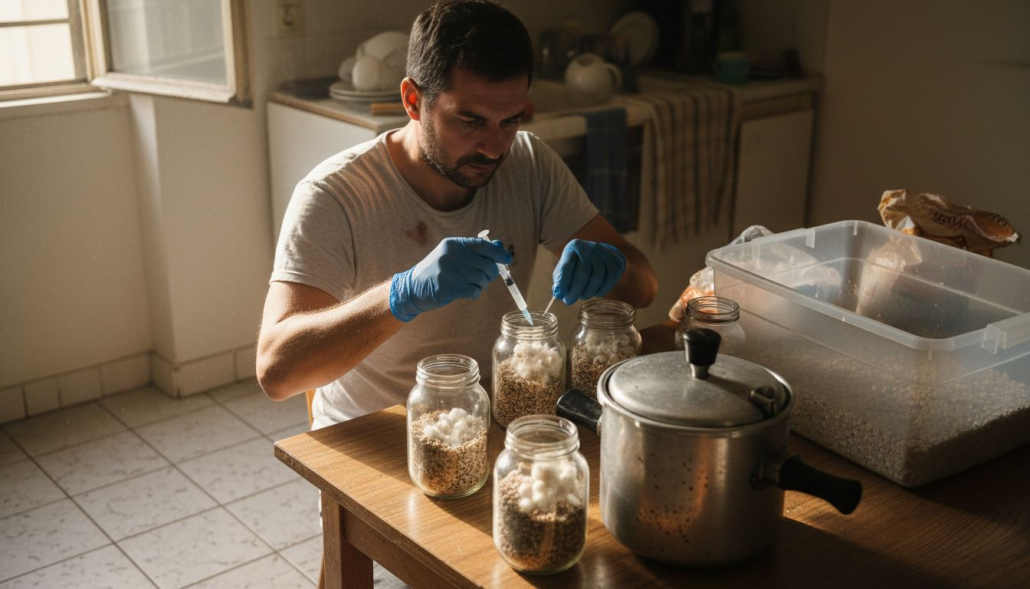
6 Practical Examples of Mushroom Growing Methods
Starting mushroom cultivation at home can feel overwhelming when you face confusing setup options and the constant threat of contamination. You want reliable yields and simple methods that work even if you have limited space or equipment. The right approach makes the difference between frustration and fruitful harvests. This list breaks down the proven techniques used by Canadian hobbyists, from PF Tek’s beginner-friendly simplicity to high-yield bulk substrate and efficient monotub setups. You’ll discover actionable tips and key steps that solve common problems, helping you build confidence and avoid costly mistakes. Get ready to unlock practical answers for every stage of your grow—so you can harvest healthy mushrooms at home with ease.
Table of Contents
- 1. Simple PF Tek For Beginners
- 2. Bulk Substrate Method For Higher Yields
- 3. Monotub Setup For Home Cultivation
- 4. Outdoor Bed Method For Seasonal Growing
- 5. Grain Spawn Preparation For Advanced Results
- 6. Sterile Technique Tips For Safe Cultivation
Quick Summary
| Takeaway | Explanation |
|---|---|
| 1. Start with PF Tek for simplicity | This method uses basic materials and steps, reducing contamination risk, making it ideal for beginners. |
| 2. Scale up with bulk substrate for higher yields | Moving to larger substrates allows for exponential growth, resulting in 5-10 times more mushrooms compared to small jars. |
| 3. Use monotubs for hands-off cultivation | Monotubs create self-regulating environments that require minimal daily maintenance, producing consistent and high yields. |
| 4. Try outdoor beds for natural growing | Leverage natural conditions for seasonal growth, reducing equipment needs and allowing multiple flushes throughout the summer. |
| 5. Master grain spawn for advanced cultivation | High-quality grain spawn accelerates colonization and enhances yields, making it crucial for serious mushroom growers. |
1. Simple PF Tek for Beginners
PF Tek is your entry point into mushroom cultivation. Developed by Robert McPherson in the 1990s, this method strips away complexity and gives you a straightforward path to growing mushrooms at home with minimal equipment and expense.
Why PF Tek works for beginners comes down to simplicity. You’re using basic materials: brown rice flour, vermiculite, and water mixed into a substrate. The entire process follows a logical sequence that minimizes contamination risk, which is the biggest challenge new growers face.
Here’s what the process actually looks like:
- Mix your substrate (brown rice flour and vermiculite combined with water)
- Pack the mixture into half-pint jars with a dry vermiculite layer on top
- Sterilize the jars using pressure cooking
- Inoculate with a spore syringe in a clean space
- Wait for colonization at stable temperature
- Transfer to a fruiting chamber with moisture control
PF Tek uses brown rice flour and vermiculite substrate, making it the most accessible method for first-time growers seeking low cost and straightforward steps.
The beauty of this method is scale. You’re working with small volumes in half-pint jars, not massive bins. This means you can experiment without wasting money or space. Your kitchen or closet becomes your grow lab.
What makes Canadian hobbyist cultivators gravitate toward PF Tek:
- Low startup cost: Most materials cost under $50 total
- Space efficient: Works in small apartments or bedrooms
- Fast colonization: Takes 2-4 weeks typically
- Beginner friendly: Clear steps with minimal variables
- Contamination control: The dry vermiculite barrier protects your substrate
You’ll handle sterility carefully during the inoculation phase. This is where most beginner mistakes happen. A simple still-air box or laminar flow hood helps, though many growers start with just careful technique and a clean workspace.
The fruiting stage introduces you to humidity management. You’ll use a plastic container with perlite and water to maintain the moisture your mushrooms need. Nothing complex here, just basic atmospheric control.
Yield expectations matter too. Each jar typically produces 20-40 grams of dried mushrooms, depending on your care and conditions. For personal use, 3-6 jars gives you reasonable output without overwhelming your setup.
Pro tip: Invest in a pressure cooker for sterilization and get comfortable using it properly—poor sterilization creates contamination that wastes your substrate and time, making this the single most important step to get right.
2. Bulk Substrate Method for Higher Yields
Ready to scale up your production? The bulk substrate method is where hobbyists move from experimenting with a few jars to harvesting meaningful quantities. This approach uses larger volumes of pasteurized substrate to support exponentially more mycelial growth.
The core difference from PF Tek is volume and material. Instead of half-pint jars, you’re working with bags, buckets, or trays containing pounds of substrate. Agricultural byproducts like straw and sawdust become your nutrient base, offering better food for your mycelium than rice flour alone.
Why does bulk work better? Your mycelium has more substrate to colonize, which means more mushrooms fruiting simultaneously. A single bulk substrate colonization can yield 200-400 grams dried compared to 20-40 grams per small jar.
The process mirrors PF Tek but scales the steps:
- Prepare large quantities of substrate (straw, sawdust, or mixed agricultural waste)
- Pasteurize the bulk substrate to eliminate competing microbes
- Cool completely before inoculation
- Mix spawn throughout the substrate evenly
- Incubate in bags or trays until fully colonized
- Fruit in controlled conditions with proper humidity
Bulk substrate techniques enable larger yields by using pasteurized agricultural waste products, making this method scalable and sustainable for Canadian growers seeking higher production.
Pasteurization is your critical step here. Unlike pressure cooking small jars, bulk substrates use hot water immersion or steam. You heat the substrate to 160-180 degrees Fahrenheit for 30-90 minutes depending on material. This kills competing fungi without requiring expensive equipment.
What makes bulk substrate attractive for hobbyists:
- Significantly higher yields: 5-10 times more mushrooms per colonization cycle
- Cost per gram drops: Materials are cheap agricultural waste
- Sustainability: Spent substrate can be recycled for future grows
- Colonization efficiency: Faster completion with proper spawn distribution
- Reduced jar fatigue: One large container beats managing dozens of small jars
Your environmental control becomes slightly more sophisticated. Bulk fruiting requires consistent humidity (80-95%), adequate fresh air exchange, and temperature stability (55-75°F depending on species). A plastic storage tub with perlite and holes drilled for airflow works perfectly.
One real advantage: mushroom quality stays consistent. Bulk substrates support healthier fruiting bodies with better size and density because the mycelium has abundant nutrients.
The learning curve exists but remains manageable. You’re applying the same contamination principles and sterile technique you learned with PF Tek, just operating at larger scale.
Pro tip: Start with a single 5-pound bulk substrate batch before scaling further, allowing you to master pasteurization temperatures and humidity control without overwhelming yourself or risking your entire operation.
3. Monotub Setup for Home Cultivation
The monotub method transforms an ordinary plastic storage container into a self-regulating fruiting chamber that handles humidity and air exchange automatically. This is where serious home growers transition from experimental setups to reliable, high-yield operations.
A monotub works because of its elegant simplicity. You drill strategically placed holes, cover them with breathable filters, line the interior to prevent side pinning, and fill it with colonized substrate. The result is a sealed microenvironment that maintains the exact conditions mushrooms need.
The beauty lies in minimal maintenance. Unlike spray bottles and constant monitoring, your monotub passively manages moisture levels through air exchange. You’re not hovering over your grow space every few hours.
Here’s the setup process:
- Choose a 40-70 quart plastic storage tub with a fitted lid
- Drill holes in all four sides near the bottom for fresh air intake
- Drill holes in the lid for air exchange and carbon dioxide release
- Cover holes with micropore tape or polyfill to maintain sterility
- Line the interior with black plastic to prevent side pins
- Fill with pasteurized substrate mixed with colonized grain spawn
- Allow full colonization before removing tape and initiating fruiting
Monotub cultivation balances humidity and fresh air exchange, enabling large yields with minimal daily maintenance for Canadian home growers.
Your substrate composition matters here. The standard formula uses coco coir, vermiculite, and gypsum combined in specific ratios. This mixture holds moisture excellently while providing nutrients your mycelium craves throughout the fruiting cycle.
Why monotubs outperform other methods for home growers:
- Hands-off operation: Once set up, requires checking only every few days
- High yields: Single monotubs produce 100-300 grams dried per flush
- Cost effective: A plastic tub costs under $20, materials are inexpensive
- Multiple flushes: One monotub produces 3-5 harvest cycles
- Beginner friendly: No specialized equipment needed
- Space efficient: Standard tub fits under a shelf or in a closet
Temperature stability remains important. Your monotub should sit in an environment between 55-75°F depending on species. A basement or insulated closet works perfectly. Avoid direct sunlight and drafty areas.
The step-by-step monotub growing guide details exactly how to prevent side pinning and optimize your air holes for your specific space.
Gas exchange is critical. If holes are too small or blocked, carbon dioxide accumulates and mushrooms grow stunted. If holes are too large, humidity drops and caps crack. This is why drilling patterns matter and why your filter media (micropore tape or polyfill) is essential.
Pro tip: Use black plastic specifically designed as a liner because it eliminates side pinning (mushrooms growing along the container walls), concentrating all energy into your top fruiting surface where you harvest the best specimens.
4. Outdoor Bed Method for Seasonal Growing
Want to grow mushrooms without heating, electricity, or indoor equipment? The outdoor bed method harnesses natural conditions to produce seasonal harvests with minimal ongoing work. This approach feels less like technical cultivation and more like gardening.
Outdoor beds leverage something indoor growers spend money replicating: natural humidity, temperature cycles, and rainfall. You’re working with nature instead of against it. Spring through fall becomes your growing season in Canadian climates.
The appeal here is genuine simplicity. You prepare a bed once, inoculate it, and let environmental conditions do most of the work. No monitoring humidity sensors or adjusting temperature controls daily.
Setting up your outdoor bed takes these steps:
- Select a shaded location with good drainage and partial moisture
- Prepare substrate using wood chips, straw, compost, or mixed materials
- Layer your inoculated spawn throughout the bed
- Cover the bed with burlap or wood to maintain moisture and shade
- Water during dry spells to maintain consistent dampness
- Harvest mushrooms as they fruit throughout the season
Outdoor mushroom beds produce mushrooms within the same season while leveraging natural conditions, making this method ideal for Canadian gardeners seeking seasonal harvests with minimal equipment.
Species selection matters significantly for outdoor success. Oyster mushrooms thrive outdoors and forgive beginner mistakes. Wine cap mushrooms (also called king stropharia) establish beautiful harvests with minimal intervention. Both species produce reliably in Canadian climates.
Location is everything. Find a spot receiving dappled shade for part of the day. Full sun dries beds too quickly. Complete darkness limits fruiting. Afternoon shade works best, protecting your bed from harsh heat while allowing morning light.
Your material choices determine success:
- Wood chips provide excellent substrate and stay moist longer
- Straw offers quick colonization but dries faster
- Compost supplies extra nutrients supporting healthy fruiting
- Hardwood sawdust creates stable beds lasting multiple seasons
- Mixed materials balance moisture retention and air exchange
Water management is straightforward. Natural rainfall usually suffices during spring and summer. During dry periods, water your bed thoroughly once or twice weekly. The goal is consistent dampness, not standing water. Mushrooms need oxygen and will rot if waterlogged.
One massive advantage exists here: ongoing production. A well-established outdoor bed produces multiple flushes throughout the season. You harvest in waves rather than single explosive yields, providing continuous supply for months.
Contamination risk drops significantly outdoors. Environmental microbes still exist, but they’re vastly outnumbered by outdoor microbiota. Your spawn competes in a natural ecosystem rather than a sterile vacuum.
Pro tip: Plant your outdoor bed in spring (April-May in most Canadian regions) and expect first mushrooms by early summer, giving you three months of consistent harvests before fall temperatures decline.
5. Grain Spawn Preparation for Advanced Results
Grain spawn is where serious cultivators separate themselves from beginners. This is the living, breathing bridge between your spores and bulk substrate. Quality spawn determines colonization speed, contamination resistance, and ultimately your harvest size.
Think of grain spawn as concentrated mycelium power. A single jar of colonized grain can inoculate 5-10 pounds of bulk substrate. Without quality spawn, you’re working with weak starting material that colonizes slowly and battles contamination.
Why grain spawn matters: it multiplies your inoculation potential exponentially. One spore syringe takes weeks to colonize a single jar. That same spore inoculates agar, which then inoculates a grain jar, which then colonizes your bulk substrate in days instead of weeks.
The preparation process requires precision:
- Select clean grains like rye, wheat, or millet
- Wash grains thoroughly to remove dust and debris
- Soak overnight to hydrate the kernels
- Boil until grains hydrate without bursting
- Drain completely to remove surface moisture
- Fill sterilization containers with prepared grain
- Pressure cook at 15 psi for 90 minutes
- Cool completely before inoculation
- Inoculate with liquid culture or agar under sterile conditions
- Incubate at optimal temperature until fully colonized
Proper grain spawn preparation ensures fast colonization and high yields through meticulous sterilization and inoculation under aseptic conditions, making this critical for advanced cultivation.
Moisture control during preparation determines everything. Grains must be hydrated but not soggy. Excess surface moisture invites contamination and prevents proper mycelial colonization. Under-hydrated grains colonize slowly and unevenly.
Sterilization is non-negotiable here. Your pressure cooker must reach 15 psi for the full 90-minute duration. Skipping this step or underestimating time leads to contamination that ruins entire batches.
What makes quality grain spawn stand out:
- Rapid colonization: Fully colonized spawn colonizes bulk substrate in 7-14 days
- Contamination resistance: Healthy mycelium outcompetes contaminants aggressively
- Spawn viability: Colonized grain remains viable for weeks when stored properly
- Multiplication potential: One jar inoculates enormous substrate quantities
- Consistent results: Professional-quality spawn produces reliable harvests
Inoculation technique matters tremendously. Working in a still-air box or near a flame prevents airborne contaminants from settling into your grain jars. Use a fresh, sterile needle for each jar. Never reuse needles between containers.
Storage extends your spawn’s usefulness. Fully colonized grain spawn keeps for 2-3 weeks refrigerated. Some cultivators freeze spawn for longer storage, though viability decreases slightly over months.
Pro tip: Prepare spawn in larger batches (10-20 jars) during your sterilization sessions to maximize efficiency and ensure you always have fresh, vigorous spawn ready for inoculation when your bulk substrates are prepared.
6. Sterile Technique Tips for Safe Cultivation
Sterile technique separates successful cultivators from frustrated failures. Contamination is the silent killer of mushroom grows. One microscopic bacteria or competing mold spore ruins weeks of work and wastes your substrate, time, and resources.
Why does contamination happen? Mold, bacteria, and yeast exist everywhere in your environment. These competitors colonize substrate faster than your mycelium unless you actively prevent them. Sterile technique creates conditions where your mushroom mycelium outpaces everything else.
The stakes are high because contamination losses compound. One contaminated jar becomes multiple jars if you’re not careful. A single contaminated bulk substrate means losing hundreds of grams of potential mushrooms.
Core sterile practices include:
- Work in a clean environment (still air box or laminar flow hood)
- Sterilize all tools by flame or alcohol before use
- Wear gloves and mask to reduce human contamination sources
- Minimize airborne spore exposure during inoculation
- Clean and disinfect your workspace thoroughly
- Practice deliberate, careful movements avoiding splashing
- Use pressure cooking at 15 psi for 60-90 minutes for substrate
- Employ proper sterilization techniques for bulk materials
Maintaining strict sterile technique prevents mold and bacteria contamination, which causes most mushroom cultivation failures and reduces productive outcomes significantly.
Your still air box becomes your sanctuary. This simple tool creates a dead space where dust and airborne spores settle before reaching your work area. Construction is straightforward: sealed plastic container with arm holes and a front opening for inoculation work.
Tool sterilization matters immensely. A flame-sterilized inoculation needle cools instantly in sterile grain, preventing contamination introduction. Flaming your needle between each jar takes seconds and prevents cross-contamination between containers. Alcohol works when flames aren’t practical.
What makes sterile technique effective:
- Mycelium colonization speed: Healthy mycelium outcompetes contaminants aggressively
- Reduced batch failures: Properly sterilized substrates stay clean throughout colonization
- Cost efficiency: One successful grow beats five contaminated batches
- Peace of mind: Confident technique prevents wasted effort
- Scalability: Sterile methods work identically at any scale
Pressure cooking is non-negotiable for serious cultivation. Boiling water alone kills surface contaminants but misses heat-resistant spores deep inside your substrate. Pressure cookers reach temperatures that destroy everything, creating truly sterile material.
Gloves and masks reduce human-sourced contamination significantly. Your skin naturally sheds cells containing bacteria. Your breath carries spores. These protective measures cost dollars and take seconds to don, preventing contamination that costs hundreds.
Your workspace cleanliness reflects your results. Wiping surfaces with diluted bleach or isopropyl alcohol before inoculation sessions eliminates environmental contaminants lurking on tables and shelves.
Pro tip: Practice your inoculation technique on sterile jars containing just water before working with actual spawn or substrate, allowing you to develop smooth, confident movements that minimize contamination risk.
Below is a comprehensive table summarizing the different mushroom cultivation methods discussed in the article.
| **Cultivation Method** | **Description** | **Advantages** |
|---|---|---|
| PF Tek | A beginner-friendly method using rice flour and vermiculite substrates in small jars. | * Low cost * Space-efficient * Simple and clear steps |
| Bulk Substrate | A scalable method using pasteurized agricultural wastes in larger containers. | * Higher yields * Cost-effective * Efficient for experienced growers |
| Monotub Setup | An advanced setup with plastic containers for self-regulating humidity and air exchange. | * Hands-off operation * Suitable for medium to large yields * Low maintenance effort |
| Outdoor Bed | A naturalistic approach utilizing outdoor settings and seasonal conditions. | * Minimal equipment * Seasonal production * Eco-friendly |
| Grain Spawn | An advanced method preparing grains as a colonization medium for bulk production. | * Rapid colonization * Contamination resistance * Increased multiplication potential |
| Sterile Technique | Methods to ensure contamination-free cultivation using sterile materials and environments. | * Reduced batch failures * Scalability * Essential for consistent success |
Unlock the Full Potential of Mushroom Cultivation and Use
Growing mushrooms at home can be both rewarding and challenging. Whether you are mastering sterile technique with the PF Tek or scaling up with bulk substrate and monotubs, the journey requires patience, precision, and high-quality resources. The article highlights crucial hurdles like contamination control, proper sterilization, and environmental management that every cultivator faces on their path to consistent and bountiful harvests.
At Three Amigos, we understand these challenges firsthand. That is why we offer a trusted source for premium dried shrooms, microdosing capsules, and other psilocybin products to support both beginners and advanced cultivators. Explore our educational content alongside our carefully curated products to enhance your experience safely and discreetly. Embrace quality assurance, expert customer support, and the latest psychedelic research all in one place at Three Amigos.

Take control of your mushroom journey today with reliable supplies and expert guidance. Visit Three Amigos now and discover the perfect complement to your cultivation efforts. Your next successful flush is just a click away.
Frequently Asked Questions
What are the key steps in the PF Tek method for beginners?
The PF Tek method involves mixing brown rice flour and vermiculite to create a substrate, packing it into jars, sterilizing them, inoculating with a spore syringe, and waiting for colonization. Begin by gathering your materials and following these steps to achieve your first mushroom harvest within 4-6 weeks.
How do I set up a monotub for mushroom cultivation?
To set up a monotub, drill holes for air exchange and fresh air intake in a plastic storage container, cover the holes with filters, and fill it with colonized substrate. Complete this setup, then check the conditions periodically to maintain optimal humidity and temperature for maximum yields.
What materials do I need for the bulk substrate method?
The bulk substrate method primarily requires agricultural byproducts like straw or sawdust as the nutrient base, along with materials for pasteurization. Gather these ingredients, and prepare your bulk substrate to achieve higher yields quickly—typically 5-10 times more than smaller jars.
How does the outdoor bed method work for seasonal mushroom growing?
The outdoor bed method involves preparing a shaded area with wood chips, straw, or compost, inoculating it with spawn, and allowing natural conditions to foster growth. Set up your outdoor bed in spring, and you can expect to harvest fresh mushrooms by early summer for ongoing produce throughout the season.
How can I ensure sterile technique during mushroom cultivation?
To maintain a sterile technique, work in a clean environment, sterilize all tools before use, and wear gloves and a mask to minimize contamination. Focus on practicing proper sterilization techniques and inoculation methods to reduce contamination risks significantly and increase your chances of successful growth.
What is the importance of grain spawn in mushroom cultivation?
Grain spawn acts as a concentrated source of mycelium, enabling faster colonization of bulk substrates and improving contamination resistance. Prepare high-quality grain spawn to increase your inoculation efficiency, ensuring a successful yield from your mushroom growing efforts.
Recommended
- All In One Mushroom Grow Kit In Canada – 3 Amigos
- Discover the Best Nootropic Mushrooms for Boosting Brain Power
- How to Dry Magic Mushrooms Using Easy DIY Methods
- How to Make Magic Mushroom Chocolate: A Guide for Beginners

Thomas Wrona is a writer, designer, and wellness coach who believes that nature’s wisdom provides an antidote to the stress of modern life. As a former pro athlete, he’s all about staying in motion! When he’s not writing you’ll probably find Thomas outside.


