
Magic mushroom cultivation guide: techniques and tips for Canada
Growing magic mushrooms at home in Canada attracts many people curious about cultivation techniques and personal use benefits. However, psilocybin mushroom cultivation without authorization is illegal under federal law, creating legal risks for growers. Success requires mastering specific methods like PF Tek or monotub systems, maintaining strict sterility, and controlling environmental factors. This guide walks you through legal considerations, essential preparation steps, detailed cultivation processes, and contamination prevention strategies to help you understand what effective mushroom growing involves.
Table of Contents
- Key takeaways
- Understanding legal considerations in Canada
- Essential preparation and materials for cultivation
- Step-by-step magic mushroom cultivation process
- Preventing and managing contamination
- Explore psilocybin products and educational resources
- Frequently asked questions
Key Takeaways
| Point | Details |
|---|---|
| Legal status in Canada | Psilocybin mushroom cultivation without authorization is illegal under Canadian law and may lead to criminal charges, fines, or imprisonment. |
| Cultivation methods | PF Tek is suitable for beginners while monotub systems can achieve higher yields with larger substrate and equipment requirements. |
| Sterility matters | Maintaining sterility and preventing contamination are crucial for success, involving proper sterilization, clean equipment, and controlled environments. |
| Environmental factors | Environmental factors such as colonization temperature of 20 to 24 C, humidity over 90 percent during fruiting, and adequate fresh air exchange prevent stunted growth. |
Understanding legal considerations in Canada
Psilocybin mushrooms cultivation for personal use is illegal under the Controlled Drugs and Substances Act without Health Canada authorization. Growing these mushrooms carries serious legal consequences including criminal charges, fines, and potential imprisonment. Many Canadians remain unaware that possession of spores becomes illegal once germination begins, even in private spaces.
Understanding current Canadian laws protects you from prosecution and helps you make informed decisions. The legal landscape continues evolving as research expands and public attitudes shift toward psilocybin therapy. Some individuals have received exemptions for medical or research purposes, but these remain rare and require extensive documentation.
Safer alternatives exist for those interested in psilocybin benefits without legal risk:
- Purchase products from licensed retailers operating in gray market spaces
- Participate in authorized clinical trials studying psilocybin therapy
- Explore legal psychedelic retreats in jurisdictions where psilocybin is decriminalized
- Stay informed about potential legislative changes through government health resources
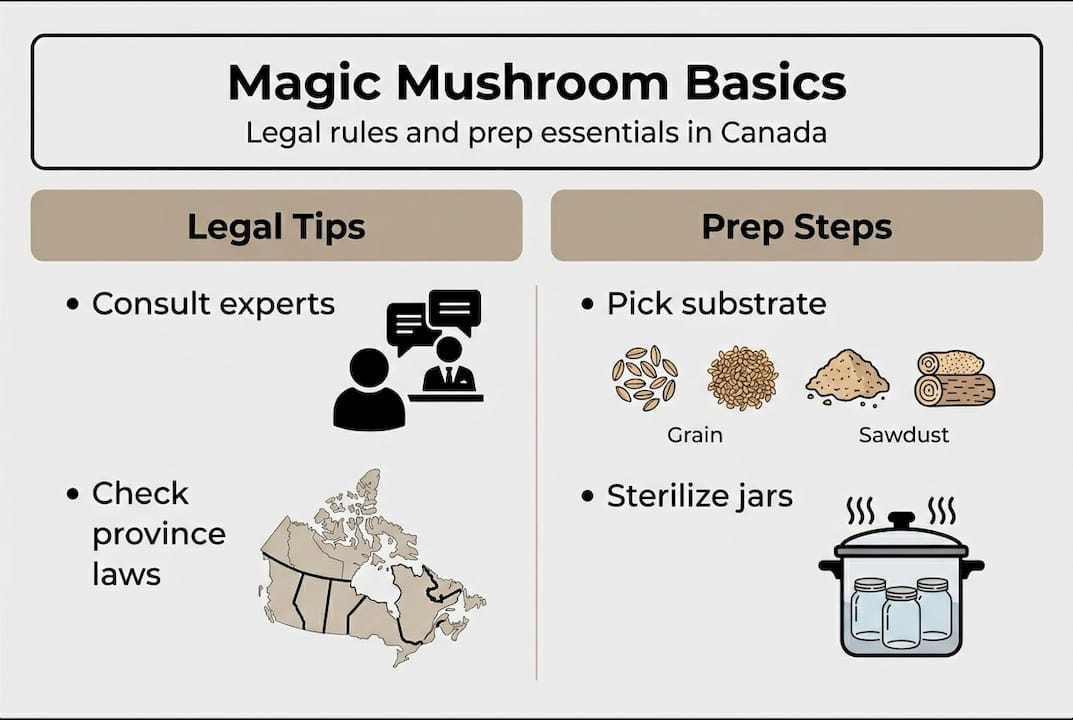
Before proceeding with any cultivation activity, research your provincial regulations and consult legal experts familiar with drug policy. The information in this guide serves educational purposes to explain cultivation techniques and safety protocols, not to encourage illegal activity. Legal context frames every decision in mushroom growing, from acquiring materials to managing harvests.
Essential preparation and materials for cultivation
Successful mushroom cultivation starts with gathering the right materials and creating optimal environmental conditions. Both PF Tek and monotub methods require specific equipment, though monotub systems need more initial investment for larger yields.
Core Materials for PF Tek:
- Half-pint glass jars with metal lids and rubber gaskets
- Brown rice flour and vermiculite for substrate
- Pressure cooker or large pot for sterilization
- Spore syringe from reliable supplier
- Rubbing alcohol and lighter for sterilization
- Clear plastic storage container for fruiting chamber
- Perlite for humidity maintenance
Additional Materials for Monotub:
- Large plastic tub with lid (50-70 quart capacity)
- Coco coir, vermiculite, and gypsum for bulk substrate
- Grain spawn jars (rye, millet, or wild bird seed)
- Polyfill or micropore tape for gas exchange holes
- Digital hygrometer and thermometer
| Method | Substrate Ratio | Container Size | Initial Cost |
|---|---|---|---|
| PF Tek | 2:1:1 vermiculite:water:brown rice flour | 12 half-pint jars | $50-80 |
| Monotub | 1:2 to 1:4 spawn:substrate | 50-70 quart tub | $100-150 |
Your growing environment dramatically affects success rates. Maintain room temperature between 20-24°C during colonization, then increase humidity to 90%+ for fruiting. Fresh air exchange prevents carbon dioxide buildup that stunts mushroom development. A spare closet, basement corner, or dedicated grow tent works well if you can control these variables.
Substrate preparation determines how well mycelium colonizes and produces mushrooms. Monotub systems use substrate mixes of coco coir, vermiculite, and gypsum combined with grain spawn in ratios from 1:2 to 1:4. Proper hydration creates field capacity where substrate holds moisture without excess water pooling.
Pro Tip: Test substrate moisture by squeezing a handful. A few drops of water should release, but not a steady stream. This field capacity ensures mycelium gets water without creating anaerobic conditions that encourage contamination.
Sterilization eliminates competing organisms before introducing your spores. Pressure cook jars at 15 PSI for 90 minutes, or use a pot with boiling water for 90-120 minutes if no pressure cooker is available. Let everything cool to room temperature in a clean space before inoculation. Working in a sterile environment with sanitized tools and surfaces prevents contamination that ruins entire batches.
Step-by-step magic mushroom cultivation process
The cultivation process follows distinct phases from inoculation through multiple harvest flushes. Understanding each stage helps you troubleshoot problems and optimize yields.
Inoculation and Colonization:
- Sanitize your workspace with rubbing alcohol and wear clean gloves
- Flame sterilize the spore syringe needle until red hot, then let cool 10 seconds
- Inject 0.25-0.5ml of spore solution into each jar through pre-drilled holes
- Cover injection sites with micropore tape to allow gas exchange while blocking contaminants
- Store jars in a dark space at 20-24°C for colonization
- Watch for white mycelium growth spreading from injection points over 2-4 weeks
- Fully colonized jars show complete white coverage with no visible substrate
Pro Tip: Avoid disturbing jars during colonization as movement can damage delicate mycelium networks. Check every few days for contamination signs like green, black, or pink spots.
Fruiting Chamber Setup:
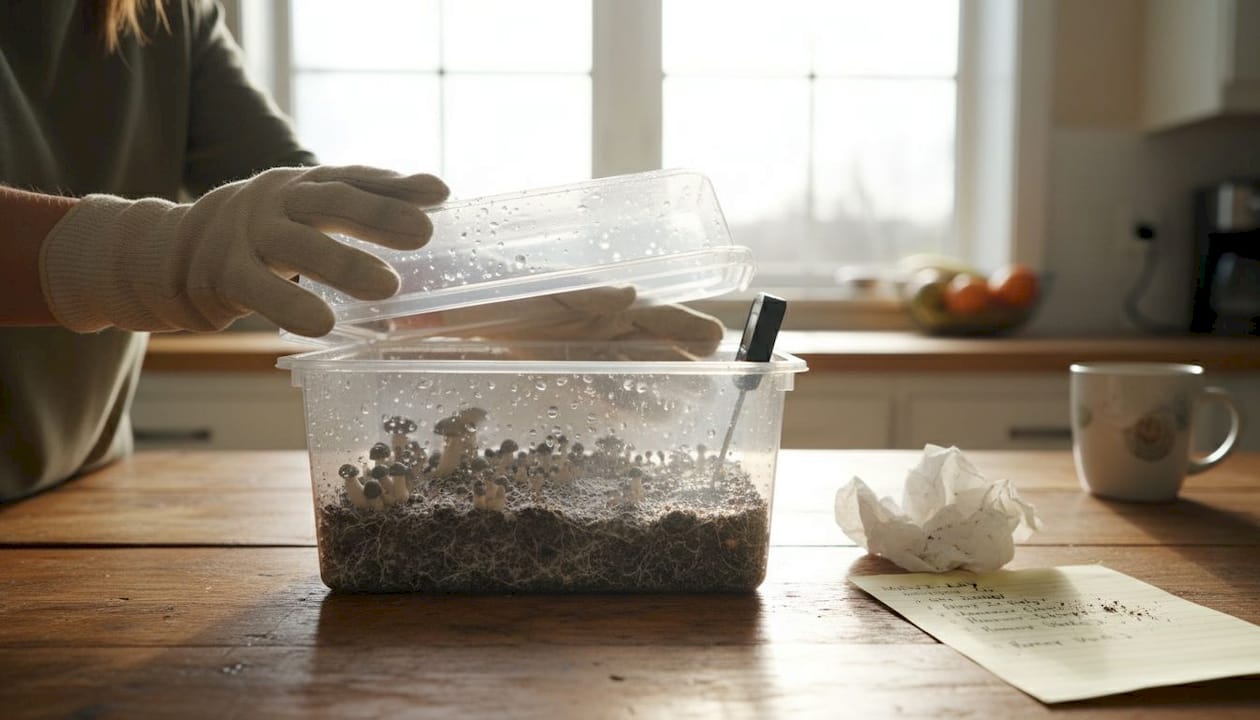
Once colonization completes, mushrooms need specific conditions to fruit. For PF Tek, remove colonized cakes from jars and place them on a perlite bed inside a clear plastic container. Mist the chamber walls twice daily to maintain 90%+ humidity without directly spraying cakes. Fan the chamber 2-3 times daily for 30 seconds to provide fresh air exchange.
Monotub systems require different preparation. Mix fully colonized grain spawn with pasteurized bulk substrate in your tub, then seal and let colonize for 7-10 days. Once surface mycelium covers the substrate, introduce fruiting conditions by opening gas exchange holes and maintaining high humidity through misting.
Environmental Controls:
- Humidity: 90-95% during fruiting prevents mushrooms from drying out
- Temperature: 20-24°C promotes optimal growth rates
- Light: Indirect natural light or 12-hour light cycle triggers pinning
- Fresh Air: 4-6 air exchanges per hour removes CO2 buildup
Pins (tiny mushroom primordia) appear 5-14 days after introducing fruiting conditions. These develop into mature mushrooms over 5-7 days. Harvest when veils underneath caps begin tearing but before spores drop, as spore release signals the mushroom to stop producing psilocybin.
Harvest and Yield Expectations:
| Method | First Flush Timeline | Typical Yield | Biological Efficiency | Additional Flushes |
|---|---|---|---|---|
| PF Tek | 4-6 weeks total | 20-50g dried per 12 jars | 50-70% | 2-4 flushes |
| Monotub | 5-8 weeks total | 100-400g dried per tub | 80-120% | 3-5 flushes |
Twist and pull mushrooms at the base rather than cutting to avoid leaving stumps that rot. Typical timelines from inoculation to first harvest span 4-8 weeks depending on method and conditions. After harvesting, remove any aborts (small mushrooms that stopped growing) and continue misting for subsequent flushes.
Drying harvested mushrooms preserves potency and prevents decay. Use a food dehydrator at 40-50°C for 6-8 hours until mushrooms snap cleanly when bent. Store dried mushrooms in airtight containers with desiccant packets in cool, dark locations. Properly dried and stored mushrooms maintain potency for 6-12 months.
Preventing and managing contamination
Contamination represents the biggest threat to successful cultivation, destroying entire grows within days if left unchecked. Recognizing contamination types and implementing prevention strategies protects your investment of time and materials.
Common contamination appears as colored growth distinct from white mycelium. Green mold (Trichoderma) spreads rapidly and releases spores that contaminate nearby jars. Black mold indicates Aspergillus species that thrive in overly wet conditions. Bacterial contamination produces sour, unpleasant odors and slimy textures. Pink or orange discoloration signals other bacterial or yeast infections.
Over 90% of contamination cases are preventable through proper hygiene and sterile technique. Every surface, tool, and material that contacts your substrate or mycelium must be sanitized. Work in a clean room away from air vents, pets, and high traffic areas. Many growers create a still air box from a clear plastic tub to minimize airborne contaminants during inoculation.
Essential Sterilization Practices:
- Wipe down all work surfaces with 70% isopropyl alcohol before starting
- Wear clean gloves and change them if you touch anything non-sterile
- Flame sterilize needles and tools between each use
- Use a HEPA filter or work in a laminar flow hood for advanced setups
- Shower and wear fresh clothes before working with cultures
- Keep pets out of grow areas as fur carries contaminant spores
Substrate pasteurization reduces contamination risk in bulk methods. Heating coco coir and vermiculite to 70-80°C for 60-90 minutes kills most competing organisms while preserving beneficial microbes. This gentler approach than sterilization works because mushroom mycelium colonizes faster than remaining contaminants can establish.
“Pasteurized CVG (coco coir, vermiculite, gypsum) substrate in monotub systems dramatically reduces contamination compared to sterilized grain jars alone. The bulk substrate’s competitive colonization gives mushroom mycelium an advantage over slower-growing molds.”
If contamination appears, act immediately to prevent spread. Remove contaminated jars or sections of substrate and dispose of them far from your grow area. Never open contaminated containers indoors as this releases millions of spores. Seal contaminated materials in plastic bags before disposal. Thoroughly clean and sanitize the affected area before continuing cultivation.
Some growers attempt to salvage partially contaminated substrate by cutting away affected sections, but this rarely succeeds. Contamination visible on the surface often indicates deeper infection throughout the substrate. Starting fresh with proper sterile technique proves more reliable than rescue attempts.
Monotub methods offer contamination resistance advantages over PF Tek. The larger substrate mass colonizes quickly, outcompeting potential contaminants. Pasteurization eliminates most threats while maintaining beneficial organisms. The enclosed environment with controlled gas exchange limits exposure to airborne contaminants. These factors explain why experienced growers favor bulk methods for consistent, safe cultivation.
Explore psilocybin products and educational resources
While cultivation knowledge empowers you to understand mushroom growing, legal alternatives provide safe access to psilocybin benefits without legal risk. Three Amigos offers lab-tested products and comprehensive educational resources for Canadians interested in responsible psilocybin use.
Our microdose mushroom capsules deliver precise, consistent doses perfect for beginners exploring psilocybin’s therapeutic potential. Each batch undergoes rigorous testing for potency and purity, ensuring you know exactly what you’re consuming. Microdosing supports mental clarity, creativity, and emotional balance without the intensity of full psychedelic experiences.
Beyond products, we provide trusted guides covering safe cultivation practices and legal considerations to help you make informed decisions. Our educational content explores the science behind psilocybin’s mental health benefits, from neuroplasticity enhancement to depression relief. Whether you’re curious about growing techniques or ready to experience psilocybin’s benefits legally, Three Amigos supports your journey with quality products and expert knowledge.
Frequently asked questions
Is cultivating magic mushrooms legal in Canada?
No, growing psilocybin mushrooms for personal use remains illegal in Canada without Health Canada authorization under the Controlled Drugs and Substances Act. Cultivation carries criminal penalties including fines and imprisonment. Very few medical or research exemptions have been granted, requiring extensive documentation and approval processes. Check current psilocybin regulations to understand your legal options and risks.
What are the safest cultivation techniques to avoid contamination?
Maintaining strict sterility during inoculation prevents most contamination issues. Work in a clean space with sanitized surfaces, wear gloves, and flame sterilize all tools between uses. Pressure cook substrate jars at 15 PSI for 90 minutes to eliminate competing organisms. For bulk grows, pasteurize coco coir substrate at 70-80°C for 60-90 minutes. Never open suspicious jars indoors, and dispose of contaminated materials immediately in sealed bags.
How long does it take from inoculation to harvest?
PF Tek typically requires 4-6 weeks total, with 2-3 weeks for colonization and another 1-2 weeks for fruiting after cakes are birthed. Monotub systems take 5-8 weeks, including 3-4 weeks for grain colonization, 7-10 days for bulk substrate colonization, and 1-2 weeks for fruiting. Temperature, genetics, and environmental conditions affect these timelines. Subsequent flushes appear faster, usually within 7-10 days after harvesting the previous flush.
What should you do if contamination occurs?
Immediately isolate contaminated jars or substrate sections to prevent spore spread to healthy cultures. Seal contaminated materials in plastic bags without opening them indoors, then dispose of them away from your grow area. Thoroughly sanitize the affected space with alcohol or bleach solution before resuming cultivation. Most contamination indicates sterile technique failures, so review your procedures and identify where contaminants entered. Starting fresh with improved sterility practices succeeds more often than attempting to salvage infected grows.
Can legal alternatives provide benefits without cultivation risk?
Yes, purchasing psilocybin products from established retailers eliminates legal risks and cultivation challenges while providing consistent, lab-tested doses. Microdose capsules offer precise amounts perfect for therapeutic benefits without intense psychedelic effects. Many Canadians choose this approach for convenience, safety, and reliability. Educational resources help you understand safe psilocybin usage practices whether you’re microdosing for mental health support or exploring consciousness expansion. Legal products provide quality assurance that home cultivation cannot guarantee.
Recommended
- How to Make Magic Mushroom Chocolate: A Guide for Beginners
- Mushroom Grow Kits in Canada: How to Start Growing at Home
- Optimal Timing for Harvesting Magic Mushrooms: When to Pick
- Psilocybin Cultivation: Safe Practices and Legal Facts

Thomas Wrona is a writer, designer, and wellness coach who believes that nature’s wisdom provides an antidote to the stress of modern life. As a former pro athlete, he’s all about staying in motion! When he’s not writing you’ll probably find Thomas outside.