

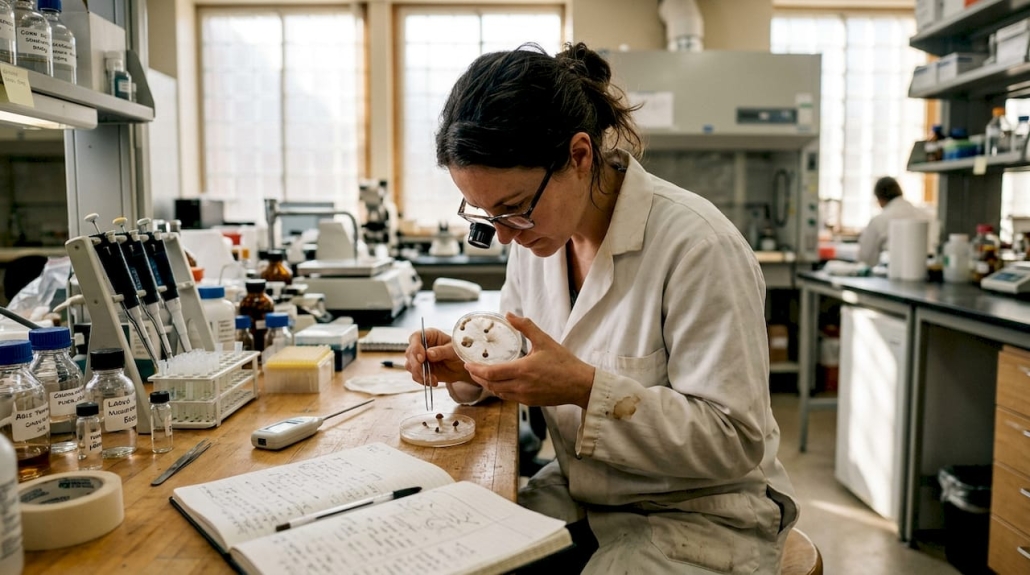
Magic mushroom life cycle: growth, potency & therapy
Most people picture magic mushrooms as a simple cap on a stem. That image captures maybe 10% of what’s actually happening. The full life cycle of a magic mushroom, from microscopic spore to mature fruiting body, is a layered biological process that directly shapes potency, harvest timing, and therapeutic value. For Canadians exploring psilocybin for personal growth, microdosing, or mental health support, understanding each stage isn’t just interesting science. It’s practical knowledge that changes how you approach every aspect of use.
Table of Contents
- Magic mushrooms demystified: More than a simple plant
- The four essential stages of the magic mushroom life cycle
- Habitat, environment, and growth factors: What magic mushrooms need
- Potency, strain differences, and timing: Why details matter
- Obstacles and troubleshooting: Common problems and solutions
- From life cycle to personal growth: Practical applications in Canada
- Explore trusted resources for magic mushroom growth and wellness
- Frequently asked questions
Key Takeaways
| Point | Details |
|---|---|
| Four-stage life cycle | Magic mushrooms grow through spores, mycelium, pins, and fruiting bodies. |
| Environment influences success | Humidity, temperature, and substrate are crucial at each growth stage. |
| Strain and timing impact potency | Harvest before the veil breaks for highest psilocybin levels. |
| Avoid common pitfalls | Control contamination and humidity to maximize harvest and safety. |
| Knowledge supports safe use | Understanding the cycle helps Canadians use mushrooms more effectively and responsibly. |
Magic mushrooms demystified: More than a simple plant
Magic mushrooms are fungi, not plants. That distinction matters more than it sounds. Plants use roots to absorb water and nutrients. Fungi do something different: they grow a web of thread-like cells called mycelium that spreads through a substrate and absorbs nutrients directly through its walls. The mushroom cap you see is just the fruiting body, the reproductive structure the fungus produces to release spores.
Here are the core components of a magic mushroom’s biology:
- Spores: Microscopic reproductive cells, equivalent to seeds in plants
- Mycelium: The underground (or in-substrate) network that feeds and grows the organism
- Fruiting body: The visible mushroom, including cap, gills, and stem
- Spore print: Released at maturity to restart the cycle
The most cultivated species, Psilocybe cubensis, is coprophilous, thriving on dung in humid, tropical and subtropical climates. In Canada, replicating those conditions indoors is the foundation of successful cultivation. If you’re new to this, reviewing magic mushroom basics gives you a solid starting point before going deeper.
“Fungi are not plants. They are their own kingdom, and understanding that changes everything about how you grow and use them.”
Now that the true nature of magic mushrooms is clarified, let’s explore what really happens in each stage of their remarkable life cycle.
The four essential stages of the magic mushroom life cycle
Every magic mushroom passes through four distinct stages. Each one has its own environmental requirements, timeline, and significance for potency and yield. The Psilocybe cubensis life cycle consists of spore germination, mycelial colonization, primordia formation (pinning), and fruiting body maturation.
- Spore germination: Spores land on a suitable substrate and begin to germinate, sending out hyphae (individual fungal threads) that merge to form mycelium. This stage requires moisture and warmth.
- Mycelial colonization: The mycelium spreads through the substrate, breaking down organic matter and storing energy. This is the longest stage and the most vulnerable to contamination.
- Pinning (primordia formation): Environmental triggers, including a drop in temperature, increased fresh air exchange, and light exposure, signal the mycelium to form tiny pin-like structures. These are the earliest visible signs of mushrooms.
- Maturation and spore dispersal: Pins grow into full fruiting bodies. The veil beneath the cap stretches and eventually tears, releasing spores. Harvest before this point preserves peak potency.
From inoculation to first harvest, the timeline runs 4 to 8 weeks depending on strain and environment. You can also explore more on mushroom stages for a broader look at fungal development.
“Timing your harvest to the pinning and maturation stages is one of the most impactful decisions you can make for potency and yield.”
| Stage | Key environment | Typical duration |
|---|---|---|
| Spore germination | Warm, moist substrate | 12 to 24 hours |
| Mycelial colonization | 75 to 80°F, high humidity, dark | 2 to 4 weeks |
| Pinning | 68 to 75°F, fresh air, light | 5 to 10 days |
| Maturation | Stable humidity, airflow | 5 to 7 days |
For a deeper look at how to apply this knowledge hands-on, magic mushroom cultivation techniques covers the practical side in detail.
Habitat, environment, and growth factors: What magic mushrooms need
Getting the environment right at each stage is the difference between a thriving crop and a failed one. Optimal cultivation means colonization at 75 to 80°F with 95 to 100% relative humidity in darkness, then fruiting at 68 to 75°F with 90 to 95% humidity, a 12/12 light cycle, and frequent fresh air exchange.
Here’s what each factor does:
- Substrate: Sterile grain, brown rice flour, or compost mimics the nutrient-rich dung environment P. cubensis prefers in the wild
- Humidity: Critical at every stage. Drops below 85% during fruiting cause aborts and stunted growth
- Temperature: Colonization runs warmer; fruiting needs a slight drop to trigger pinning
- Light: Not needed for colonization, but a 12-hour cycle during fruiting signals the organism to produce
- Fresh air exchange (FAE): CO2 buildup stunts growth and causes long, thin stems with small caps
| Factor | Wild environment | Indoor cultivation |
|---|---|---|
| Substrate | Animal dung, decaying matter | Sterile grain, compost, coco coir |
| Humidity | Tropical rainfall, 90%+ | Humidifier, misting, humidity tent |
| Temperature | 70 to 85°F year-round | Heat mat, thermostat control |
| Light | Indirect, filtered | LED or natural, 12/12 cycle |
| Air exchange | Natural breeze | Manual fanning or FAE holes |
Pro Tip: To trigger pinning, drop the temperature by 5°F, increase fresh air exchange, and introduce indirect light for 12 hours. This mimics the natural shift from a warm, sheltered colonization environment to the open air where fruiting occurs.
Research into magic mushroom chemistry also shows how environmental stress can influence psilocybin production, which connects directly to the benefits for mental health that many Canadians are exploring.

Potency, strain differences, and timing: Why details matter
Not all magic mushrooms are created equal. Strain genetics, harvest timing, and growing conditions all influence how much psilocybin and psilocin a mushroom contains. Psilocybin and psilocin peak in caps at 0.44 to 1.35% dry weight, with significant variation by strain and growing conditions, including notably higher concentrations in dark-grown specimens.
Two popular strains illustrate the range:
- Golden Teacher: Colonizes quickly, moderate potency, forgiving for beginners, consistent yields
- Penis Envy: Slower to colonize, significantly higher psilocybin content, smaller but denser fruiting bodies
Harvest timing is just as important as strain selection. Caps harvested just before the veil breaks contain the highest concentration of active compounds. Once the veil tears and spores begin to drop, potency starts to decline and the mushroom’s energy shifts toward reproduction rather than compound production. You can check psilocybin content data by strain for more detail.

Pro Tip: If you’re growing for microdosing, harvest slightly earlier than you would for a full-dose experience. Earlier harvests from pre-veil caps give you more consistent, measurable psilocybin levels, which matters when you’re dialing in a psilocybin microdosing protocol.
Key considerations before use:
- Know your strain and its typical potency range
- Dry mushrooms thoroughly before weighing for dosing accuracy
- Store in airtight containers away from heat and light to preserve potency
- Start low, especially with high-potency strains like Penis Envy
Obstacles and troubleshooting: Common problems and solutions
Even experienced growers run into problems. Contamination risk peaks during germination and colonization, while aborts are triggered by low humidity and overlays by over-consolidation of mycelium. Knowing what to look for saves a lot of frustration.
Common issues and how to handle them:
- Green, black, or pink mold: Contamination. Isolate and discard affected substrate immediately. Improve sterile technique for future grows.
- Aborted pins: Small pins that stop growing and die off. Usually caused by humidity drops or sudden temperature shocks. Increase misting frequency and stabilize conditions.
- Overlay (hyphal knot consolidation): A thick, white, leathery layer forms over the substrate surface, blocking pins. Scratch the surface lightly and introduce fresh air to break it up.
- Long, thin stems with small caps: CO2 buildup. Increase fresh air exchange immediately.
- Slow colonization: Temperature too low or substrate too wet. Adjust heat and check moisture levels.
“Sterile technique isn’t optional. It’s the single most important habit you can build as a grower. Most failures trace back to contamination introduced during inoculation or casing.”
For more detailed guidance, more cultivation tips walks through advanced troubleshooting, and Canadian legal guidance covers what you need to know about safe and responsible use in Canada.
From life cycle to personal growth: Practical applications in Canada
Understanding the life cycle isn’t just for growers. For anyone using psilocybin for personal development or therapeutic purposes, this knowledge shapes how you think about dosing, timing, and sourcing. Grasping the life cycle aids in timing harvests for peak potency and understanding emerging research into mycelial compounds that may have their own therapeutic value.
Here are actionable steps for Canadians considering personal or therapeutic use:
- Learn the legal landscape. Psilocybin remains controlled in Canada, but exemptions exist for specific medical and research contexts. Review the current psilocybin legal status before making any decisions.
- Source from reputable suppliers. Quality and potency vary widely. Knowing what a well-grown mushroom looks like, based on life cycle knowledge, helps you evaluate what you’re getting.
- Match strain and timing to your intention. Microdosing calls for consistent, lower-potency harvests. Therapeutic macrodoses benefit from peak-potency, pre-veil-break caps.
- Track your doses. Dry weight, strain, and harvest timing all affect your experience. Keep notes.
- Consult emerging research. Therapeutic mycelium research is expanding what we know about the full organism, not just the fruiting body.
Pro Tip: Think of the life cycle as your quality control framework. When you understand what conditions produce the most consistent, potent mushrooms, you make better decisions whether you’re growing, buying, or dosing.
Explore trusted resources for magic mushroom growth and wellness
If this breakdown of the magic mushroom life cycle has sparked your curiosity, there’s a lot more to explore. Three Amigos brings together educational resources and high-quality products for Canadians navigating psilocybin with intention.

Whether you’re looking to start a microdosing capsules protocol, understand the science-backed benefits of psilocybin, or explore the therapeutic uses of dried mushrooms for mental health, Three Amigos offers both the products and the knowledge to support your journey. Every product is sourced with quality and consistency in mind, so what you learn about potency and timing actually translates to what you receive.
Frequently asked questions
What are the main stages of the magic mushroom life cycle?
The four main stages are spore germination, mycelial colonization, primordia (pin) formation, and fruiting body maturation with spore dispersal. Each stage has distinct environmental needs and directly affects the final potency of the mushroom.
When is the best time to harvest magic mushrooms for potency?
Harvest just before the veil breaks for maximum psilocybin content. Psilocybin peaks right before veil break, after which potency begins to decline as the mushroom shifts energy toward spore release.
Can the mycelium itself have therapeutic benefits?
Emerging research suggests mycelium may contain beneficial compounds, but it does not carry the strong psychedelic properties found in fruiting bodies. Mycelium research is still developing, and most therapeutic applications currently focus on the fruiting body.
How long does it typically take to grow magic mushrooms?
From spore inoculation to first harvest, expect 4 to 8 weeks depending on strain, substrate, and environmental conditions. Faster-colonizing strains like Golden Teacher tend to sit at the lower end of that range.
Is it legal to grow or use magic mushrooms in Canada?
Psilocybin mushrooms remain illegal in Canada, though rare exemptions exist for medical use and research contexts. Always review current regulations before pursuing cultivation or therapeutic use.
Recommended
- Safe mushroom consumption workflow for mental health 2026
- Therapeutic uses of dried mushrooms: mental health 2026
- Psilocybin, Nerve Growth, and Mental Health: A Deep Dive
- Psychedelic Mushroom Terms 2026: 0.2-1.3% Potency Guide

Thomas Wrona is a writer, designer, and wellness coach who believes that nature’s wisdom provides an antidote to the stress of modern life. As a former pro athlete, he’s all about staying in motion! When he’s not writing you’ll probably find Thomas outside.


