

Mushroom edibles: safe use and legal guide Canada 2026
Psilocybin mushroom edibles are gaining attention across Canada, yet many people remain confused about their legal status and safe use. While mushrooms remain Schedule III controlled substances, therapeutic exemptions and evolving enforcement create a complex landscape. This guide cuts through the confusion, explaining Canadian law, how psilocybin works in your brain, comparing edibles to other formats, and providing practical safety protocols. Whether you’re exploring mushroom edibles for mental health, personal growth, or curiosity, understanding legality and responsible use is essential for Canadians in 2026.
Table of Contents
- Legal Framework And Classification Of Mushroom Edibles In Canada
- How Psilocybin Works: Effects And Therapeutic Potential
- Mushroom Edibles Versus Other Psilocybin Consumption Methods
- Safe Use Protocols For Mushroom Edibles In Canada
- Explore Trusted Psilocybin Edibles And Resources At 3 Amigos
Key takeaways
| Point | Details |
|---|---|
| Legal status | Psilocybin mushrooms are Schedule III controlled substances in Canada, generally illegal except under specific medical exemptions and clinical trials. |
| Brain effects | Psilocybin alters neural connectivity and sensory processing, with therapeutic potential for depression and alcohol-use disorder backed by clinical evidence. |
| Consumption methods | Edibles offer slower onset and longer duration than teas, with capsules providing standardized dosing but variable bioavailability. |
| Safe use essentials | Start with low doses from tested sources, use safe environments, avoid substance mixing, and understand local enforcement to minimize legal and health risks. |
Legal framework and classification of mushroom edibles in Canada
Understanding the legal status of mushrooms in Canada requires navigating federal law and regional enforcement nuances. Psilocybin and psilocin, the active compounds in magic mushrooms, are classified as Schedule III controlled substances under the Controlled Drugs and Substances Act. This classification makes possession, production, and sale illegal nationwide, with penalties including fines and imprisonment for unauthorized activities.
Despite this prohibition, exceptions exist that create legal pathways for specific users. Health Canada grants case-by-case exemptions through the Minister of Health for compassionate medical use, particularly for end-of-life care and treatment-resistant conditions. The Special Access Program allows healthcare practitioners to request psilocybin for patients when conventional treatments have failed. Clinical trials and research programs operate under federal approval, advancing scientific understanding while providing legal access to participants.
Enforcement priorities vary significantly across Canadian municipalities. Some cities have adopted lower-priority approaches to personal possession, though this does not constitute formal decriminalization. Vancouver and other urban centers have seen advocacy for policy reform, but federal law remains unchanged in 2026. This creates a gap between street-level enforcement and legal consequences, leaving users in uncertain territory.
Psilocybe mushroom spores occupy a legal gray area because they contain no psilocybin or psilocin until cultivated. However, growing mushrooms from spores crosses into illegal production. The distinction matters for those researching mycology versus those seeking psychoactive products.
Key legal considerations for Canadians include:
- Federal prohibition applies nationwide regardless of municipal enforcement approaches
- Medical exemptions require formal application and approval, not self-directed use
- Possession charges can result in criminal records affecting employment and travel
- No retail storefronts operate with full legal authorization for recreational sales
- Psilocybin legality in Canada 2026 remains restrictive despite growing therapeutic interest
Pro Tip: Always verify current local enforcement practices and exemption eligibility before obtaining or using mushroom edibles to avoid legal risks. Consult legal resources specific to your province and stay updated on policy changes as therapeutic access expands.
How psilocybin works: effects and therapeutic potential
Psilocybin’s effects stem from profound changes in brain network connectivity and neurotransmitter activity. When you consume mushroom edibles, your body converts psilocybin into psilocin, which binds to serotonin receptors, particularly the 5-HT2A receptor. This binding alters brain activity and increases signal complexity, disrupting normal communication patterns between brain regions. The result is enhanced sensory perception, altered emotional processing, and shifts in consciousness that users describe as mystical or transcendent.
Neuroimaging studies reveal that psilocybin reduces activity in the default mode network, the brain system responsible for self-referential thinking and ego maintenance. Simultaneously, it increases connectivity between regions that rarely communicate, creating novel neural pathways. The amygdala, your brain’s emotional processing center, shows reduced reactivity to negative stimuli, potentially explaining psilocybin’s antidepressant effects. Sensory areas become hyperactive, intensifying colors, sounds, and tactile sensations.
These neurological changes translate into therapeutic benefits supported by rigorous clinical evidence. Research demonstrates that intensity of psychedelic experience correlates with clinical improvement, especially for mood disorders and addiction. Patients with treatment-resistant depression show sustained symptom reduction following psilocybin-assisted therapy, with some experiencing remission lasting months. Alcohol-use disorder studies reveal decreased drinking and increased abstinence rates after therapeutic psilocybin sessions.
“Intensity of the psychedelic experience was associated with clinical improvement.” — Scientific study, 2025
The therapeutic mechanism appears to involve both acute neuroplasticity and psychological insights gained during sessions. Psilocybin promotes the growth of new neural connections, potentially reversing brain changes caused by chronic stress and depression. The profound experiences users report, characterized by ego dissolution and feelings of interconnectedness, facilitate psychological breakthroughs that traditional talk therapy may not achieve.
Key neurological and therapeutic effects include:
- Enhanced connectivity between normally segregated brain networks
- Reduced default mode network activity, decreasing rumination and self-criticism
- Amygdala modulation leading to decreased fear and anxiety responses
- Increased neuroplasticity supporting long-term mood improvements
- Mystical-type experiences correlating with better clinical outcomes
For Canadians exploring psilocybin mental health impacts, understanding these mechanisms helps set appropriate expectations and contexts for use. The mental health benefits of magic mushrooms extend beyond temporary mood elevation to potentially lasting neurological and psychological changes when used responsibly.
Mushroom edibles versus other psilocybin consumption methods
Choosing between mushroom edibles, teas, and capsules significantly impacts your experience timeline, intensity, and comfort. Each format delivers psilocybin differently, affecting onset speed, duration, and how your body processes the compound. Understanding these differences helps you select the method that aligns with your goals and circumstances.
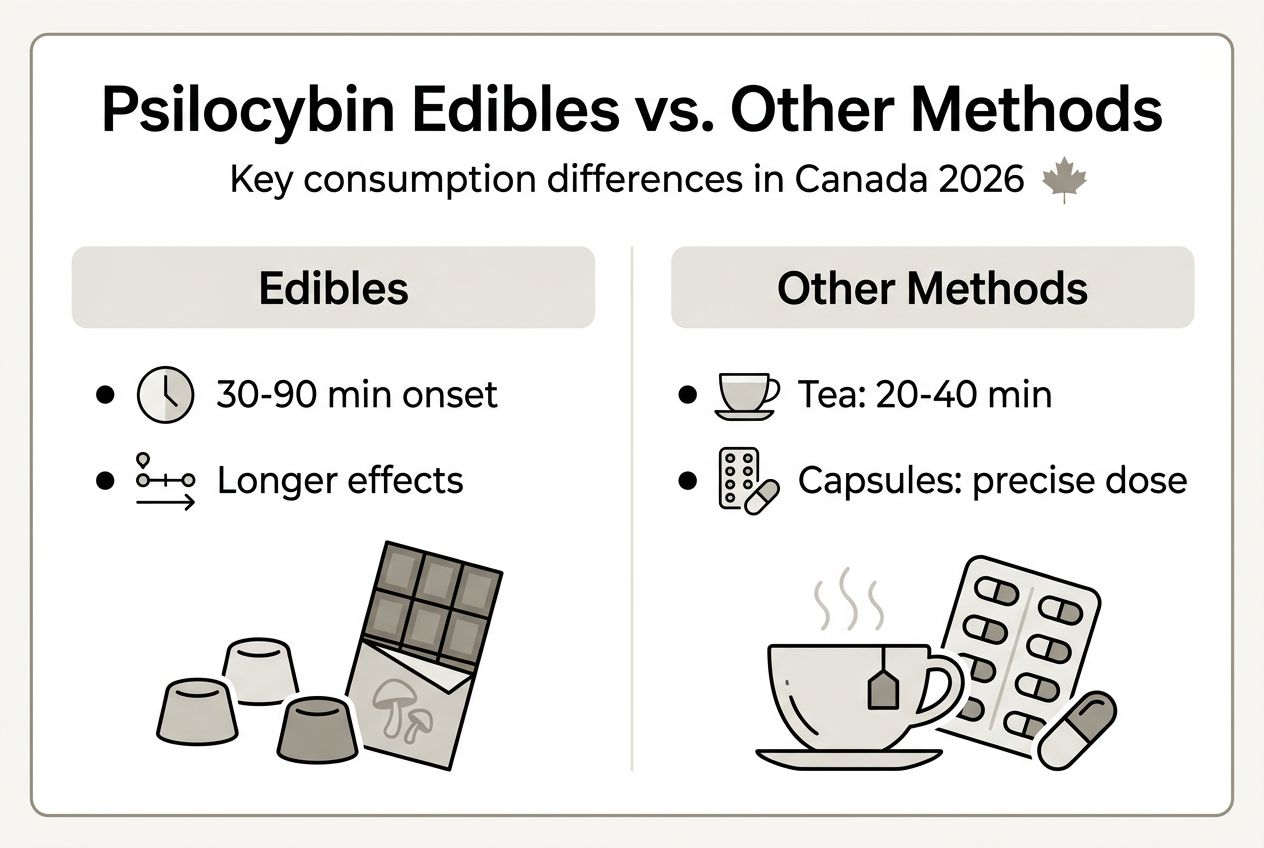
Mushroom edibles, including chocolates and gummies, offer the slowest onset at 30 to 90 minutes because psilocybin must pass through your digestive system. This delayed absorption means effects build gradually, reducing the abrupt intensity some users find overwhelming. Duration extends to 4 to 6 hours, providing a longer experience window. Edibles effectively mask the earthy, sometimes unpleasant taste of raw mushrooms, making them preferable for those sensitive to flavor.

Mushroom tea provides faster onset, typically 20 to 40 minutes, because hot water extraction allows quicker absorption through your stomach lining. The experience tends to peak earlier and may feel slightly shorter overall. Comparing mushroom tea and edibles reveals that tea offers more control over dosing by adjusting steeping time and mushroom quantity, though measuring precision remains challenging without lab testing.
Capsules deliver measured doses with pharmaceutical-style consistency, eliminating guesswork about potency. Onset mirrors edibles at 30 to 60 minutes, with bioavailability varying based on capsule material and stomach contents. Gelatin capsules dissolve faster than vegetarian alternatives, potentially speeding effects. Capsules provide no taste, ideal for users who dislike mushroom flavor but want predictable dosing.
| Method | Onset Time | Duration | Taste | Dosing Precision |
|---|---|---|---|---|
| Edibles | 30-90 minutes | 4-6 hours | Masked by flavoring | Moderate (varies by product) |
| Tea | 20-40 minutes | 3-5 hours | Earthy, adjustable | Low (hard to measure) |
| Capsules | 30-60 minutes | 4-6 hours | None | High (pre-measured) |
| Raw Mushrooms | 20-45 minutes | 4-6 hours | Strong, earthy | Moderate (weigh before use) |
Individual metabolism plays a crucial role regardless of format. Body weight, recent meals, liver enzyme activity, and tolerance all influence how quickly and intensely psilocybin affects you. Someone with a fast metabolism may feel edibles sooner than the typical range, while a heavy meal can delay onset by an hour or more.
Considerations for choosing your format:
- Edibles suit users wanting gradual onset and taste masking
- Tea works for those seeking faster effects and ritual preparation
- Capsules provide consistency for microdosing or precise therapeutic protocols
- Raw mushrooms offer traditional experience with moderate control
Pro Tip: Start with low doses when trying a new edible format to gauge effects safely. Your body’s response to chocolates may differ from gummies due to fat content and digestion speed. Refer to magic mushroom dosage information before experimenting with unfamiliar products.
Safe use protocols for mushroom edibles in Canada
Responsible mushroom edible use requires careful planning, legal awareness, and harm reduction practices. Following structured protocols minimizes risks and maximizes the potential for positive experiences, whether you’re exploring therapeutic benefits or personal growth.
Understanding your local legal landscape is the first safety step. While Health Canada allows case-by-case exemptions for medical psilocybin use, recreational possession remains illegal federally. Research your municipality’s enforcement priorities and consult legal resources if you qualify for medical exemptions. Avoid public consumption and keep products discreet to reduce legal exposure.
Product quality and testing matter enormously. Unregulated markets mean potency varies wildly between batches and brands. Obtain edibles from reputable sources that provide lab testing certificates showing psilocybin content. Avoid products with unknown ingredients or those making exaggerated health claims. Contamination with other substances or incorrect dosing creates serious health risks.
Dosage guidelines for mushroom edibles:
- Microdose (0.1-0.3g dried equivalent): Sub-perceptual effects for focus and mood, taken 2-3 times weekly
- Low dose (0.5-1.5g): Mild sensory enhancement and mood elevation, suitable for beginners
- Moderate dose (2-3.5g): Clear psychedelic effects with visual distortions and emotional intensity
- High dose (4g+): Profound experiences with ego dissolution, reserved for experienced users in controlled settings
Start at the lowest effective dose for your intention, especially with edibles where onset delays can tempt impatient redosing. Wait at least 90 minutes before considering additional consumption. Redosing after effects begin rarely intensifies the experience proportionally and extends duration unpredictably.
Environment and companionship significantly influence outcomes. Choose a comfortable, familiar setting where you feel safe and won’t be interrupted. Having a sober, trusted sitter present provides reassurance and practical help if the experience becomes challenging. Avoid driving, operating machinery, or making important decisions while under the influence.
Substance interactions create unpredictable and potentially dangerous effects. Never combine mushroom edibles with alcohol, which dulls the experience and increases nausea. Avoid mixing with stimulants, antidepressants (especially MAOIs and SSRIs), or other psychoactive substances. Certain medications reduce psilocybin’s effects or create adverse reactions.
Step-by-step safe use protocol:
- Research legal status and exemption eligibility in your area
- Source tested products from reputable providers with transparent lab results
- Calculate appropriate dose based on experience level and intention
- Prepare a safe, comfortable environment with minimal external demands
- Arrange for a sober sitter if taking moderate to high doses
- Consume edibles on an empty or light stomach for consistent absorption
- Set intentions and create a calm mindset before ingestion
- Wait full onset period (60-90 minutes) before considering redosing
- Stay hydrated and have light snacks available for after peak effects
- Plan integration time to process insights and experiences afterward
Pro Tip: Keep a journal of dosage, setting, and effects to track your experiences and adjust safely. Note the specific product, amount consumed, time of onset, peak intensity, and any insights gained. This record helps you identify optimal doses and recognize patterns in your responses.
For comprehensive guidance, review safe psilocybin intake guidelines and psychedelic safety protocols covering medical screening, contraindications, and emergency response procedures. These resources provide detailed frameworks for responsible use aligned with current Canadian context.
Explore trusted psilocybin edibles and resources at 3 Amigos
Navigating the mushroom edible landscape becomes simpler when you have access to quality-tested products and comprehensive educational support. 3 Amigos serves Canadians seeking reliable psilocybin options combined with evidence-based information about safe use and therapeutic applications.
Our curated selection of magic mushroom edibles includes chocolates, gummies, and other formats designed for consistent dosing and enjoyable consumption. Each product undergoes quality verification to ensure you receive accurately labeled potency. Beyond retail offerings, 3 Amigos provides detailed guides explaining psilocybin science and mental health benefits, helping you understand mechanisms, research findings, and practical applications. Explore information about therapeutic uses of dried mushrooms and microdosing protocols tailored to Canadian users prioritizing safety and informed decision-making. Whether you’re beginning your journey or deepening your practice, our resources support responsible exploration within the evolving legal and scientific landscape.
FAQ
Are mushroom edibles legal in Canada?
Mushroom edibles containing psilocybin remain illegal federally as Schedule III controlled substances under the Controlled Drugs and Substances Act. Exceptions exist through Health Canada exemptions for compassionate medical use, the Special Access Program, and approved clinical trials. Enforcement priorities vary by municipality, but possession without authorization can result in criminal charges. Check current mushroom legality in Canada and consult legal resources for your specific situation.
How do mushroom edibles differ from capsules or teas?
Edibles have slower onset (30-90 minutes) and longer duration (4-6 hours) compared to tea, which acts in 20-40 minutes with slightly shorter effects. Edibles mask mushroom taste with flavoring, while tea retains earthy flavor. Capsules provide standardized doses with onset similar to edibles but bioavailability varies based on capsule material and stomach contents. Compare detailed differences at mushroom edibles vs tea to choose the format matching your preferences.
What safety precautions should I follow when using mushroom edibles?
Start with a low dose (0.5-1.5g dried equivalent) and wait 90 minutes to assess effects before consuming more. Use a comfortable, safe environment with a trusted sober sitter present, especially for moderate to high doses. Avoid mixing with alcohol, antidepressants, or other substances that create unpredictable interactions. Source products from tested, reputable providers to ensure accurate potency. Follow comprehensive protocols at psilocybin intake safety guide for detailed preparation and risk reduction.
Can psilocybin mushroom edibles help with mental health conditions?
Clinical research demonstrates psilocybin’s potential for treating depression, anxiety, and alcohol-use disorder, with therapeutic effects linked to mystical-type experiences and increased neural plasticity. However, self-medication carries risks including adverse reactions and legal consequences. Medical use requires formal exemptions and professional supervision in Canada. Consult healthcare providers about eligibility for therapeutic programs rather than attempting unsupervised treatment. Understand the evidence and limitations before considering psilocybin for mental health purposes.
How long do effects from mushroom edibles last?
Mushroom edibles typically produce effects lasting 4 to 6 hours from onset to baseline, with peak intensity occurring 2 to 3 hours after consumption. Onset takes 30 to 90 minutes depending on stomach contents, metabolism, and edible formulation. Higher doses extend duration, while individual factors like body weight and liver enzyme activity influence timeline. Plan for at least 6 to 8 hours of uninterrupted time without responsibilities when using moderate to high doses to ensure safe, comfortable experiences.
Recommended
- Step-by-step mushroom safety guide for Canadians 2026
- 7 Safe Examples of Mushroom Edibles for Canadians
- Magic Mushroom Edibles to Try in 2024: Trending Options
- A Beginner’s Guide to Ordering Magic Mushrooms Online in Alberta

Thomas Wrona is a writer, designer, and wellness coach who believes that nature’s wisdom provides an antidote to the stress of modern life. As a former pro athlete, he’s all about staying in motion! When he’s not writing you’ll probably find Thomas outside.