
What factors affect psilocybin potency? Key insights for buyers
TL;DR:
- Psilocybin potency varies greatly by species, strain, cultivation, and storage conditions.
- Proper cultivation, harvest timing, and storage are crucial for maintaining mushroom potency.
- Personal mindset and environment significantly influence the psilocybin experience beyond chemical content.
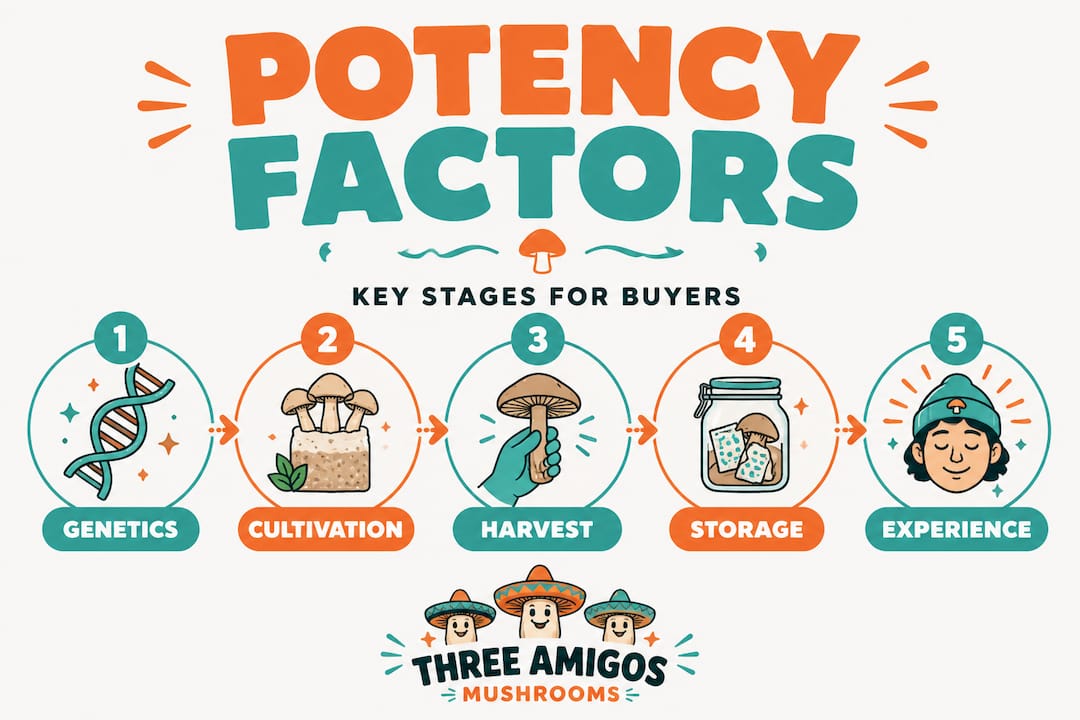
Most people assume that a gram of magic mushrooms is a gram of magic mushrooms. Pick up a bag, take your dose, and expect a predictable result. That assumption gets a lot of people into trouble. Psilocybin potency varies significantly across species, strains, growing conditions, storage methods, and even the mental state you bring to the experience. Understanding these variables isn’t just academic. It’s the difference between a transformative evening and an unexpectedly overwhelming one, or a completely flat session that leaves you wondering what all the fuss was about.
Table of Contents
- The role of species, strain, and genetics
- How cultivation and harvest affect potency
- Storage, drying, and handling: Why potency fades over time
- Testing, labeling, and real-world accuracy: Why numbers don’t tell the whole story
- Beyond chemistry: Experience, dose, and ‘set and setting’
- Why most people misunderstand psilocybin potency
- Finding reliable psilocybin options in Canada
- Frequently asked questions
Key Takeaways
| Point | Details |
|---|---|
| Species and strain matter most | Different mushroom types and even strains within a type greatly affect how strong the effects will be. |
| Growing and harvest conditions shift potency | How mushrooms are grown and exactly when they are harvested can raise or lower the concentration of active compounds. |
| Storage and drying protect effects | Improper drying or exposure to heat, light, or moisture leads to potency loss—even if mushrooms still look fine. |
| Lab tests have limits | Testing numbers in reports vary due to differences in lab methods and may not always match real-life strength. |
| Experience is more than numbers | Your dosage, mindset, and setting are as important as chemical content for the effects you feel. |
The role of species, strain, and genetics
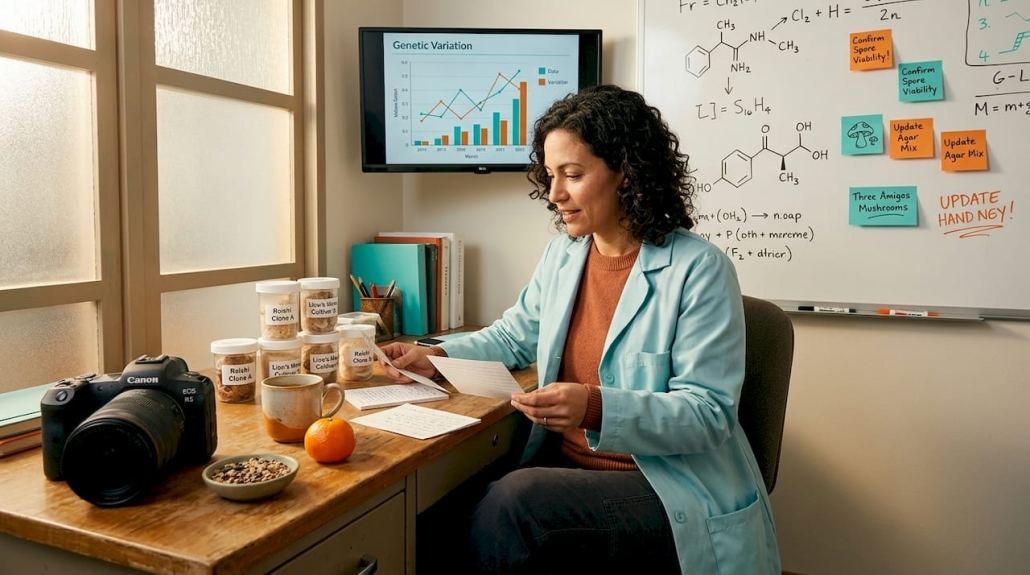
When it comes to psilocybin potency, genetics is the first and most powerful variable. Think of it like coffee beans: two cups brewed exactly the same way from different origins will taste completely different because the plant’s genetics determine what compounds develop in the first place. The same logic applies directly to psilocybin mushrooms.
A 2025 study analyzed 42 fungal strains from nine psilocybin-producing species under controlled cultivation conditions and found substantial metabolomic diversity. Not just between species, but within them. Two strains of the same species, grown identically, can produce meaningfully different alkaloid profiles. That finding should change how buyers think about shopping by species name alone.
Species is not enough information. What matters is the specific strain and what it’s known to produce. Here’s a broad comparison to give you context:
| Species | General potency | Common in retail? |
|---|---|---|
| Psilocybe cubensis | Moderate (variable by strain) | Very common |
| Psilocybe cyanescens | High | Less common |
| Psilocybe azurescens | Very high | Rare |
| Psilocybe semilanceata | Moderate to high | Uncommon |
| Psilocybe tampanensis | Low to moderate | Rare |
Within P. cubensis alone, strains like Penis Envy are documented to contain significantly higher psilocybin concentrations than Golden Teacher, which tends toward a milder, more visual experience. Both are cubensis. Both can come in the same packaging. But they are not the same product.
Key things genetics control include:
- Total psilocybin content as a percentage of dry weight
- Ratio of psilocybin to psilocin (which has different onset and intensity characteristics)
- Presence of baeocystin and norbaeocystin, lesser-known alkaloids that may contribute to the overall effect profile
- How responsive the strain is to environmental conditions
Understanding the psilocybin effects and benefits associated with different strains helps you set realistic expectations. And before you dose anything new, reviewing a solid dosage by strain guide is genuinely worth the time.
How cultivation and harvest affect potency
Genetics set the ceiling. What actually happens inside the fruiting body depends almost entirely on how the mushroom was grown and when it was picked. Growing conditions and harvest timing can substantially change psilocybin and psilocin levels in the final product, and this is where a lot of variability creeps into even well-sourced mushrooms.
Substrate matters more than most growers realize. Brown rice flour and vermiculite (BRF), rye grain, straw, and wood chips all produce different results with the same strain. Nutrient-dense substrates generally support higher alkaloid production. Casing layers, colonization temperature, fruiting humidity, and CO2 levels during pinning all interact to influence how efficiently the mycelium produces and stores psilocybin.
Here’s a simple ranking of factors that affect potency during cultivation:
- Substrate composition — Nutritional density directly supports alkaloid synthesis. Rye grain often outperforms BRF in controlled comparisons.
- Colonization temperature — Too hot or too cold slows mycelial growth and alkaloid accumulation. Most strains prefer 75 to 81°F during colonization.
- Fruiting chamber humidity — Consistent humidity (90 to 95% relative humidity) supports healthy development without encouraging contamination that degrades the crop.
- Light exposure during fruiting — Indirect light appears to influence pigmentation and potentially secondary metabolite production.
- Harvest timing — This one is critical. Mushrooms harvested just before or as the veil breaks (the thin membrane connecting the cap to the stem) tend to be at peak potency. Once the veil tears and spores begin releasing, some of the available psilocybin has already converted or dissipated.
Pro Tip: If you’re buying dried mushrooms, ask whether the supplier harvests pre-veil or post-veil. Pre-veil harvesting is the industry standard for high-potency products, but not everyone follows it consistently.
Curious about cultivation practices in more depth? Understanding what goes into a well-grown batch helps you evaluate supplier claims more critically. And if you want a real-world example of how strain and cultivation intersect, the Melmac potency profile is a fascinating case study in how a Penis Envy derivative can behave very differently depending on the grow.
Storage, drying, and handling: Why potency fades over time
Here’s something most buyers don’t consider at all: the mushrooms sitting in your drawer right now may be meaningfully weaker than they were six months ago, even if they look, smell, and feel perfectly fine.
Post-harvest handling is one of the most underappreciated factors in psilocybin potency. Once mushrooms leave the fruiting chamber, a race against chemistry begins. Heat, light, oxygen, and moisture all accelerate the breakdown of active compounds, and psilocin degrades faster than psilocybin because it lacks the phosphate group that gives psilocybin its relative stability.
Psilocin is the compound your body actually uses after converting psilocybin during digestion. If psilocin has already broken down before you consume the mushroom, you lose the portion of the experience that depends on it being present at ingestion.
What accelerates potency loss:
- UV and ambient light exposure — Even indirect sunlight through a window degrades alkaloids over weeks
- Heat above 77°F (25°C) — Enzymatic and oxidative reactions speed up dramatically at higher temperatures
- Oxygen exposure — Oxidation is one of the primary mechanisms of psilocin degradation
- Residual moisture — Mushrooms that aren’t fully dried to below 10% water content continue to have enzymatic activity, and mold risk rises sharply
- Plastic bags — These allow micro-amounts of oxygen to permeate and trap any residual moisture
Proper storage looks like this: fully dried product, stored in an airtight glass jar, with a food-grade desiccant packet, in a cool dark location. Vacuum sealing is even better for long-term preservation. Some users add a small piece of food-grade silica gel and store jars in a basement or dark cabinet.
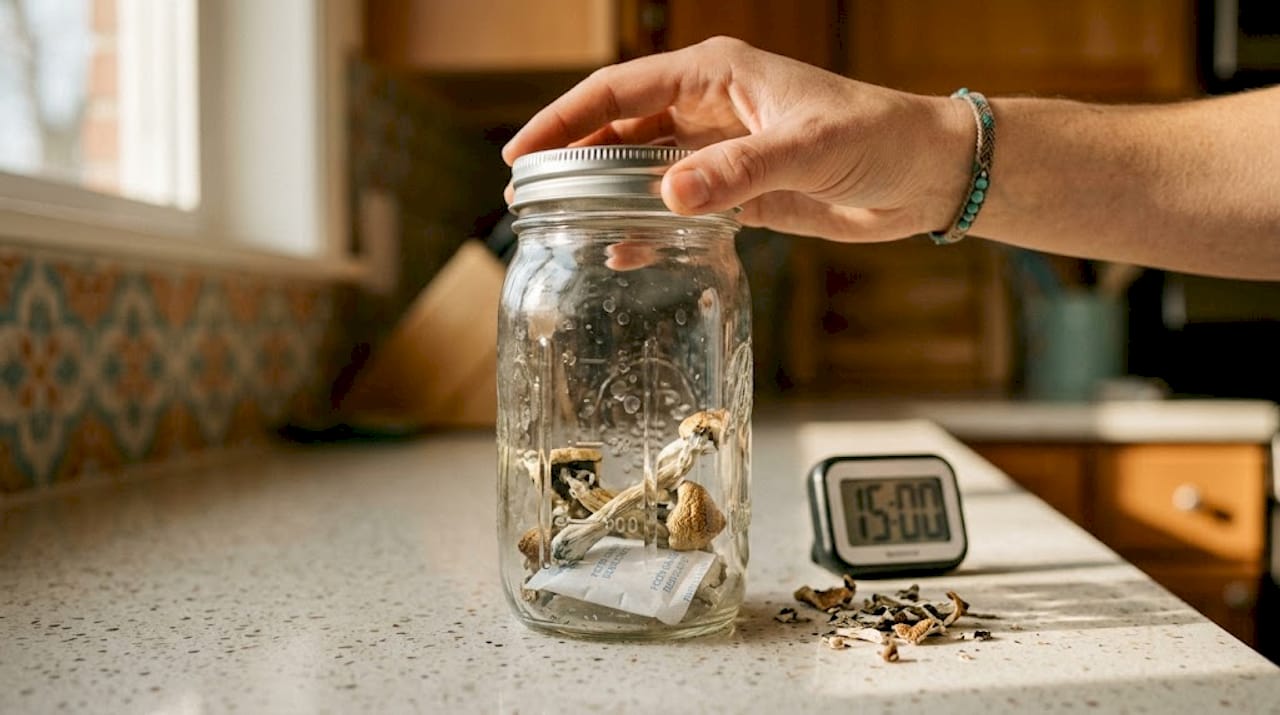
Appearance is not a reliable indicator of potency. You can have a beautifully preserved, bone-dry mushroom that has lost 30 to 40% of its active alkaloid content simply because it sat in a ziplock bag near a window for three months. The safe storage guidance we recommend goes into the specific protocols that protect both safety and effect quality.
Pro Tip: When you receive dried mushrooms, transfer them immediately to a glass mason jar with a fresh desiccant packet. Label the jar with the date and strain. Treat them like a quality spice: away from the stove, away from sunlight, away from the refrigerator door.
Testing, labeling, and real-world accuracy: Why numbers don’t tell the whole story
Even if you start with genetically excellent mushrooms, grow them perfectly, harvest at peak timing, and store them flawlessly, you still face a serious challenge when buying retail products: you often can’t fully trust what the label says.
A published PMC case series examined 12 retail psilocybin edibles and found that psilocybin was undetectable in some of the products. Some items contained psilocin without psilocybin. Others showed signs of ingredient substitution. This isn’t a fringe problem. It’s a structural issue in a market that lacks standardized testing requirements.
The problem compounds because extraction and testing methodology directly influences what gets reported. A supplier testing with HPLC (high-performance liquid chromatography) under one set of protocols may report 1.2% total alkaloids. The same batch sent to a different lab using a different solvent system might yield 0.9% or 1.5%. Neither result is necessarily wrong. They just measured slightly different things.
| Label claim type | Reliability level | What to look for |
|---|---|---|
| Batch-specific COA (certificate of analysis) | High | Third-party lab, specific batch number |
| General “lab tested” claim | Medium | Ask for documentation |
| No testing information | Low | Proceed with significant caution |
| Edible with no mushroom origin info | Very low | High adulteration risk |
When evaluating psilocybin products, smart buyers look for:
- Batch-specific certificates of analysis from independent labs, not the producer’s own testing
- Clear strain identification, not just species name
- Transparent sourcing information about where and how mushrooms were cultivated
- Named extraction or concentration process for any capsule or edible product
- Consistent potency across reorders, which indicates quality-controlled production
Understanding the full picture of psilocybin safety protocols means factoring in product verification, not just personal preparation. And following a clear mushroom safety guide helps you build a consistent framework for evaluating every purchase.
Beyond chemistry: Experience, dose, and ‘set and setting’
All the chemistry in the world only gets you partway to understanding what a psilocybin experience will actually feel like. The final layer of variables is entirely personal.
Reaction to psilocybin depends heavily on mental state, personality, immediate environment, and the specific quantity consumed. Two people taking identical mushrooms from the same batch on the same night can have profoundly different experiences. One may have a gentle, introspective journey. The other may feel overwhelmed and anxious. Same chemistry. Same dose. Completely different outcomes.
The psychological and contextual factors that most strongly shape the experience include:
- Mindset and emotional baseline — Entering an experience with unresolved stress or anxiety tends to amplify those feelings
- Intention — People who approach psilocybin with a clear, relaxed intention tend to navigate the experience more smoothly
- Physical environment — Indoor versus outdoor, familiar versus unfamiliar, comfortable versus tense settings all create different emotional textures during the experience
- Trusted company or solitude — Some people do better with a sober guide or trusted friend; others prefer privacy
- Stomach contents — Taking mushrooms on an empty stomach increases onset speed and peak intensity; eating beforehand softens and delays effects
- Tolerance and experience level — Regular users build partial tolerance. A gram might feel negligible to someone who uses weekly but quite significant to someone dosing for the first time
Pro Tip: Before any session, take 10 minutes to write down your intention for the experience. Even one sentence helps anchor your mindset and gives you something to return to if the experience gets challenging. This simple practice makes a measurable difference in outcomes.
If you’re figuring out where to start with amounts, the resource on dosing safely walks through the full spectrum from microdose to macrodose with clear, practical guidance.
Why most people misunderstand psilocybin potency
Here’s the uncomfortable reality: the way most consumers and even many sellers talk about psilocybin potency is fundamentally too simple. Milligrams on a label, strain names, and species classifications all get treated as reliable predictors of experience. None of them, alone, is sufficient.
The obsession with raw numbers misses what actually produces a reliable, repeatable experience: the full chain from genetics through cultivation, harvest, storage, product integrity, and personal context. A 3.5-gram dose of poorly stored cubensis with no testing history may deliver less effect than 1.5 grams of fresh, properly handled Melmac. Yet most people focus entirely on weight.
What separates informed buyers from everyone else is their insistence on transparency. Not just “how many milligrams” but which strain, when harvested, how stored, tested by whom, and with what methodology. That’s a high bar. But it’s the only bar that actually tells you something useful.
We also want to push back on the idea that potency is the primary goal. Chasing the strongest possible experience frequently leads to difficult trips that don’t produce the insight or healing people were looking for. Calibrated, well-informed use almost always produces better outcomes than maximum dosing. The psilocybin mushroom checklist we recommend covers this philosophy in practical detail, because responsible preparation is what separates a meaningful experience from a chaotic one.
Finding reliable psilocybin options in Canada
Navigating all these variables is genuinely easier when you’re working with a supplier who prioritizes transparency over hype.
At Three Amigos, we curate our dried mushroom selection with strain-specific sourcing and consistent quality standards built into every batch. Whether you’re new to psilocybin or an experienced user refining your approach, our dried mushroom selection is organized by strain so you can make informed choices, not just guesses. For those exploring structured, low-dose approaches, our microdose capsules offer precise, consistent dosing with clearly labeled content. And if you want to understand what to expect before your first or next session, our psilocybin experience guide walks you through every stage with practical, clear-headed preparation advice.
Frequently asked questions
Which psilocybin mushroom species are the most potent?
Species like Psilocybe azurescens and Psilocybe cyanescens generally contain more psilocybin than common cubensis, but strain-level variation within any species means a high-potency cubensis strain can outperform a poorly cultivated cyanescens.
Does drying or storing mushrooms reduce their potency?
Yes. Improper storage conditions including light, heat, oxygen, and moisture accelerate alkaloid breakdown, particularly psilocin degradation, and can meaningfully reduce effect strength even when mushrooms look intact.
Why do edibles sometimes vary in expected psilocybin content?
Retail psilocybin edibles can suffer from ingredient substitution, inconsistent formulation, and poor labeling. A case review of 12 retail edibles found psilocybin was undetectable in some products, highlighting how unreliable unverified sources can be.
Do laboratory potency numbers always reflect real experience?
Not reliably. Extraction and quantification methods differ between labs and can produce divergent results from the same material. Numbers are a useful starting point but shouldn’t be treated as precise predictions of experience.
What besides potency most strongly shapes a psilocybin experience?
Mindset, setting, and dose are just as influential as alkaloid content. Mental state, personality, and environment all interact with the chemistry to produce the actual subjective experience, which is why preparation matters as much as product quality.
Recommended
- Why mushroom potency varies: factors behind every dose
- Shroom tolerance explained: optimize your psilocybin experience
- How to Dose Psilocybin Safely for Best Results
- Psychedelic Mushroom Terms 2026: 0.2-1.3% Potency Guide

Thomas Wrona is a writer, designer, and wellness coach who believes that nature’s wisdom provides an antidote to the stress of modern life. As a former pro athlete, he’s all about staying in motion! When he’s not writing you’ll probably find Thomas outside.