

Psilocybin Safety Protocols: Protecting Wellness in Canada
Sorting fact from fiction about psilocybin can feel overwhelming for Canadians interested in safe microdosing for mental wellness. With curiosity growing but misinformation still common, understanding the real effects of this natural compound is crucial. This guide clears up common misconceptions, details the legal framework across Canada, and outlines safety measures to help you make informed choices when exploring microdosing protocols or considering online purchases.
Table of Contents
- Psilocybin Basics And Common Misconceptions
- Microdosing And Macrodosing: Protocol Variations
- Canadian Legal Framework For Psilocybin Use
- Quality Assurance And Safe Product Selection
- Harm Reduction And Risk Management Strategies
Key Takeaways
| Point | Details |
|---|---|
| Understanding Psilocybin | Psilocybin is a natural compound with a long history of use in various cultures for spiritual purposes and is not addictive like traditional substances. |
| Microdosing vs. Macrodosing | Microdosing offers subtle cognitive benefits, while macrodosing provides intense experiences; the choice depends on personal goals and preparation. |
| Legal Framework in Canada | Psilocybin remains a controlled substance in Canada, but emerging exemptions allow for therapeutic use under specific conditions. |
| Quality Assurance | Ensure product quality through testing, transparency, and detailed sourcing information to avoid potency inconsistencies and contaminants. |
Psilocybin Basics and Common Misconceptions
Psilocybin is a naturally occurring compound found in certain mushroom species that grow worldwide. It’s not a synthetic drug created in a laboratory—it’s been part of human history for centuries, used traditionally in various cultures for spiritual and ceremonial purposes. Understanding what psilocybin actually is forms the foundation for safe, informed use.
The chemical works by interacting with serotonin receptors in your brain, which explains why it produces altered perceptions, vivid hallucinations, and shifts in emotional intensity. These effects typically begin within 20-40 minutes of ingestion and last 4-6 hours depending on dose and individual metabolism.
What Psilocybin Actually Does
Research on psilocybin’s mental health impacts shows promise for treating mood disorders, anxiety, and depression. However, the scientific evidence is still developing, and much remains unknown about optimal dosing and long-term effects. Current research is preliminary but encouraging—this isn’t hype; it’s measured scientific progress.
The compound doesn’t create addiction in the traditional sense. Your brain won’t develop physical dependence like it does with alcohol or opioids. You won’t wake up craving mushrooms or experience withdrawal symptoms if you stop using them.
Common Misconceptions That Persist
Canadians encounter several widespread myths about psilocybin that deserve direct correction:
-
“One bad trip causes permanent brain damage” — Temporary psychological distress can occur, but psilocybin doesn’t cause structural brain damage or lasting cognitive impairment in most people.
-
“You’ll become addicted immediately” — Psilocybin has virtually zero addictive potential. Research shows it’s less habit-forming than caffeine or cannabis.
-
“Everyone hallucinates intensely” — Effects vary dramatically between individuals and dosages. Some people experience subtle perceptual shifts; others encounter vivid visions. Microdosing produces minimal to no perceptual changes.
-
“Psilocybin works the same way for everyone” — Body weight, metabolism, mental state, expectation, and environment all influence effects significantly.
Misconceptions often stem from outdated drug-war propaganda rather than current scientific evidence. Accurate information protects your wellness decisions.
Why These Myths Exist
Historical drug prohibition created an information vacuum. Decades of anti-drug messaging left few Canadians with factual information. Now that research is advancing, old narratives persist even as science shows something different.
The gap between public perception and actual research creates unnecessary anxiety. Many people worry needlessly because they’ve absorbed fears disconnected from reality.
Pro tip: When researching psilocybin safety, prioritize information from peer-reviewed journals and academic institutions over social media discussions or anecdotal claims. The difference between credible data and rumor is significant.
Microdosing and Macrodosing: Protocol Variations
Microdosing and macrodosing represent two fundamentally different approaches to psilocybin use, each with distinct intentions, dosages, and outcomes. Understanding the differences helps you choose what aligns with your wellness goals and circumstances.
Microdosing involves taking sub-hallucinogenic doses—typically 0.1 to 0.5 grams—on a regular schedule. Macrodosing means consuming larger doses (1-5 grams or more) designed to produce full psychedelic experiences with profound perceptual and emotional shifts.
The choice between them isn’t about which is “better.” It’s about what you’re trying to achieve.
The Microdosing Approach
Microdosing research shows mixed preliminary results on mood and cognitive improvements, though the evidence base is still developing. People microdose to enhance focus, reduce anxiety, or improve emotional resilience without disrupting their daily routine or work.
At microdoses, you don’t hallucinate noticeably. Most people report feeling slightly different—perhaps more creative, clearer thinking, or emotionally balanced—but nothing that interferes with normal functioning.
Common microdosing schedules include:
- Every third day — Take a microdose, skip two days, repeat
- Five days on, two days off — Daily microdosing during the work week, rest on weekends
- Twice weekly — Flexible schedule with two doses spaced out
Many Canadians choose microdosing because it fits into existing routines. You can microdose before work, during a creative project, or when managing anxiety without anyone noticing anything different about you.
The Macrodosing Approach
Macrodosing creates a genuinely different experience. At these doses, hallucinations are vivid, emotions intensify dramatically, and your perception of reality shifts noticeably. A macrodose typically lasts 4-6 hours and requires a controlled environment where you can fully experience the effects.
Macrodosing serves different purposes than microdosing:
- Therapeutic exploration — Processing trauma, grief, or deep emotional patterns
- Spiritual or personal insight — Seeking profound introspection or existential understanding
- Reset experiences — Using the intensity to break entrenched thought patterns
- Recreational exploration — Experiencing the full range of psilocybin’s effects
Macrodosing demands more preparation, a safe setting, ideally a trusted person present, and time afterward to integrate the experience.
Key Differences at a Glance
| Aspect | Microdosing | Macrodosing |
|---|---|---|
| Typical dose | 0.1–0.5g | 1–5g+ |
| Perceptual changes | Minimal to none | Pronounced hallucinations |
| Duration | 2–4 hours | 4–6 hours |
| Daily function | Maintains normal activities | Requires safe, controlled setting |
| Frequency | Regular schedule (2–3x/week) | Occasional (1–4x/year) |
| Integration time | Minimal | Several days recommended |
The research shows microdosing effects are subtle and individual, while macrodosing produces unmistakable perceptual changes that demand respect and preparation.
Neither approach is inherently safer than the other—safety depends entirely on proper protocol, set, setting, and individual factors. Someone microdosing daily without monitoring mood changes faces different risks than someone macrodosing with preparation and support.
To help clarify the distinction between microdosing and macrodosing, here is a concise summary table of context and considerations:
| Factor | Microdosing Context | Macrodosing Context |
|---|---|---|
| Suitable Environment | Regular daily setting | Private, calm, supervised space |
| Preparation Required | Minimal, track mood and intention | Extensive, including support person |
| Potential for Disruption | Very low | High, disruption to routine |
| Primary Motivation | Cognitive enhancement or mood support | Intense self-exploration or therapy |
Pro tip: Start with clarity about your actual goal before choosing a protocol. Microdosing for subtle mood improvement and macrodosing for deep processing require different commitment levels and safety considerations.
Canadian Legal Framework for Psilocybin Use
Canada’s legal status for psilocybin is clear: it remains a controlled substance under the Controlled Drugs and Substances Act. Possession, production, and sale without authorization are illegal, period. However, the legal landscape is shifting, with emerging exemptions and therapeutic pathways changing how access actually works.
Understanding the current framework matters because it directly affects your options, risks, and what constitutes legal access in your province.
Current Legal Status in Canada
Psilocybin and psilocin are controlled substances in Canada, meaning private possession carries legal consequences. However, this doesn’t mean zero legal pathways exist. The law distinguishes between casual possession and authorized therapeutic or research use.
Health Canada controls all legal access through strict authorization processes. No psilocybin products are currently approved for sale in Canadian pharmacies or clinics. This matters—it means any psilocybin you encounter outside clinical trials or exemptions exists in a legal gray area.
The penalties for unauthorized possession vary by amount and jurisdiction, but they remain serious. Understanding your actual legal exposure helps you make informed choices.
Exemptions and Emerging Access Routes
Recent legal developments have created new cracks in the strict prohibition. Health Canada has granted exemptions allowing supervised psilocybin-assisted psychotherapy for patients with serious medical conditions like terminal illness or treatment-resistant depression.
A Federal Court ruling mandated that Health Canada reconsider denying exemptions for health-care professionals seeking psilocybin for experiential training. This decision signals shifting judicial interpretation of whether exemptions should be available.
Key exemption categories include:
- Patient exemptions — For individuals with documented medical conditions under professional supervision
- Practitioner exemptions — For licensed therapists or clinicians working within clinical frameworks
- Research exemptions — For approved clinical trials examining psilocybin’s therapeutic potential
- Compassionate access — For terminal patients under specific conditions
These exemptions don’t create a “legal” market. They create narrow authorized pathways for specific individuals in specific circumstances.
What This Means for You
Psilocybin delivery services and online retailers operate in regulatory gray zones. They exist and operate within Canada, but their legal status remains contested. This creates real uncertainty for consumers.
Your actual legal risk depends on several factors: amount possessed, intent (personal use versus distribution), your jurisdiction, and local enforcement priorities. Some provinces enforce more strictly than others.
The law remains officially prohibitive, but enforcement practices and exemption availability are evolving. This gap between written law and practical reality creates confusion, not protection.
Provincial variation matters too. While federal law is uniform, provincial police and prosecutors exercise discretion differently. Toronto, Vancouver, and Montreal have notably different enforcement approaches than rural areas.
The safest position legally remains complete avoidance. The realistic position acknowledges that many Canadians access psilocybin, that consequences vary, and that the legal framework is in active flux.
Understanding legal access is critical. Here is a reference table outlining psilocybin access pathways in Canada:
| Access Type | Who Qualifies | Oversight Required |
|---|---|---|
| Patient Exemption | Diagnosed medical condition | Medical professional |
| Practitioner Exemption | Licensed practitioner | Health authority approval |
| Research Exemption | Clinical trial participant | Institutional ethics board |
| Unregulated Market | General public | No formal oversight |
Pro tip: If you’re considering psilocybin access, verify current exemption eligibility through licensed health practitioners rather than assuming online retailers operate in clear legal territory. Professional involvement provides both medical oversight and potential legal protection.
Quality Assurance and Safe Product Selection
Not all psilocybin products are created equal. Natural variation means two mushrooms of the same species can contain vastly different potency levels. When you’re purchasing online or through dispensaries, quality assurance isn’t optional—it’s the difference between predictable effects and dangerous surprises.
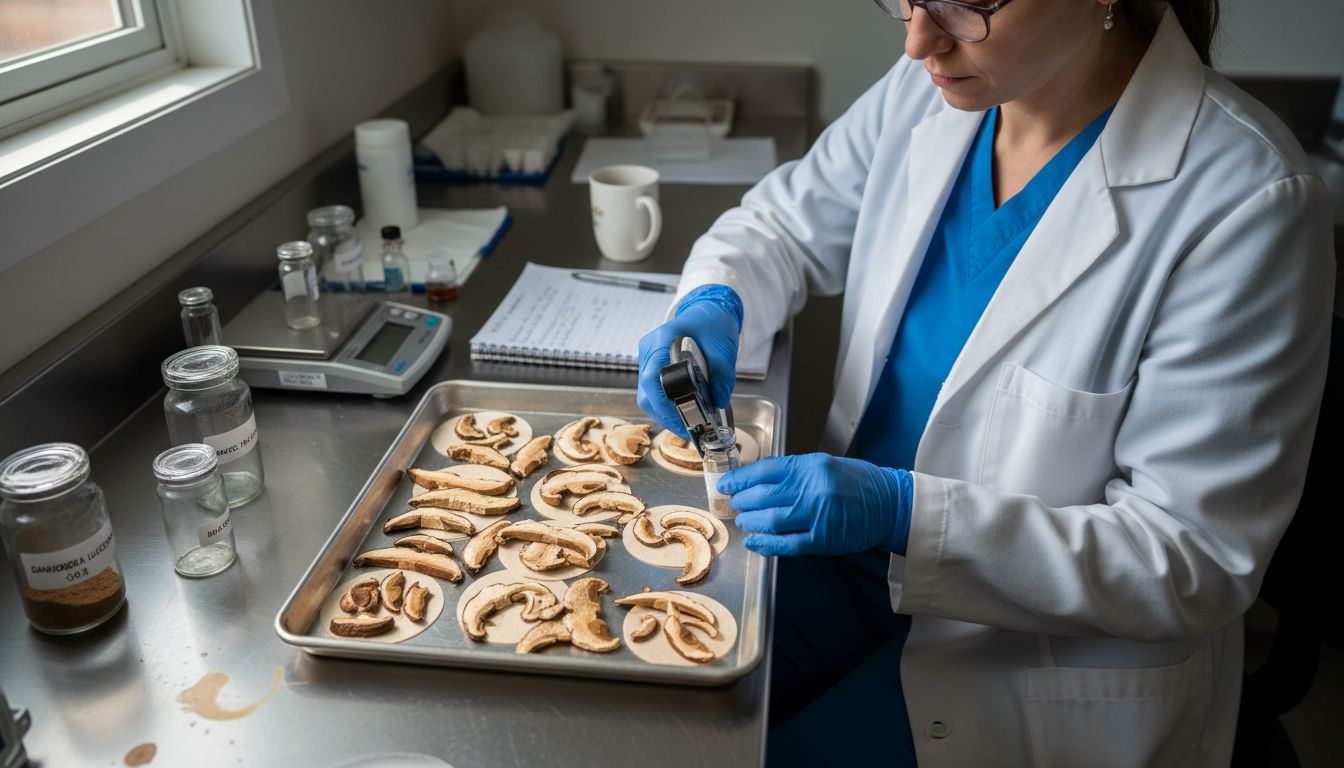
Canadian producers and retailers serious about safety follow rigorous testing protocols. Understanding what to look for protects your wellness and your body.
Why Quality Matters for Psilocybin
Psilocybin content varies wildly in natural mushrooms. One dried gram might contain 0.3 milligrams of psilocybin, while another gram from the same batch contains 0.8 milligrams. This inconsistency creates real problems when you’re trying to dose safely and predictably.
Good Manufacturing Practices ensure consistent quality and dosing in legitimate clinical operations. These standards demand rigorous quality controls at every production step—from cultivation through packaging.
Contamination risks add another layer. Mushrooms absorb heavy metals, bacteria, and mold from their growing environment. Untested products might contain lead, cadmium, or dangerous pathogens you can’t see or taste.
What Testing Should Cover
Reputable suppliers conduct comprehensive testing across multiple parameters:
- Psilocybin and psilocin potency — Confirms actual compound concentration
- Microbial analysis — Tests for E. coli, salmonella, and mold species
- Heavy metal screening — Detects lead, cadmium, arsenic, and mercury
- Solvent residues — Verifies extraction processes left no harmful chemicals
- Moisture content — Ensures proper storage and prevents degradation
Specialized analytical testing services provide Health Canada-authorized verification for psilocybin products. These labs use chromatography and mass spectrometry to precisely measure active compounds.
When a retailer mentions testing, ask for third-party verification. Independent labs provide more credibility than manufacturer self-testing.
How to Evaluate Product Quality
Transparency is your first filter. Legitimate retailers openly share testing results. They list potency ranges, provide batch numbers, and can trace product origin.
Red flags include:
- No testing information available
- Vague dosing claims (“this is strong” instead of actual milligram amounts)
- Inconsistent product appearance or texture
- Sellers unwilling to discuss sourcing or quality protocols
- Prices suspiciously below market rates
Trustworthy suppliers embrace transparency because quality assurance protects both you and their business. Secrecy usually indicates corners were cut.
Product format also affects quality consistency. Capsules with precisely measured microdoses offer better accuracy than eyeballing dried mushrooms. Standardized chocolate bars or gummies provide dosing certainty that loose mushrooms simply cannot match.
Ask about batch testing frequency. Monthly or quarterly testing shows ongoing commitment to safety. Annual testing suggests less rigorous oversight.
Pro tip: Request COA (Certificate of Analysis) from any retailer before purchasing—this third-party lab document confirms potency, microbial safety, and contaminant levels. Reputable sellers provide it without hesitation.
Harm Reduction and Risk Management Strategies
Harm reduction isn’t about encouraging psilocybin use. It’s about acknowledging reality: people use psilocybin, and practical strategies minimize actual damage. Whether you’re microdosing for wellness or exploring macrodosing, specific protocols dramatically reduce psychological and physical risks.
Canadian health authorities emphasize that risk management requires preparation, monitoring, and professional oversight when available. These aren’t optional add-ons—they’re the foundation of safe practice.
Pre-Use Screening and Assessment
Risk management in clinical settings prioritizes participant screening and monitoring to prevent adverse events. Personal use requires similar self-assessment, even without professional oversight.
Before using psilocybin, honestly evaluate your mental health status. Certain conditions create genuine contraindications:
- Active psychosis or psychotic disorders — Psilocybin can trigger or worsen psychotic episodes
- Unmanaged bipolar disorder — Risk of mood destabilization or manic episodes
- Recent suicidal ideation — Requires professional support before considering psilocybin
- Family history of schizophrenia — Genetic vulnerability increases psychotic risks
- Current severe anxiety disorders — May intensify rather than resolve through psilocybin
If you’re on psychiatric medications, consult your prescriber. Some medications interact unpredictably with psilocybin, while others provide stabilization.
The Critical Elements of Safe Protocol
Regardless of dose, these factors protect your safety:
Set — Your mindset matters enormously. Use psilocybin when you’re mentally stable, emotionally grounded, and have clear intentions. Avoid use during crisis, major life stress, or emotional turmoil.
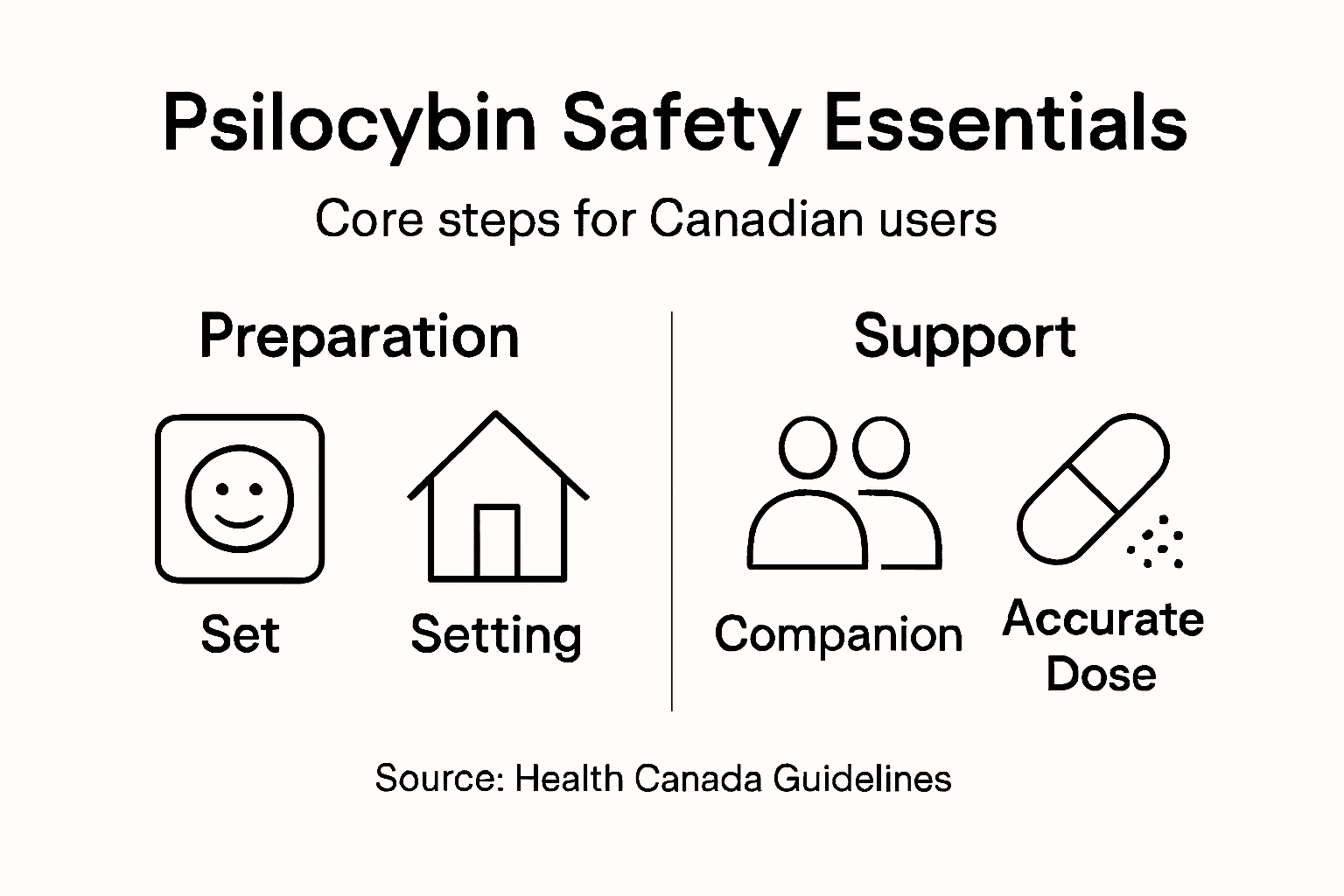
Setting — Physical environment shapes the experience dramatically. Safe settings are quiet, comfortable, free from interruptions, and ideally with a trusted person present. Lock doors. Silence phones. Plan for 6-8 hours of uninterrupted time.
Support — Having a sober, trusted companion present dramatically reduces panic and provides grounding if things feel overwhelming. They don’t need to participate—just be present and calm.
Dosage accuracy — Know exactly what you’re consuming. Vague “doses” create preventable accidents. Use the testing information discussed earlier to verify potency.
Managing Difficult Experiences
Not every psilocybin experience feels positive. Anxiety, fear, or intense emotions can arise during use. These aren’t failures—they’re experiences you can navigate:
- Stay grounded in your body through breathing techniques
- Remind yourself the effects are temporary and will pass
- Shift environments if needed—go outside, change rooms, adjust lighting
- Use music, nature, or familiar objects to stabilize emotional intensity
- Accept difficult emotions rather than fighting them
A structured harm reduction workflow helps you prepare for and manage risks before, during, and after use. Written protocols create clarity when your mind is altered.
Professional oversight, clear protocols, and honest self-assessment separate safe exploration from reckless experimentation.
Post-Use Integration
After psilocybin effects wear off, integration matters. Spend time journaling, reflecting, or discussing your experience with a trusted person. Integration helps translate insights into meaningful change.
Watch for lingering mood changes, unusual thoughts, or persistent anxiety. Most people feel normal within 24 hours. Anything longer warrants caution and possibly professional consultation.
Pro tip: Create a written safety plan before using psilocybin—include emergency contacts, grounding techniques, set intentions clearly, and identify your support person. Having this documented prevents panic-driven decisions during the experience.
Elevate Your Psilocybin Experience with Safety and Confidence
Navigating the complex world of psilocybin in Canada can feel overwhelming, especially with the critical need for proper safety protocols, accurate dosing, and legal awareness highlighted in this article. Whether you are looking to explore microdosing for subtle mood enhancement or preparing for a macrodosing experience, understanding these challenges is essential to protect your wellness journey. At Three Amigos, we recognize these concerns and offer a trusted space where you can access high-quality psilocybin products combined with educational resources to help you make informed and responsible decisions.
Discover our extensive selection of carefully tested dried shrooms, capsules, and edibles, designed with precise potency and quality assurance in mind. We prioritize harm reduction, transparency, and up-to-date scientific insights so your psilocybin use can be both safe and rewarding. Start your path toward better mental health and consciousness expansion today by exploring our online dispensary. Learn more about safe psilocybin protocols and how to integrate these practices effectively through our comprehensive guides. Take control now and shop confidently at Three Amigos where your wellness and safety come first.
Frequently Asked Questions
What are the key differences between microdosing and macrodosing psilocybin?
Microdosing involves taking sub-hallucinogenic doses (0.1 to 0.5 grams) on a regular schedule, usually for cognitive enhancement or mood support. Macrodosing, on the other hand, involves larger doses (1-5 grams or more) that produce full psychedelic experiences. The effects of macrodosing include intense emotional shifts and vivid hallucinations.
How can I ensure the quality of psilocybin products before using them?
To ensure quality, look for vendors who provide testing results from third-party labs, including Certificates of Analysis (COA). These documents should confirm the potency of psilocybin, as well as screen for contaminants like heavy metals and harmful microbes. Transparency in sourcing and testing is critical for safety.
What precautions should be taken before using psilocybin?
Before using psilocybin, evaluate your mental health status and identify any potential contraindications such as active psychosis or unmanaged bipolar disorder. It’s also essential to prepare a safe setting, have a trusted companion present, and ensure you know your exact dosage to manage risks effectively.
How can I manage a difficult psilocybin experience if it arises?
If you encounter a difficult experience, focus on grounding techniques such as deep breathing, remind yourself the effects are temporary, and consider changing your environment to a more comfortable space. Listening to calming music or engaging with nature can also help stabilize emotional intensity.
Recommended
- Psilocybin Delivery Services in Vancouver: What You Need to Know
- Complete Magic Mushroom Dosage Information Guide | 3 Amigos
- How to Dose Psilocybin Safely for Best Results
- Psychedelic Therapy | 3 Amigos

Thomas Wrona is a writer, designer, and wellness coach who believes that nature’s wisdom provides an antidote to the stress of modern life. As a former pro athlete, he’s all about staying in motion! When he’s not writing you’ll probably find Thomas outside.