

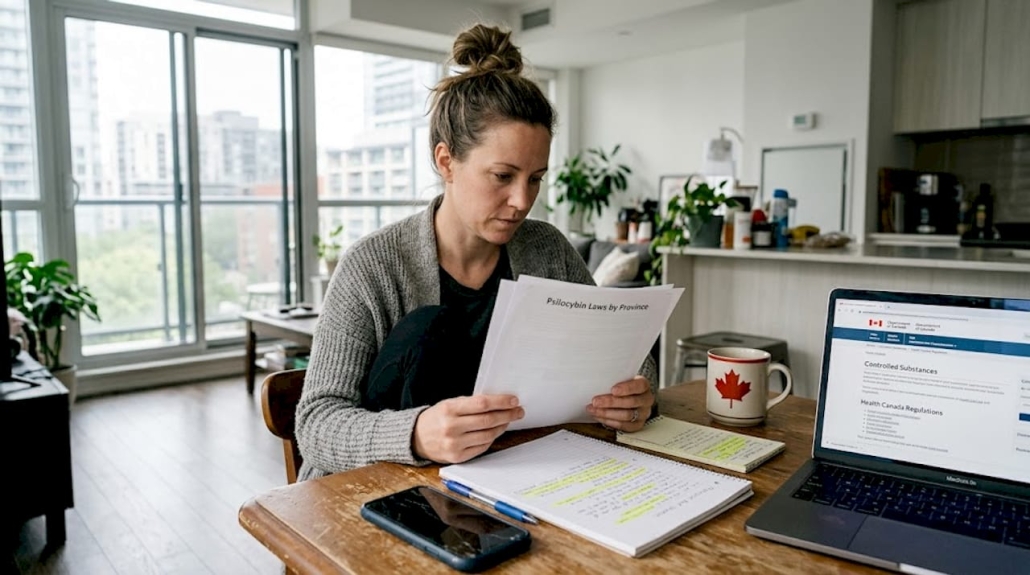
Magic Mushroom Shopping Tips for Canadians: Stay Safe
TL;DR:
- Buying magic mushrooms in Canada poses legal risks and safety concerns due to unregulated markets.
- Verify lab results, safety info, and transparent customer support before considering any grey-market purchase.
- Practicing harm reduction, proper dosing, and setting awareness is vital for safer use.
Shopping for magic mushrooms in Canada means navigating a landscape where quality is unpredictable, the legal framework is strict, and misinformation is everywhere. Potency swings wildly between batches, grey-market sites multiply faster than regulations, and even well-intentioned buyers can end up with contaminated product or unexpected legal exposure. The good news: informed consumers make better decisions. Whether you’re curious about microdosing, exploring therapeutic potential, or just want to understand your options, these shopping tips will help you move through Canada’s complex psilocybin landscape with your eyes open.
Table of Contents
- Understand the legal landscape before you shop
- Spot red flags: How to evaluate dispensaries and websites
- Quality checklist: Potency, testing, and contaminants
- Safer use tips: Harm reduction, dosing, and trip preparation
- Why safe access is more than just shopping smart: Hard truths for Canadians
- Explore safe, science-backed options with 3 Amigos
- Frequently asked questions
Key Takeaways
| Point | Details |
|---|---|
| Legal access is limited | Buying magic mushrooms is only legal via clinical trials or special medical programs in Canada. |
| Evaluate dispensaries critically | Check for lab testing, harm-reduction info, and be cautious with unregulated sellers. |
| Potency and contamination vary | Grey-market mushrooms show huge variability in strength and frequently lack safety testing. |
| Harm reduction matters | Always start with low doses, use safe settings, and understand personal risk factors before use. |
Understand the legal landscape before you shop
Before you spend a single dollar, you need to understand exactly where the law stands. Psilocybin mushrooms are Schedule III controlled substances under Canada’s Controlled Drugs and Substances Act, making non-medical possession and purchase federally illegal. That means no store, website, or pop-up market can legally sell you magic mushrooms for recreational or personal use without violating federal law. Knowing this protects you from both legal and health risks.
So what are the lawful pathways? According to Health Canada official guidance, legal access routes are limited to three specific channels:
- Clinical trials: Approved research studies where participants receive psilocybin under strict protocols.
- Special Access Program (SAP): A Health Canada program that allows physicians to request access to restricted substances for patients with serious or life-threatening conditions.
- Section 56 exemptions: Granted by the Minister of Health, these allow specific individuals or organizations to possess or produce controlled substances for medical or scientific purposes.
The SAP approval rate for psilocybin applications sits around 68%, meaning most patients who apply through a physician do receive approval. That’s actually a meaningful success rate and a signal that the system, while slow, is not a dead end for those who need it most.
Personal liability is real. Buying from a grey-market dispensary, even one that looks polished online, still exposes you to potential criminal charges. The risk may feel abstract until it isn’t. Understanding psilocybin legality in Canada in full before you make any purchase is the most protective thing you can do.
A note from harm reduction advocates: If therapeutic use is your goal, speak with a healthcare provider before exploring any access route. SAP and clinical trials exist specifically to give patients safer, monitored access to psilocybin, and a physician can guide you through whether you qualify.
For a full breakdown of mushroom legal status across provinces, dig into the specifics before assuming your location changes the rules. It largely doesn’t at the federal level.
Spot red flags: How to evaluate dispensaries and websites
Once you understand the law, your next challenge is choosing where, or whether, to shop. The grey market in Canada is large and growing, but not all sellers operate with the same standards. Knowing what to look for can protect your health and your wallet.
A Canadian Institute of Health Research study found that unregulated dispensaries operate in 35.7% of major Canadian cities, and only 31.8% of those sites warn users about psychosis risk. That gap between access and safety information is the biggest hazard in the grey market. You’re essentially shopping blind if you skip due diligence.
Here’s how to check legitimacy before handing over payment:
- Look for lab results. Batch-specific certificates of analysis (COAs) showing potency, mold, and heavy metals are the gold standard. Only 9.1% of online sites publish these, so their presence immediately signals a more responsible seller.
- Read harm reduction content. Any trustworthy supplier publishes clear guidance on dosing, contraindications, and what to do if a session becomes overwhelming.
- Check for transparent contact info. Anonymous sites with no customer support, no physical or business address, and no refund policies are red flags.
- Search for independent reviews. Look beyond the site’s own testimonials. Community forums and Reddit threads often surface real user experiences.
- Assess health claim language. Vague promises like “cure depression” or “guaranteed healing” without citations are a warning sign.
- Verify return or quality policies. Sellers who stand behind their products explain what happens if something arrives damaged or incorrectly labeled.
Pro Tip: Never trust sites that make bold, unverified health claims without linking to peer-reviewed research. Responsible sellers educate; predatory ones promise.
Understanding a safe intake process for psilocybin will help you ask the right questions when evaluating a seller’s harm reduction content. If the seller can’t answer basic safety questions, that tells you everything. Review psilocybin safety protocols so you can benchmark what good guidance actually looks like.
Quality checklist: Potency, testing, and contaminants
Even among dispensaries that seem credible, quality varies dramatically. This is not a minor concern. Potency can range from 0.2% to over 2% psilocybin content, and risks include heavy metals or microbes that you simply cannot detect by looking at the product. A dose that felt moderate from one batch could be overwhelming from another.

Independent lab testing using HPLC (High-Performance Liquid Chromatography) is the most reliable method for verifying potency. HPLC separates and measures chemical compounds with high precision, making it the industry benchmark for pharmaceutical-grade accuracy. If a seller doesn’t reference this method or a comparable standard, their “lab results” may be self-reported and unreliable.
Here’s a practical comparison of what you should expect across quality tiers:
| Quality indicator | Reputable seller | Grey-market average |
|---|---|---|
| Potency range disclosed | Yes, per batch | Rarely or never |
| HPLC or equivalent testing | Referenced | Usually absent |
| Heavy metal screening | Included in COA | Uncommon |
| Microbial/mold results | Provided | Rarely provided |
| Strain-specific info | Detailed | Generic or missing |
A quality mushroom report should include:
- Psilocybin and psilocin percentages specific to the batch, not the strain in general
- Heavy metals panel covering lead, arsenic, mercury, and cadmium
- Microbial contamination results including total yeast, mold, and coliforms
- Testing lab name and accreditation so you can verify independently
- Date of testing to confirm the results are current
Pro Tip: If lab results are missing from a product page, ask the seller directly before purchasing. A legitimate operation will send them without hesitation. If they can’t provide documentation, walk away.
You can use our psilocybin shopping checklist to run through these points systematically. If you’re considering edibles, the same standards apply. Review safe use of mushroom edibles to understand how potency factors into dosing when psilocybin is embedded in food products.
Safer use tips: Harm reduction, dosing, and trip preparation
Great shopping doesn’t end at purchase. Use is where most risks actually arise. Even well-sourced mushrooms can produce difficult experiences if basic harm reduction principles are ignored.
Research consistently shows that bad trips are 40% more likely due to poor set and setting or an absence of harm reduction planning. “Set” refers to your mindset going in. “Setting” refers to your physical and social environment. Both are controllable variables, and both matter enormously.
Here’s a side-by-side comparison of how these variables affect outcomes:
| Factor | Lower risk | Higher risk |
|---|---|---|
| Mindset (set) | Calm, intentional, prepared | Anxious, impulsive, unresolved stress |
| Environment (setting) | Safe, familiar, comfortable | Public, chaotic, unfamiliar |
| Dose | Low to moderate, verified potency | High, unknown potency |
| Support | Sober trip sitter present | Alone or with impaired companions |
| Health status | No contraindications | History of psychosis, pregnancy, medications |
Follow these steps for a safer experience:
- Start with a low dose. This is especially important with a new supplier or unknown batch. A threshold dose of 0.5g to 1g dried mushroom lets you assess potency before committing to more.
- Arrange a trip sitter. A trusted, sober person who knows you’re using is the single most effective safety net for a difficult experience.
- Set your intention. Know why you’re using and what you hope to get from the experience. Vague or impulsive intent increases psychological risk.
- Prepare your space. Have water, comfortable clothes, and a playlist or quiet environment ready before you begin.
- Know when not to use. Anyone with a personal or family history of psychosis, schizophrenia, or bipolar disorder should avoid psilocybin. Pregnancy and certain medications, particularly SSRIs, are also contraindications.
Expert consensus: Preparation is not optional. Set, setting, and dose are the three variables that most reliably predict outcome. Skipping even one of them significantly raises risk.
Our safe psilocybin use guide goes deeper into each of these areas with practical, experience-based recommendations.
Why safe access is more than just shopping smart: Hard truths for Canadians
Here’s something the shopping tips alone won’t tell you: even if you follow every piece of advice in this article perfectly, you have not eliminated your risk. You’ve reduced it. That’s a meaningful difference.
The grey market operates without accountability. If a batch is contaminated, there is no regulatory body to report it to and no refund mechanism that carries legal weight. You have no recourse in the way you would with a licensed pharmacy. That gap is not a minor inconvenience. It’s a structural hazard.
At the same time, clinical programs and SAP exist precisely because the government recognizes that some people have legitimate therapeutic needs. These programs are slower and more bureaucratic than buying online, but they offer something grey-market access never can: accountability, monitoring, and legal protection. For anyone seeking mental health benefits of psilocybin, these formal channels deserve serious consideration.
The uncomfortable truth is that the Canadian legal framework is inconsistent. Enforcement is uneven, the therapeutic promise of psilocybin is real and growing in scientific credibility, yet policy has not kept pace. Informed consumers exist in that gap. The best thing you can do is stay educated, advocate for policy reform, and make decisions that put your safety first, not convenience.
Explore safe, science-backed options with 3 Amigos
For those wanting reliable, evidence-backed options and guidance, here’s how 3 Amigos can help.
3 Amigos prioritizes quality, education, and harm reduction at every step. Whether you’re just starting to explore psilocybin science and benefits or you’re ready to shop with confidence, the platform provides the resources you need to make informed decisions.

Browse dried magic mushrooms online with detailed strain information, or explore psilocybin microdose capsules for a measured, beginner-friendly format. Every product listing is paired with safety information so you’re never shopping without context. 3 Amigos exists to help you access quality products and the knowledge to use them wisely.
Frequently asked questions
Is it legal to buy magic mushrooms for personal use in Canada?
No. Non-medical possession is illegal under federal law. Magic mushrooms are Schedule III controlled substances, and purchasing them outside of clinical trials or special programs carries real legal risk.
How can I access magic mushrooms legally in Canada?
Legal access routes include clinical trials, the Special Access Program, and Section 56 exemptions. These pathways require medical or research justification and physician involvement.
What are the main risks of buying from grey-market dispensaries?
Risks include legal charges, unknown potency, contamination, and almost no harm reduction guidance. Grey-market dispensaries lack the testing and safety warnings that responsible access requires.
What should I look for when choosing a magic mushroom supplier?
Prioritize batch-specific lab results, clear harm reduction content, and responsive customer support. Lab testing is rare in this market, so suppliers who provide certificates of analysis stand out for the right reasons.
Are there safer ways to use magic mushrooms if I choose to purchase them?
Yes. Start low, use with a sober sitter, and know your contraindications. Contraindications include a history of psychosis and pregnancy, and harm reduction planning consistently reduces the likelihood of a difficult experience.
Recommended
- Magic mushroom safety workflow: a Canadian guide
- How to Safely Purchase Magic Mushrooms in Canada: A Guide
- Magic Mushroom Delivery Canada: The Ultimate Guide
- Psilocybin mushroom checklist: safe steps for Canadians

Thomas Wrona is a writer, designer, and wellness coach who believes that nature’s wisdom provides an antidote to the stress of modern life. As a former pro athlete, he’s all about staying in motion! When he’s not writing you’ll probably find Thomas outside.


