
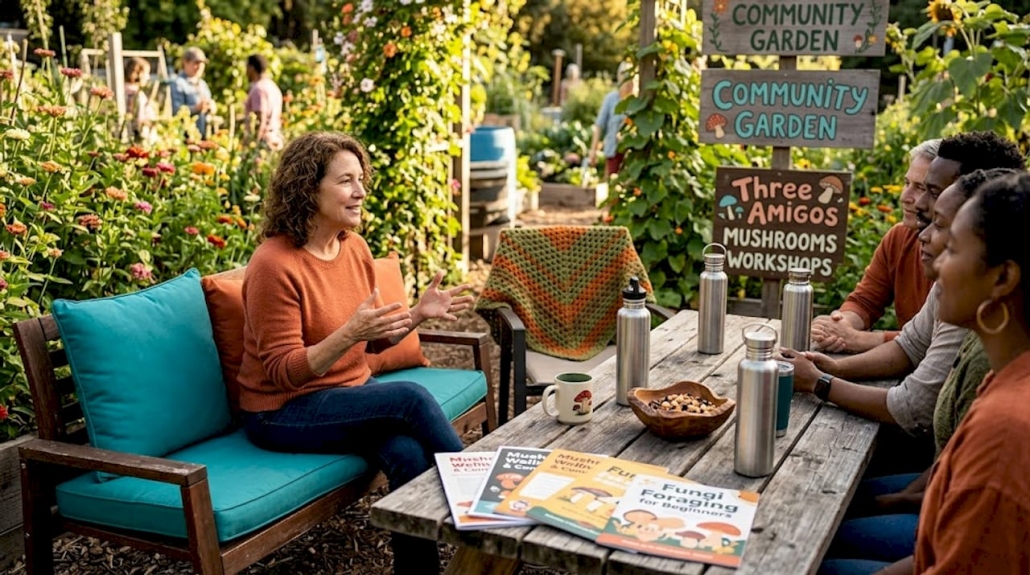
The Role of Community in Psychedelic Use
TL;DR:
- Community plays a crucial role in shaping positive and safe psychedelic experiences through support, shared intentions, and ongoing integration. Traditional ceremonies demonstrate that structure, relational accountability, and shared purpose enhance safety and healing, principles modern communities should adopt. Scientific research confirms that relational support reduces risks, improves psychological outcomes, and strengthens long-term resilience beyond clinical settings.
Most people picture psychedelic use as a solo journey: one person, one experience, one mind turning inward. That picture is incomplete. The role of community in psychedelic use shapes outcomes in ways the molecule alone cannot. From indigenous ceremonies conducted over thousands of years to modern peer support lines and integration circles, social context determines whether a psychedelic experience becomes transformative healing or a destabilizing event with no support structure to catch you. What surrounds the experience matters just as much as what’s in it.
Table of Contents
- Key takeaways
- The role of community in psychedelic use across history
- What science says about social support in psychedelic experiences
- Contemporary community models for safer psychedelic use
- Challenges and nuances in communal psychedelic practice
- Practical ways to find and build your psychedelic community
- My perspective: community is the medicine, not the add-on
- Explore safe psychedelic use with 3amigos
- FAQ
Key takeaways
| Point | Details |
|---|---|
| Community buffers hard experiences | Relational support during and after a session reduces the negative impact of challenging psychedelic moments. |
| Shared experiences strengthen bonds | Couples who use psychedelics together report measurably higher relationship satisfaction and mutual understanding. |
| Peer support shapes set and setting | Knowing a support system exists lowers anticipatory anxiety before a session, even without direct contact. |
| Most use happens outside clinics | An estimated 95% of psychedelic use occurs outside clinical settings, making community models critical for safety at scale. |
| Integration groups prevent distress | Ongoing peer groups provide shared reflection and validation long after a retreat or session ends. |
The role of community in psychedelic use across history
You don’t have to look far to see that communal psychedelic use is not a modern invention. Indigenous peoples across the Americas, Africa, and Oceania have been conducting plant medicine ceremonies within tightly organized social structures for millennia. The mazatec healers of Oaxaca who work with psilocybin mushrooms, the Shipibo curanderos facilitating ayahuasca ceremonies in the Amazon, the Native American Church and its ceremonial peyote use: all of these traditions share one core principle. The medicine is embedded in a web of relationships, roles, and responsibilities.
What makes traditional communal ceremonies work is not just the plant. It’s the container.
- Defined roles: Traditional ceremonies assign specific responsibilities to healers, assistants, participants, and community members. Everyone knows their function.
- Shared intention: The group enters with a collective or at least mutually understood purpose, whether healing, rites of passage, or communal renewal.
- Post-ceremony integration: In many traditions, the experience doesn’t end when the ceremony does. Community meals, storytelling, and continued guidance follow.
- Intergenerational knowledge: Elders pass down hard-won understanding about the medicine, its risks, and its uses, creating a living safety net.
Modern psychedelic communities have a lot to learn from this architecture. The tendency to extract rituals from their cultural context, sometimes called the “retreat industry problem,” creates real risks. Using sacred indigenous frameworks without the lineage, training, or relational accountability behind them can harm both participants and the source communities. Respectful engagement means learning from these traditions while recognizing that you aren’t entitled to replicate them wholesale. The lesson isn’t the ceremony itself. It’s the underlying logic: safety comes from structure, and structure is built by community.
What science says about social support in psychedelic experiences
The research on this has moved well beyond anecdote. Studies now directly examine how community and relational support change the measurable outcomes of psychedelic use.
A survey of 1,867 participants using classic psychedelics found that therapeutic-like relational support reduced the negative impact of life stress on challenging experiences while improving overall psychological well-being. That’s not a minor finding. It means the presence of a supportive person or group can functionally change the risk profile of a difficult session.
Shared use within close relationships produces measurable benefits too. Research using the Shared Reality Questionnaire showed that sharing a psychedelic experience with a romantic partner increased mutual understanding and collaboration between partners, enhancing relationship satisfaction after the experience. The experience becomes a shared reference point, a kind of emotional landmark both people can return to.
On the integration side, the data is equally clear:
- Practitioners surveyed across multiple studies ranked peer and community support among the top five strategies for managing post-psychedelic difficulties, sitting alongside formal psychotherapy.
- Integration groups provide what clinical sessions often can’t: continuity. Therapy may last an hour per week, but peer circles can offer daily or ongoing contact during vulnerable windows.
- Community-based integration fills critical gaps in clinical systems by providing mutual validation and shared reflection that prevents distress from compounding over time.
There’s also a psychological safety effect worth understanding. Research from Fireside Project shows that simply knowing a support system exists changes anticipatory anxiety before a session, which directly influences set and setting. You don’t even have to call the hotline. The knowledge that someone will answer if you need them alters the emotional starting point of the experience.
Contemporary community models for safer psychedelic use
The clinical model of psychedelic therapy is valuable, but it reaches a narrow slice of people. High costs, gatekeeping by diagnosis, and limited availability mean that 95% of psychedelic use occurs outside clinical infrastructure entirely. Community models aren’t just a nice supplement to clinical care. For most people, they’re the only option.
Here are the main models shaping how communities support psychedelic use today:
- Peer support lines: Organizations like Fireside Project operate crisis and support lines staffed by trained volunteers who can assist people mid-experience or post-experience. The existence of these lines also serves a preventive function by reducing pre-session anxiety.
- Psychedelic societies: Local and online groups that create consistent spaces for education, connection, and norm formation. These societies define what responsible use looks like in practice, and they set the cultural standards that clinical settings often ignore.
- Integration circles: Regular group meetings where participants share experiences, process insights, and hold each other accountable. Practitioner research identifies integration groups as critical for long-term psychological resilience after psychedelic use.
- Recovery community augmentation: Studies have documented genuine synergy between psychedelics and 12-Step programs. The existing accountability structure of recovery communities gives psychedelic experiences a framework for meaning-making and continued support.
- Community-centered access programs: Frameworks like C-CAP emphasize participatory governance and community agency in psychedelics, ensuring that access doesn’t become monopolized by corporate or top-down clinical structures.
Pro Tip: If you’re new to psychedelic use, find your integration community before your first experience, not after. Knowing where to process what you encounter changes the entire arc of the journey.
The advantage of these non-clinical models is scale and accessibility. A peer support circle costs nothing to join. An online psychedelic society reaches rural users who have no local retreat center. These models also reflect a core insight: norms of safe psychedelic culture are incubated in communities, not clinics.
Challenges and nuances in communal psychedelic practice
Community support isn’t automatically beneficial. The quality of the community determines the quality of the support. A poorly structured group can reinforce harmful patterns, dismiss legitimate psychological distress, or create social pressure that overrides individual needs.
Here’s an honest look at the key challenges:
- Lack of facilitation training: Not every peer circle has someone equipped to recognize psychological crisis. Without basic harm reduction training, well-meaning groups can miss warning signs.
- Accessibility gaps: Community models are better than clinical ones for equity in theory, but they still concentrate in urban, educated, and predominantly white demographics. This reflects the broader inequity in who gets to define safe psychedelic culture.
- Cultural appropriation risks: Adopting indigenous ceremonial elements without accountability to those communities causes real harm. Borrowing aesthetics without lineage or permission is not the same as learning from tradition.
- Individual vs. group dynamics: Group settings can suppress individual expression. Someone having a difficult experience may feel pressure to minimize it to avoid disrupting the group.
| Aspect | Community-led models | Clinical models |
|---|---|---|
| Accessibility | High, low cost, scalable | Low, high cost, limited by diagnosis |
| Continuity of support | Strong, ongoing peer contact | Limited to scheduled sessions |
| Crisis response | Variable, depends on training | Structured, professionally managed |
| Cultural relevance | Community-defined | Standardized protocols |
| Integration depth | High, peer-led reflection | Often ends at session close |
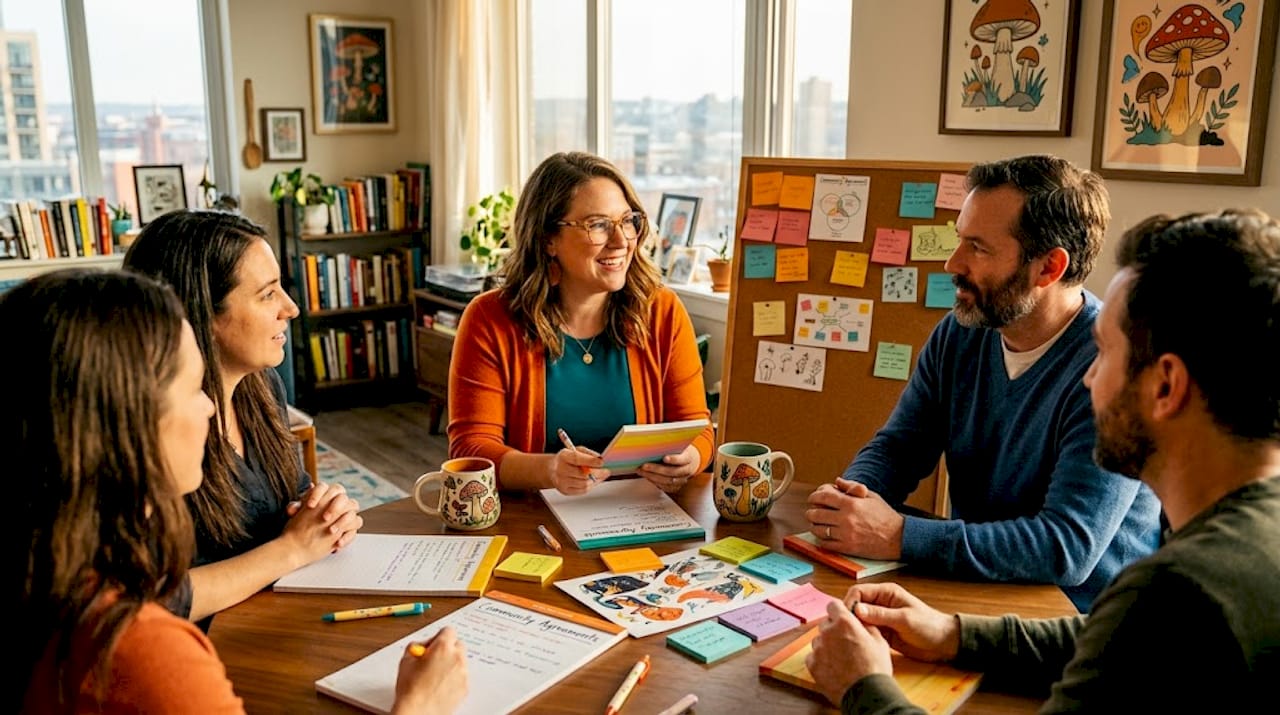
Trained facilitators and clear community agreements address most of these risks. The best peer groups operate with explicit norms, defined roles, and connections to professional resources when needed. Knowing when to escalate to a therapist or medical provider is a skill that healthy communities actively cultivate. You can learn more about psychedelic safety protocols to understand how social and individual screening work together.
Practical ways to find and build your psychedelic community
Finding a good community takes deliberate effort. Here’s where to start and what to prioritize.
- Look for integration-first spaces: The best psychedelic communities center the work that happens after the experience. If a group focuses primarily on access and consumption rather than reflection and support, keep looking.
- Vet for harm reduction values: Ask how the group handles difficult experiences. A community that has no answer to that question isn’t ready to support you.
- Use existing platforms: Groups organized through meetup networks, regional psychedelic societies, and online forums like Reddit’s integration communities provide entry points where you can observe before participating.
- Bring your preparation: Sharing your intentions, fears, and history with at least one trusted person before a session is one of the most protective things you can do. You can read about safe psychedelic experiences in Canada for context on how preparation and community intersect.
Pro Tip: Trauma-informed community spaces are not just for people with trauma histories. They create safer conditions for everyone by normalizing emotional complexity and reducing shame around difficult experiences.
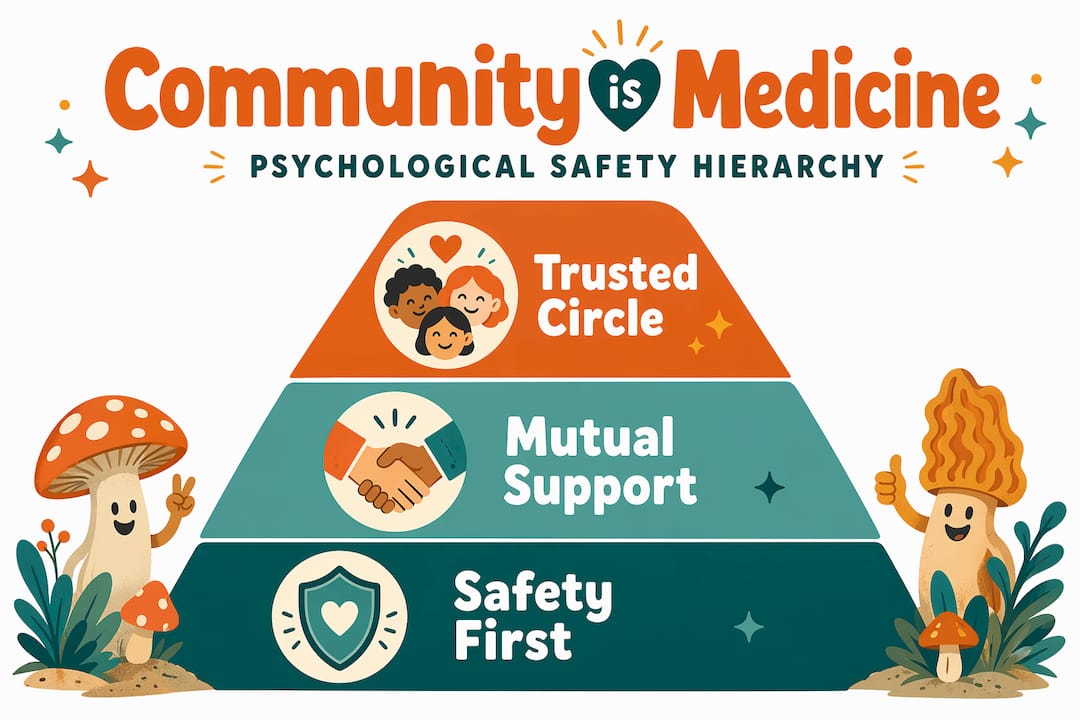
When building your own community or integration group, prioritize psychological safety over size. A circle of five people who genuinely trust each other outperforms a hundred-person group with unclear norms every time. Start small, establish clear agreements about confidentiality and support, and grow from there.
My perspective: community is the medicine, not the add-on
I’ve watched the psychedelic conversation get increasingly focused on molecules, clinical protocols, and regulatory timelines. All of that matters. But in my experience, the factor that most consistently determines whether someone’s psychedelic experience changes their life for the better is not the dose. It’s who was there before, during, and after.
I’ve seen well-resourced people come out of expensive clinical psilocybin sessions and feel completely alone two weeks later, because the therapeutic container ended and there was nothing to catch them. I’ve also seen people in informal peer circles navigate genuinely difficult experiences with grace, because they’d built the relational infrastructure to hold complexity. The community was the support system, the accountability structure, and the meaning-making apparatus all at once.
The clinical model will always serve some people well. But when isolated psychedelic use tends to be less effective or even destabilizing, the answer isn’t always more clinical supervision. It’s more community. Grassroots integration groups, peer support networks, and psychedelic societies are doing the work that formal systems haven’t scaled to meet.
What I believe is that the future of psychedelic healing depends on community-centered governance, not just community participation. That means the people most affected by these medicines have a voice in how access, safety, and cultural integrity are defined. That’s not a soft ideal. It’s the practical foundation of anything that actually lasts.
— Juiced
Explore safe psychedelic use with 3amigos
If community has you thinking more carefully about how you approach psychedelics, the next step is getting your products and education from a source that takes safety as seriously as you do. At 3amigos, every product is backed by quality assurance and paired with educational resources that reflect the latest in psychedelic science. Whether you’re starting with microdosing capsules for a gentle, controlled entry point or exploring the therapeutic science behind psilocybin to inform your approach, 3amigos supports every stage of your path with discretion and care.
FAQ
How does community affect psychedelic experiences?
Community shapes set and setting, buffers difficult experiences, and provides the integration support that determines long-term outcomes. Research shows that relational support during use measurably reduces negative effects and improves psychological well-being.
What are the benefits of group psychedelic sessions?
Group sessions build shared meaning, reduce isolation, and create mutual accountability. Studies show that couples who share psychedelic experiences report higher relationship satisfaction, and integration groups rank among the top recommended strategies for managing post-session difficulties.
Why is community important for psychedelic integration?
Integration is where healing actually takes root, and it requires sustained reflection over time. Clinical sessions have a fixed endpoint, but peer integration groups offer ongoing shared reflection and validation that prevents distress from going unprocessed.
Can peer support replace professional help after a psychedelic experience?
Peer support complements rather than replaces professional care. The two work best in combination, with community providing continuity and validation while therapists or counselors address clinical needs that fall outside peer competence.
How do I find a reputable psychedelic integration community?
Start with established psychedelic societies in your region, online integration forums, or organizations like Fireside Project that offer peer support lines. Look for groups with explicit harm reduction values, trained facilitators, and clear agreements about confidentiality and crisis response.
Recommended
- Ritual and psilocybin: 5 keys to deeper mushroom use
- Understanding psychedelic pharmacology for mental health
- Psychedelic neuroscience: Psilocybin’s brain effects explained
Thomas Wrona is a writer, designer, and wellness coach who believes that nature’s wisdom provides an antidote to the stress of modern life. As a former pro athlete, he’s all about staying in motion! When he’s not writing you’ll probably find Thomas outside.