

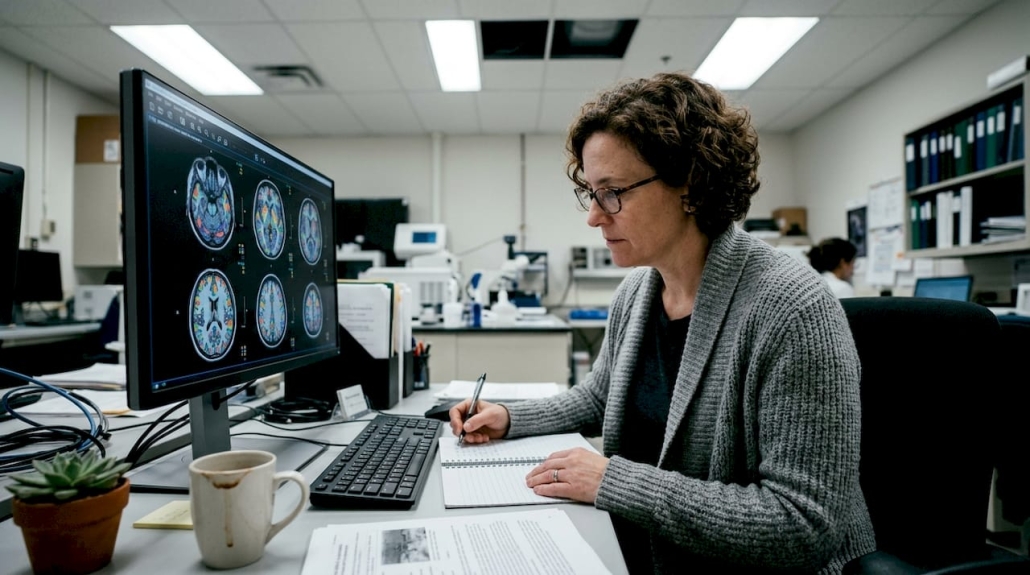
Psychedelic neuroscience: Psilocybin’s brain effects explained
TL;DR:
- Psilocybin causes brain network disruption and increased neural flexibility, supporting mental health benefits.
- Therapeutic effects depend on the subjective experience, set, setting, and integration, not just chemical changes.
- In Canada, psilocybin is legally accessible mainly through clinical trials and exemptions, with safety considerations.
Most people still picture psilocybin as a drug that causes hallucinations and not much else. That framing misses almost everything important. Modern neuroscience has spent the last decade mapping exactly what happens inside the brain during a psilocybin experience, and the findings are genuinely surprising. We’re talking about measurable changes in brain network architecture, biomarker shifts tied to reduced inflammation, and a temporary state of heightened neural flexibility that researchers believe drives lasting therapeutic outcomes. This guide breaks down the science clearly, connects it to real mental health and personal development applications, and explains what it all means for Canadians navigating this space right now.
Table of Contents
- How psilocybin works in the brain
- What neuroscience reveals: Effects on brain networks
- Therapeutic and personal growth effects: What the science shows
- Access, legal context, and safe use in Canada
- A nuanced look: What most explanations miss about psychedelic neuroscience
- Explore psilocybin safely and effectively: Your next steps
- Frequently asked questions
Key Takeaways
| Point | Details |
|---|---|
| Rewires brain networks | Psilocybin disrupts rigid patterns, increases connectivity, and boosts neural flexibility for deeper change. |
| Therapeutic effects | Clinical trials show improved mental health when psilocybin is used with guidance and integration. |
| Canadian legal access | Legal routes exist mainly through clinical trials and exemptions; personal use remains unregulated and risky. |
| Full dose vs. microdosing | Science supports supervised, high-dose sessions for real benefits, while microdosing evidence is weak and mixed. |
| Context matters | Set, setting, and support are crucial for positive outcomes, not just the chemical itself. |
How psilocybin works in the brain
When you take psilocybin, your body doesn’t actually respond to psilocybin itself. The compound is rapidly converted in the body to psilocin, which is the active molecule that crosses the blood-brain barrier and starts doing the real work. Psilocin acts as an agonist at serotonin 5-HT2A receptors, meaning it binds to and activates those receptors in a way that mimics and amplifies serotonin’s natural signaling. These receptors are densely concentrated in the prefrontal cortex, the part of your brain most involved in perception, cognition, and mood regulation.
What happens next is where it gets fascinating. Rather than simply flooding the brain with serotonin-like activity, psilocin destabilizes the brain’s default patterns of communication. fMRI and EEG studies show psilocybin decreases functional connectivity within the default mode network (DMN) and promotes neural flexibility. The DMN is the brain network active during self-referential thinking, mind-wandering, and rumination. When it’s overactive, as it tends to be in depression and anxiety, it locks you into repetitive, rigid thought loops. Psilocybin disrupts that lock.
At the same time, brain regions that don’t normally communicate start forming temporary connections. Signal complexity increases. The brain, in a sense, becomes more fluid and less predictable in how it routes information.
| Neurotransmitter target | Receptor | Key outcome |
|---|---|---|
| Serotonin (5-HT) | 5-HT2A | Altered perception, DMN disruption |
| Glutamate | NMDA/AMPA (indirect) | Increased neural signal complexity |
| BDNF (neurotrophin) | TrkB receptor | Enhanced neuroplasticity |
Pro Tip: Researchers call the period immediately following a psilocybin session a “window of plasticity.” During this window, which can last days to weeks, the brain is temporarily more adaptable and open to new patterns. This is why integration work, therapy, and intentional reflection matter so much in the days after a session.
Key mechanisms at a glance:
- Psilocybin converts to psilocin, activating 5-HT2A receptors
- DMN activity decreases, reducing rigid self-referential thinking
- Cross-network connectivity increases, allowing novel brain communication
- Neural signal complexity rises, reflecting a more flexible brain state
- A post-session plasticity window opens, supporting lasting change
Understanding psilocybin’s brain effects at this level helps explain why the therapeutic results researchers are seeing aren’t just placebo responses or wishful thinking.
What neuroscience reveals: Effects on brain networks
Understanding receptor-level action is just the start. What really sets psilocybin apart is how it transforms entire communication patterns between brain regions. Brain imaging has given researchers an unprecedented view into this process, and the results consistently point in the same direction.
The DMN, which anchors a lot of our inner narrative and sense of self, shows decreased activity and connectivity under psilocybin. This matters enormously for mental health. In depression, the DMN is often hyperactive, trapping people in cycles of self-criticism and rumination. Psilocybin essentially loosens that grip, temporarily dissolving the rigid self-narrative that keeps people stuck.
At the same time, networks that rarely talk to each other begin exchanging signals. The visual cortex connects with regions involved in emotion and memory. The sensory networks link up with higher-order cognitive areas. This cross-network communication is thought to underlie the vivid, often meaningful experiences people report during sessions.
“The disruption of normal brain communication patterns by psilocybin may be precisely what allows people to escape entrenched mental health barriers. It’s not a bug in the experience. It’s the mechanism.” — Psychedelic neuroscience researchers
Blood biomarker studies add another layer. Psilocybin reduces inflammation and increases neurotrophic factors like BDNF (brain-derived neurotrophic factor), which supports the growth and maintenance of neurons. Chronic inflammation is increasingly linked to depression and cognitive decline, so these biomarker shifts are clinically meaningful, not just interesting side notes.

| Brain measure | Without psilocybin | With psilocybin |
|---|---|---|
| DMN activity | High (especially in depression) | Significantly reduced |
| Cross-network connectivity | Low and compartmentalized | Increased and fluid |
| BDNF levels | Baseline or suppressed | Elevated post-session |
| Inflammatory markers | Elevated in mood disorders | Reduced |
Three core neuroscientific effects, summarized:
- DMN disruption: Reduces the brain’s default grip on rigid, repetitive thought patterns
- Network integration: Enables novel communication between previously isolated brain regions
- Biomarker improvement: Elevates neuroplasticity markers while lowering inflammation
For those tracking psilocybin mental health benefits or researching psilocybin safety, these network-level findings are the foundation of why clinical interest has accelerated so sharply.
Therapeutic and personal growth effects: What the science shows
But what does all this restructuring mean for people? The neural data connects directly to real improvements in mood, cognition, and how people relate to themselves and others.

One of the most consistent findings in clinical research is that the intensity of the subjective experience during a psilocybin session, particularly what researchers call a “mystical-type experience,” predicts long-term therapeutic outcomes. Therapeutic effects are tied to this subjective experience and to neuroplasticity changes, including increased openness, improved emotional processing, and reductions in depression and anxiety. People who report a profound sense of unity, awe, or ego dissolution during their session tend to show the strongest and most durable improvements afterward.
The plasticity window matters here too. Psilocybin promotes a window of plasticity that supports therapeutic reprogramming of patterns related to depression and anxiety. During this window, new behaviors, thought patterns, and emotional responses are easier to form and reinforce. That’s why integration, meaning what you do after a session, is considered just as important as the session itself.
Personal development outcomes reported in studies include:
- Increased openness to new experiences and perspectives
- Greater emotional flexibility and reduced reactivity
- Improved ability to process grief, trauma, and existential distress
- Enhanced sense of meaning and connectedness
- Reductions in compulsive or addictive behaviors
It’s worth noting the nuances here. Benefits are not automatic. They depend heavily on set (your mindset going in), setting (the environment), dose, and integration support afterward. Microdosing, while popular, shows variable and often modest results in controlled studies. The strongest evidence consistently points to full-dose, guided experiences with professional support.
As of 2025, there are approximately 15 active clinical trials in Canada studying psilocybin for conditions ranging from treatment-resistant depression to end-of-life anxiety. That number reflects how seriously the research community now takes this compound. For those considering psilocybin intake considerations, understanding these variables upfront makes a real difference in outcomes.
Access, legal context, and safe use in Canada
The science is compelling, but Canada’s regulatory landscape shapes how and if this knowledge can be safely and legally applied.
In Canada, psilocybin is available only through clinical trials, Section 56 exemptions, and the Special Access Program (SAP). Outside these channels, psilocybin remains a Schedule III controlled substance. That means personal or wellness use, however well-intentioned, carries legal risk.
Active and notable Canadian research programs include:
- PsilWell: A wellness-focused trial studying psilocybin for non-clinical populations
- PEARL: Examining psilocybin for end-of-life distress
- Microdosing studies for PTSD, anxiety, and depression at multiple Canadian universities
- TheraPsil-supported programs offering Section 56 access for palliative patients
For individuals outside clinical settings, the risks of unregulated access are real. Unverified sources mean uncertain dosage, unknown contaminants, and no professional screening for contraindications. People with personal or family histories of psychosis or certain mood disorders face elevated risks that a clinical intake process would catch and address.
Pro Tip: If you’re serious about accessing psilocybin therapeutically, start by contacting a clinical trial program directly or using a licensed therapist directory that includes psychedelic-assisted therapy practitioners. This is the safest and most legally sound path available to Canadians right now.
Understanding current psilocybin legality in Canada is essential before making any decisions, as is knowing how to approach safe psychedelic experiences if you do pursue access through a legal channel.
A nuanced look: What most explanations miss about psychedelic neuroscience
Here’s where we want to push past the standard summary. Most articles stop at “psilocybin rewires the brain and that’s why it helps.” That framing is incomplete, and in some ways misleading.
A growing number of neuroscientists argue that the full therapeutic value comes from the subjective psychedelic experience itself, not just the chemical changes in the brain. This is sometimes called the REBUS model (Relaxed Beliefs Under Psychedelics), which suggests that psilocybin works by loosening the brain’s rigid predictive models, but the healing happens through the meaning the person makes of the experience. Neural rewiring is the door. The experience is what walks through it.
There’s also a methodological problem worth knowing about. Blind studies are nearly impossible with psychedelics because participants almost always know whether they’ve taken the active compound. This makes placebo effects genuinely hard to rule out, and it means we should hold some findings with appropriate skepticism.
Microdosing is probably the most overhyped area in this space right now. The popular narrative runs far ahead of the actual evidence. Most robust brain changes and therapeutic outcomes come from supervised, full-dose sessions with structured integration support afterward.
Pro Tip: When evaluating your own goals, focus on set, setting, and integration rather than chasing neural rewiring as an outcome in itself. The neuroscience supports the experience, not the other way around.
For a deeper mental health guide that connects these nuances to practical decisions, we’ve covered the evidence in detail.
Explore psilocybin safely and effectively: Your next steps
If this science has sparked genuine curiosity, you’re not alone. Canadians are increasingly looking for trustworthy, well-researched resources to guide their next steps, whether that means understanding the research more deeply, exploring therapeutic options, or learning about responsible microdosing practices.

At Three Amigos, we’ve built a resource hub designed specifically for people who take this seriously. You’ll find psilocybin science explained in plain language, detailed guides on therapeutic mushroom uses, and a curated selection of psilocybin microdose capsules for those exploring that path carefully. We prioritize quality, education, and harm reduction above everything else.
Frequently asked questions
How does psilocybin affect the brain at the molecular level?
Psilocybin converts to psilocin, which activates serotonin 5-HT2A receptors and reshapes how brain networks communicate with each other. This receptor activation is what drives the cascade of network-level changes researchers observe in imaging studies.
Can psilocybin improve mental health according to neuroscience?
Yes. Therapeutic effects are tied to both neuroplasticity changes and the quality of the subjective experience, with the strongest outcomes seen in guided, full-dose clinical settings. Depression, anxiety, and end-of-life distress have shown the most consistent improvements.
Is it legal to use psilocybin in Canada for personal development?
Psilocybin remains illegal for personal use in Canada outside of clinical trials, Section 56 exemptions, and the Special Access Program. Personal or wellness use outside these channels carries legal risk.
Is microdosing psilocybin supported by neuroscience?
The evidence is mixed. Microdosing shows weak results compared to full-dose experiences in controlled studies, and most significant brain changes are observed with higher doses in supervised settings.
What makes the psilocybin experience therapeutic?
Neuroplasticity alone may not suffice; the therapeutic effect likely depends on the meaningful subjective experience occurring within a safe, supported setting, combined with intentional integration afterward.
Recommended
- Psilocybin science explained: unlock mental health benefits
- Psilocybin effects: mental health and personal growth
- Science behind psilocybin: effects and benefits Canada
- Why choose psilocybin: benefits and science for wellbeing

Thomas Wrona is a writer, designer, and wellness coach who believes that nature’s wisdom provides an antidote to the stress of modern life. As a former pro athlete, he’s all about staying in motion! When he’s not writing you’ll probably find Thomas outside.


