


How to Maximize Therapeutic Shroom Benefits Safely
TL;DR:
- Maximizing therapeutic shroom benefits requires thorough preparation, including setting clear intentions, creating a safe environment, and sourcing quality substances. Dosing protocols differ significantly between microdosing and macrodosing, with consistent support and integration critical for lasting mental health improvements. Psilocybin should be used alongside professional therapy, with mindfulness of safety concerns and personalized tracking to ensure optimal outcomes.
Most people who turn to therapeutic mushrooms for mental health support want real results, not trial and error. Yet knowing how to maximize therapeutic shroom benefits is where many get stuck. You might be unsure about the right dose, whether to microdose or macrodose, or how to set up a session that actually works. This guide cuts through the confusion with evidence-backed strategies covering preparation, dosing, integration, and safety. Whether you are new to psilocybin or refining your existing practice, you will leave with concrete steps you can apply right away.
Table of Contents
- Key Takeaways
- How to maximize therapeutic shroom benefits: start with preparation
- Dosing strategies for microdosing and macrodosing
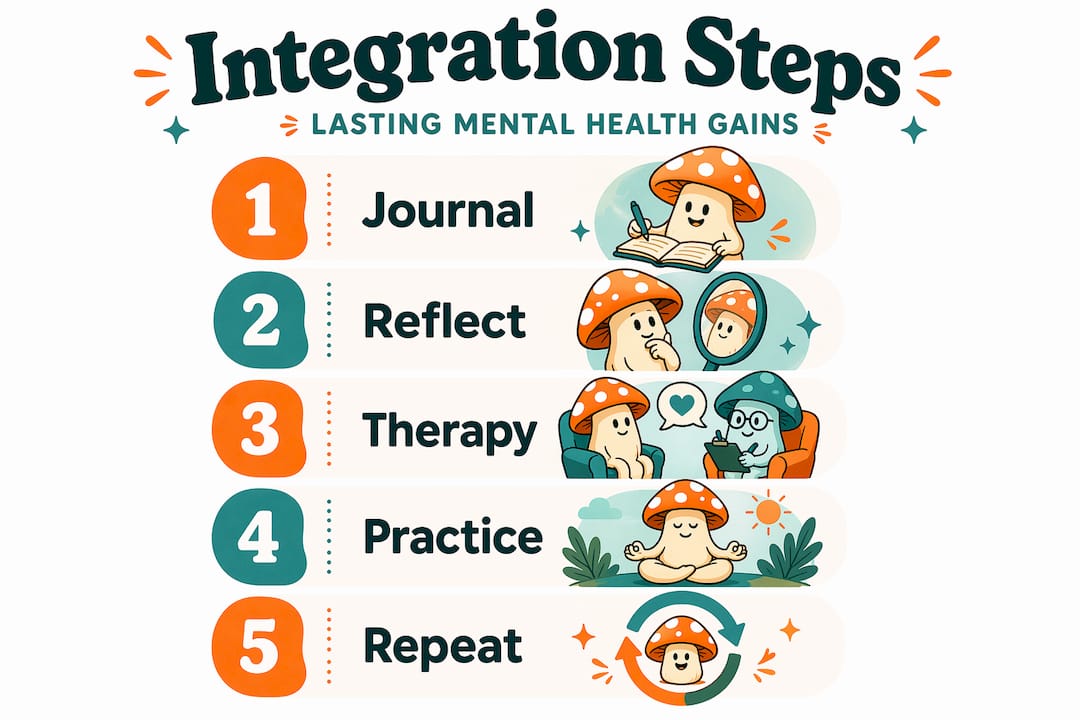
- Integrating your experience for lasting mental health gains
- Common mistakes, safety warnings, and harm reduction
- My honest take after watching hundreds of people use psilocybin therapeutically
- Start your therapeutic journey with 3amigos
- FAQ
Key Takeaways
| Point | Details |
|---|---|
| Preparation is non-negotiable | Mental readiness and environment setup directly determine whether your experience is therapeutic or destabilizing. |
| Dosing protocols differ sharply | Microdosing cycles run 6 to 8 weeks; macrodosing requires structured support and a clear timeline. |
| Integration multiplies gains | Journaling, movement, and therapy after sessions lock in neuroplasticity-based mental health improvements. |
| Avoid common pitfalls | Mixing incompatible substances, skipping preparation, or ignoring integration are the top reasons outcomes fall short. |
| Psilocybin is a tool, not a cure | Clinical experts confirm it works best alongside therapeutic support, not as a standalone fix. |
How to maximize therapeutic shroom benefits: start with preparation
You cannot shortcut your way to a good session. The single most consistent predictor of a positive outcome is what you do before you ever take a dose. Mental preparation ranks first among best practices, cited by 65.7% of users surveyed across harm reduction studies. That is not a small margin. It reflects something experienced practitioners have understood for decades: your internal state shapes the experience more than the substance itself.
Mindset and intention setting
Before any session, write down what you are hoping to work through. Be specific. “I want to feel less anxious” is a starting point, but “I want to understand why conflict at work triggers such a strong shame response” is a target your mind can actually move toward. Intentions do not need to be rigid. Think of them as a compass, not a script.
Environment and trusted support
A safe, comfortable environment matters as much as mindset. The same survey found that trusted guides and safe spaces are prioritized by over 50% of experienced users. For macrodosing sessions especially, having a sitter present is not optional. That person should be someone calm, trustworthy, and ideally familiar with psychedelic support.
Set up your space in advance. Dim lighting, a comfortable place to lie down, and curated music make a measurable difference in how the experience unfolds. Have water, light snacks, and a journal within reach. Avoid screens, loud sounds, or environments where you might be interrupted.
| Preparation area | What to prepare | Why it matters |
|---|---|---|
| Mindset | Written intentions, prior therapy | Anchors the experience to a therapeutic goal |
| Environment | Comfortable space, dim lighting, music playlist | Reduces anxiety and keeps focus inward |
| Support | Trusted sitter or guide for macrodosing | Provides safety and grounding if needed |
| Materials | Hydration, journal, snacks | Supports physical comfort and post-session reflection |
| Sourcing | Reputable, quality-controlled supplier | Accurate dosing prevents unexpected intensity |
Pro Tip: Avoid alcohol, cannabis, and SSRI medications in the days leading up to a macrodose session. Certain SSRIs significantly blunt psilocybin’s effects or, in the case of stimulants, increase cardiovascular risk.
Dosing strategies for microdosing and macrodosing
Getting the dose right is where the benefits of therapeutic mushrooms either click into place or go sideways. The two approaches, microdosing and macrodosing, are not interchangeable. Each follows its own logic, timeline, and best practices.
Microdosing protocol
Microdosing means taking a sub-perceptual dose, typically 0.1 to 0.3 grams of dried mushrooms or an equivalent capsule, every two to three days. You should not feel “high.” You should feel slightly more present, focused, or emotionally open. Microdosing cycles typically run 6 to 8 weeks followed by a rest period of one to two months to allow for neural integration. Skipping the rest period is one of the most common mistakes. Your brain needs time to consolidate the changes.
Users report enhanced creativity, mood balance, and resilience as the most consistent benefits, along with improved cognitive flexibility and better emotional regulation. These outcomes align with what neuroscience research shows about psilocybin’s effects on serotonin pathways and default mode network activity. For a deeper look at the mechanisms behind this, 3amigos breaks down the science of these mental health effects in a dedicated guide.
Macrodosing protocol
A macrodose session typically involves 2 to 5 grams of dried mushrooms or a clinical equivalent. Research shows that a 25 mg psilocybin dose administered with psychotherapeutic support produces rapid antidepressant effects lasting over three months, with measurable reductions in depression symptoms as early as day two. That is a remarkable window for a single session.
Expect effects to begin 30 to 60 minutes after ingestion, peak around two to three hours in, and resolve within five to six hours. Plan your session for a day when you have no responsibilities before or after. Morning is generally better for microdosing since effects are subtle. Macrodosing works best in the early to mid-morning so the experience concludes well before bedtime.
| Feature | Microdosing | Macrodosing |
|---|---|---|
| Dose range | 0.1 to 0.3 g dried | 2 to 5 g dried or 25 mg psilocybin equivalent |
| Frequency | Every 2 to 3 days | Once every 1 to 3 months |
| Duration per session | Sub-perceptual, no trip | 4 to 6 hours active experience |
| Best time of day | Morning | Early morning with cleared schedule |
| Recommended support | Self-managed with tracking | Trusted sitter or licensed therapist |
| Primary reported outcomes | Mood, focus, creativity | Depression remission, emotional breakthroughs |
For detailed guidance on safe dose calculation, 3amigos offers a dedicated resource on dosing psilocybin safely that covers strain variation and individual sensitivity.
- Start lower than you think you need. Beginners consistently underestimate sensitivity.
- Keep a dose log. Record the amount, time, strain, and what you noticed afterward.
- Adjust incrementally. Never increase by more than 0.5 grams between macrodose sessions.
- Space macrodose sessions by at least four weeks. Tolerance builds fast and the therapeutic window needs time to reset.
Pro Tip: Keep a dedicated notebook or app just for tracking doses and effects. After three cycles, you will have personalized data that no generic dosing chart can replicate.
Integrating your experience for lasting mental health gains
Taking a dose is about 20% of the work. What you do in the days and weeks afterward determines whether the insights stick or fade. Integration is the bridge between a profound experience and actual behavioral or emotional change. This is where shroom benefits for mental health become durable.

Surrendering to the experience is the strongest predictor of beneficial outcomes. Fighting or suppressing what arises during a session tends to increase anxiety rather than reduce it. Integration begins with carrying that same openness into your post-session days.
Here are the most effective integration practices, organized by timeframe:
- Within 24 hours: Write a detailed account of what arose during the session. Do not edit for logic. Focus on emotions, images, and themes.
- Days 2 to 7: Begin a daily meditation practice of even 10 to 15 minutes. Morning works best when neuroplasticity is elevated post-session.
- Week 2 and beyond: Yin yoga and gentle movement therapies targeting emotional trauma help release physical tension stored in the body, reinforcing the neurological changes initiated by psilocybin. Sustained floor-based poses held for several minutes create a somatic release that complements the mental processing.
- Ongoing: Combine your microdosing cycles with regular therapy sessions. Psilocybin opens psychological material; therapy helps you contextualize and act on it.
Pro Tip: Share your journal entries with a therapist within the first week after a macrodose session. The content is richest right after the experience and tends to fade quickly without anchoring.
Psilocybin’s effects on neuroplasticity create a temporary window where the brain is more receptive to new patterns. Understanding psychedelic pharmacology for mental health can help you make the most of that window rather than letting it pass unused.
Common mistakes, safety warnings, and harm reduction
Even well-intentioned therapeutic work can go sideways when key safeguards get skipped. Knowing the risks before you start is not pessimism. It is how you protect the outcome you are working toward.
Common mistakes to avoid:
- Entering a session without a clear intention or emotional anchor
- Using an unverified supplier where dosing accuracy is unknown
- Mixing psilocybin with lithium, tramadol, or MAOI-based medications, which carry serious interaction risks
- Treating a challenging experience as a failure rather than material to process
- Skipping integration entirely and expecting the experience alone to create change
- Increasing dose too quickly after one session that felt “not strong enough”
A critical reminder: Psilocybin works best as a complementary tool alongside professional therapeutic support. Clinical experts consistently caution against unsupervised macrodosing, especially for individuals with a history of psychosis, bipolar disorder, or first-degree relatives with schizophrenia. If you are managing a diagnosed mental health condition, work with a licensed professional before beginning any psilocybin protocol.
Adverse effects are uncommon but real. In clinical trials, severe anxiety requiring intervention was rare but did occur in a small number of participants. Having an exit strategy matters. If a session becomes overwhelming, grounding techniques like holding a cold object, focusing on slow breathing, or repeating a simple phrase can help reorient without ending the experience abruptly.
Research also shows that 53% of participants achieved remission at 6 weeks following psilocybin treatment, but the statistical advantage over placebo diminished at one year without continued support. This reinforces that a single transformative experience is a starting point, not a destination.
My honest take after watching hundreds of people use psilocybin therapeutically
I have watched people go through this process well and watched others burn through it recklessly. The difference is almost never about the mushrooms themselves. It is always about preparation and what happens after.
The thing most people get wrong is treating psilocybin like a shortcut to mental health. It is not. It is a catalyst. If you put in the work around it, the results can be genuinely life-changing. If you skip the prep and the integration, you are essentially doing deep emotional work without a seatbelt. Some people survive that fine. Others end up more confused than when they started.
I have also seen people get so focused on optimizing dosing that they miss the most powerful variable: their relationship with discomfort. Psilocybin works in part because it surfaces material you have been avoiding. The users who benefit most are not the ones who engineer the perfect session. They are the ones who have learned to sit with what comes up without immediately running from it.
My honest recommendation: start lower than feels necessary, build your integration practices before your first session rather than after, and treat every experience as data, not a verdict on your mental health. Realistic expectations are not a ceiling. They are what keep you in the game long enough to see real results.
— Juiced
Start your therapeutic journey with 3amigos
If you are ready to move from reading to doing, 3amigos makes it easier to take that step with confidence. Their microdosing capsules are precision-dosed for therapeutic work, removing the guesswork around preparation and weight measurement. Each product is quality-controlled so that the dose you intend is the dose you actually take.
Beyond products, 3amigos serves as a genuine educational resource covering everything from beginner microdosing guides to clinical research on psilocybin’s role in treating depression and anxiety. Their guide on the therapeutic uses of dried mushrooms for mental health is one of the most current overviews available, updated with 2026 research findings. Whether you are exploring microdosing capsules, dried shrooms, or edibles, 3amigos provides the product quality and educational depth to support informed, safe therapeutic practice.
FAQ
What is the best dose for therapeutic mushrooms?
For microdosing, most users start at 0.1 to 0.2 grams every two to three days. For macrodosing with a therapeutic focus, clinical research shows a 25 mg psilocybin dose (roughly 2 to 3.5 grams dried) with support produces meaningful antidepressant effects.
How do you prepare for a therapeutic shroom session?
Write clear intentions beforehand, arrange a safe and comfortable space, designate a trusted sitter for macrodose sessions, and avoid alcohol or interacting medications in the days prior.
How long does it take to see mental health benefits?
Macrodosing research shows measurable depression symptom reduction within 48 hours, with effects lasting over three months after a single supported session. Microdosing benefits typically build over several weeks of consistent cycling.
What should you do after a psilocybin session?
Journal your experience within the first 24 hours, begin a daily mindfulness or meditation practice, and consider integrating gentle movement therapies like yin yoga during the first two weeks to reinforce neuroplasticity gains.
Is psilocybin safe for treating mental health conditions?
Psilocybin carries a strong safety profile in clinical settings, but it is contraindicated for individuals with a personal or family history of psychosis or bipolar disorder. It works best as a complement to professional therapeutic support, not a replacement for it.
Recommended
- Best practices for shroom use: safe and effective guidance
- Safe mushroom consumption workflow for mental health 2026
- Mushroom Harm Reduction Workflow for Safe Use
- 6 Smart Ways to Use Dried Shrooms Safely and Effectively

Thomas Wrona is a writer, designer, and wellness coach who believes that nature’s wisdom provides an antidote to the stress of modern life. As a former pro athlete, he’s all about staying in motion! When he’s not writing you’ll probably find Thomas outside.