
Mushroom capsules in Canada: benefits, safety & access
Psilocybin mushroom capsules are quietly reshaping how Canadians think about mental health. Thousands of people across the country are microdosing every week, searching for relief from anxiety, depression, and burnout, even though psilocybin remains a federally controlled substance. The gap between legal status and real-world access is wider than most people realize. This guide cuts through the noise with evidence-based information on what mushroom capsules actually do, who should avoid them, how Canadians are legally and practically accessing them, and how to use them as safely as possible.
Table of Contents
- What are mushroom capsules and why are they popular in Canada?
- Evidence-based mental health benefits: what we know so far
- Safety, risks, and who should avoid mushroom capsules
- Legal status and how Canadians are accessing mushroom capsules
- Practical guide: how to microdose mushroom capsules safely
- Hard truths about psilocybin capsules: what most guides won’t tell you
- Discover safe microdosing options with 3 Amigos
- Frequently asked questions
Key Takeaways
| Point | Details |
|---|---|
| Legal gray area | Mushroom capsules with psilocybin are technically banned, yet available in Canada through many channels. |
| Benefits are possible but not proven | Many users report mental health improvements, yet clinical evidence is still unclear or shows placebo effects. |
| Prioritize safety | Start with low doses, monitor for side effects, and consult a professional before use. |
| Best accessed through trials | Legal and safest access to psilocybin is via authorized clinical trials or exemptions. |
What are mushroom capsules and why are they popular in Canada?
Psilocybin mushroom capsules are precisely measured doses of dried, ground psilocybin mushrooms packed into a standard gel or vegetable capsule. Unlike eating raw dried mushrooms, capsules offer a consistent, tasteless, and discreet way to consume a specific amount. Most people using them are not looking to trip. They are microdosing, which means taking a sub-perceptual dose, typically 50 to 300mg, small enough that you feel a subtle shift in mood or focus without any hallucinations.
The reasons Canadians are drawn to them are easy to understand. Capsules remove the guesswork. You know exactly how much you are taking, which matters when you are experimenting with a substance that has a steep dose-response curve. They are also easy to carry, easy to store, and easy to work into a morning routine without anyone noticing.
Common reasons people use psilocybin capsules include:
- Mood support: Reducing symptoms of anxiety and low-grade depression
- Cognitive flexibility: Approaching problems from new angles, breaking mental ruts
- Creativity and motivation: Many users report feeling more engaged and energized
- Emotional processing: Some use them alongside therapy to work through difficult patterns
- General well-being: A sense of groundedness and reduced emotional reactivity
Despite this demand, psilocybin capsules are widely available in Canada through online dispensaries and physical shops in cities like Toronto, even though they are classified as Schedule III controlled substances under federal law. This legal ambiguity creates real confusion for buyers.
Pro Tip: Before purchasing from any online source, research their sourcing, testing practices, and return policies. Vendors who cannot answer basic questions about their product quality are a red flag.
The ease of online ordering has made mushroom capsules more accessible than ever, but accessibility is not the same as safety or reliability. Always prioritize sourcing over convenience.
For a deeper look at where things stand legally, the guide on mushroom legality in Canada is a solid starting point.
Evidence-based mental health benefits: what we know so far
Here is where things get interesting and a little complicated. The anecdotal evidence for microdosing is enormous. Tens of thousands of people report better mood, sharper thinking, and reduced anxiety. Online communities are full of detailed journals tracking week-by-week improvements. But anecdotal reports are not clinical proof.
When researchers run randomized controlled trials (RCTs), the gold standard for measuring a treatment’s real effect, results are more mixed. Observational studies consistently show mood and mental health improvements among microdosers. But RCTs, which compare psilocybin against a placebo, often find the two groups perform similarly for depression and cognitive outcomes. This is the placebo effect at work, and it is powerful.
What does the evidence actually support?
- Mood improvements: Consistently reported in observational studies across large sample sizes
- Reduced anxiety: Particularly in naturalistic settings; less clear in controlled trials
- Increased openness: Some studies show measurable changes in personality traits
- Focus and motivation: Widely reported by users, though hard to isolate in research
- Depression relief: Promising observational data, but RCT results are inconsistent
One important nuance: most clinical psilocybin research focuses on full doses, not microdoses. The therapeutic breakthroughs you read about in major trials often involve 25mg or more of pure psilocybin, guided sessions, and trained therapists. That is a very different experience than a 100mg capsule taken on a Tuesday morning.
For a broader look at the science, the article on psilocybin science and the guide on therapeutic mushroom uses both break down the research in plain language.
Pro Tip: Track your own experience with a simple daily journal. Rate your mood, energy, focus, and sleep on a 1 to 10 scale. After 4 weeks, you will have real personal data instead of relying on what worked for someone else online.
The bottom line: Microdosing shows real promise, especially for mood and emotional regulation. But the science is still catching up to the hype. Approach it with curiosity and healthy skepticism, not as a guaranteed fix.
Safety, risks, and who should avoid mushroom capsules
Microdosing is generally considered low risk for healthy adults, but low risk is not the same as no risk. Understanding the safety profile before you start is not optional, it is essential.
At microdose levels, side effects are usually mild and may include slight anxiety, a modest increase in blood pressure, mild nausea, or subtle cognitive changes. Most people do not experience these at all when dosing correctly. But some do, especially if they start too high or dose too frequently.
Common side effects at microdose levels:
- Mild anxiety or restlessness, particularly on dose days
- Slight increase in heart rate or blood pressure
- Difficulty concentrating (more common with higher microdoses)
- Sleep disruption if taken too late in the day
- Emotional intensity, sometimes surfacing difficult feelings
Who should not use psilocybin capsules:
- People with a personal or family history of psychosis or schizophrenia
- Those with bipolar disorder, especially without professional supervision
- Pregnant or breastfeeding individuals
- Anyone taking lithium, MAOIs, or SSRIs without consulting a doctor first
- People with severe cardiovascular conditions
Strain variability is a real concern in the unregulated market. Two capsules labeled identically from different vendors may contain meaningfully different amounts of active psilocybin. This is why sourcing from a reliable, quality-focused supplier matters more than price.
Pro Tip: If you are on any prescription medication, especially antidepressants, talk to a doctor before starting. The interaction between SSRIs and psilocybin is not fully understood, and some combinations can blunt effects or create unexpected reactions.
For a broader safety framework, the guide on safe mushroom use covers edibles, capsules, and dosing protocols with practical harm reduction advice.
Legal status and how Canadians are accessing mushroom capsules
Psilocybin sits in a strange place in Canada right now. It is federally illegal. Full stop. Health Canada classifies psilocybin as a Schedule III controlled substance, meaning possession, sale, and production without authorization are all criminal offenses. No psilocybin product has been approved as a therapeutic drug in Canada.
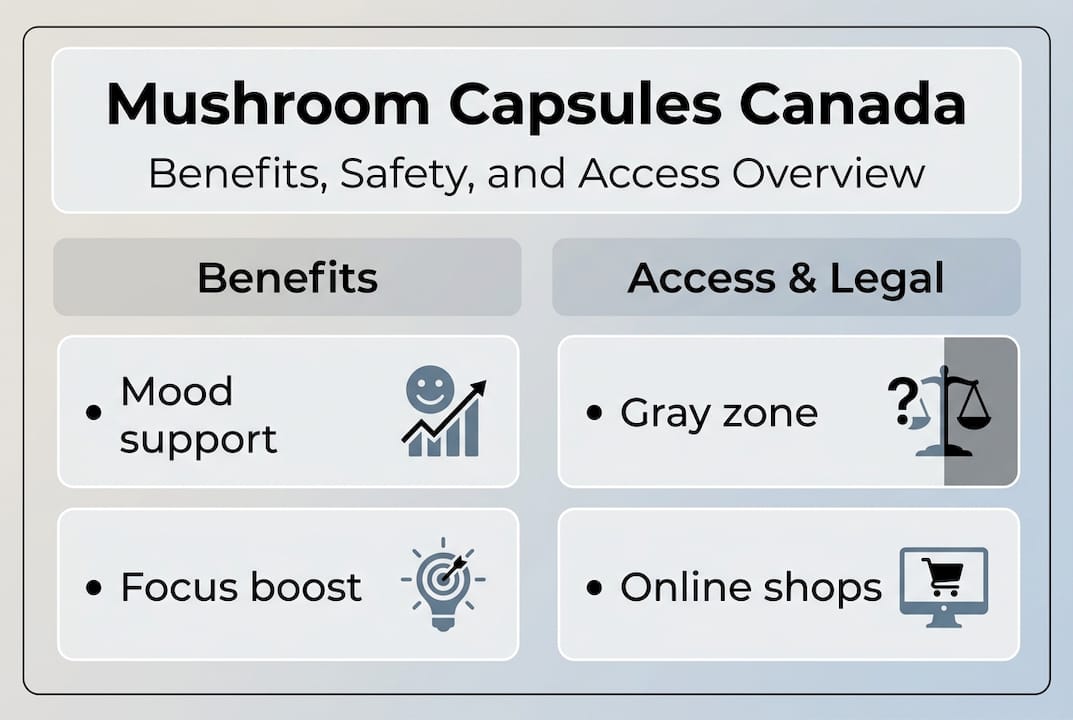
And yet, dispensaries operate openly in Vancouver and Toronto. Online stores ship across the country. Enforcement is inconsistent at best.
Here is a practical breakdown of the legal pathways:
| Access method | Legal status | Risk level |
|---|---|---|
| Online dispensary purchase | Illegal federally | Moderate |
| Physical storefront | Illegal federally | Moderate to high |
| Section 56 exemption | Legal with Health Canada approval | Low |
| Clinical trial participation | Legal | Low |
| Palliative/compassionate access | Legal with authorization | Low |
The safest legal options are clinical trials and Section 56 exemptions. Canadian trials are actively running at institutions like Kingston Health Sciences Centre (for generalized anxiety disorder), the University of Toronto (for depression), and various palliative care programs for end-of-life distress.
For those who choose to purchase outside these channels, privacy, product quality, and vendor reputation become the critical factors. For a full breakdown of where things stand legally in 2026, the guide on psilocybin legality Canada is worth reading before you buy anything.
Practical guide: how to microdose mushroom capsules safely
Knowing the theory is one thing. Putting it into practice safely is another. Here is a straightforward framework for beginners.
- Research your source first. Before buying, verify that the vendor provides product information, has clear dosing labels, and has a track record in the community. Anonymous sources with no reviews are not worth the risk.
- Start at 50 to 100mg. This is well below the perceptual threshold for most people. Starting low lets you assess your personal sensitivity before increasing.
- Follow a structured schedule. The most common protocols are one day on, two days off (Fadiman protocol) or five days on, two days off. Avoid daily dosing to prevent tolerance buildup.
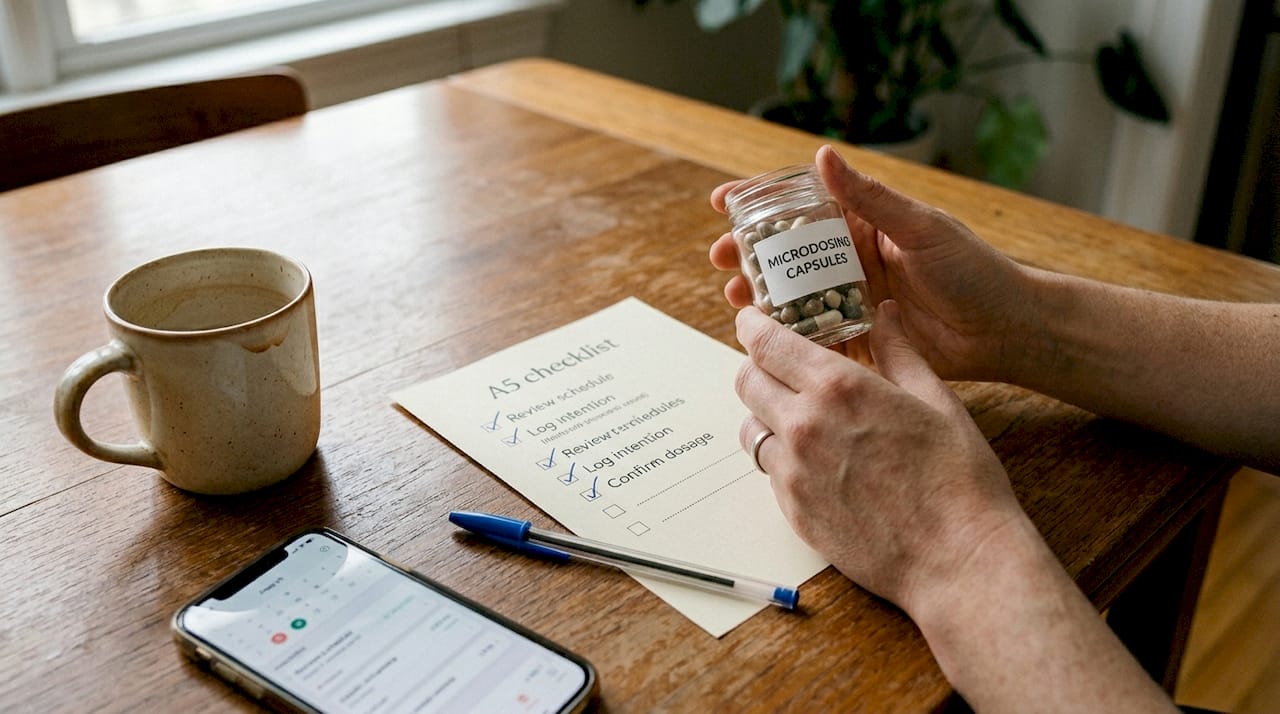
- Keep a tracking journal. Note your dose, time taken, mood, energy, focus, and any side effects. After 4 weeks, review your notes to see what is actually shifting.
- Take a full break after 4 to 6 weeks. Tolerance builds gradually. A two-week break resets your baseline and helps you evaluate whether changes are real or just adaptation.
- Consult a doctor if anything feels off. Increased anxiety, heart palpitations, or mood swings are signals to pause and get professional input.
Pro Tip: Take your first dose on a day with no major obligations. Even at microdose levels, some people feel more sensitive on their first attempt. A low-pressure day gives you space to notice how your body responds.
If you are ready to explore options, the shop microdosing capsules page offers clearly labeled products with dosing information to help you start informed.
Hard truths about psilocybin capsules: what most guides won’t tell you
We have watched the microdosing conversation evolve from fringe curiosity to mainstream wellness trend, and that shift has created a problem. The louder the hype gets, the harder it is to find honest information.
Here is what most sites will not say: 86% of dispensaries make mental health claims without including any warnings for high-risk groups. That is not education. That is marketing dressed up as wellness advice.
Microdosing is not a universal fix. It works well for some people, does nothing for others, and occasionally makes things worse, particularly for those with underlying anxiety or mood instability. The success stories you read online are self-selected. People who had bad experiences rarely post about them.
The most important thing you can bring to this practice is realistic expectations. Psilocybin capsules are a tool, not a treatment. They work best when paired with other supports: therapy, sleep, exercise, community. If you are hoping a capsule will do the heavy lifting your lifestyle is not doing, you will likely be disappointed.
For a grounded look at what psilocybin can realistically offer, the guide on realistic therapeutic uses is one of the more honest resources available.
Discover safe microdosing options with 3 Amigos
If you have made it this far, you are approaching this the right way: informed, cautious, and curious. That is exactly the mindset that leads to good outcomes with microdosing.
At Three Amigos, we stock a curated selection of purchase microdosing capsules with clear dosing labels, strain information, and transparent sourcing. Every product is chosen with quality and consistency in mind. We also maintain a library of educational content so you can keep learning as you go. If you want to go deeper on the research side, our guide on the science-based microdosing approach pairs well with everything covered here. Safe, discreet, and evidence-aware: that is how we approach every order.
Frequently asked questions
Are psilocybin mushroom capsules legal to buy in Canada?
No, psilocybin capsules are federally illegal in Canada without authorization, but they remain widely available online and in major cities due to inconsistent enforcement. Legal access is possible through Section 56 exemptions or clinical trial participation.
What is the typical microdosing protocol for mushroom capsules?
Most protocols recommend starting at 50 to 100mg every two to three days, tracking your response carefully, and adjusting only after at least two weeks of consistent observation.
Are there risks or side effects to microdosing psilocybin?
Most users tolerate microdoses well, but mild side effects like anxiety, elevated blood pressure, or cognitive changes are possible. Anyone who is pregnant, has psychosis, or has bipolar disorder should avoid use entirely.
Does microdosing psilocybin actually improve mental health?
The evidence is genuinely mixed. Observational studies show consistent mood and mental health improvements, but randomized controlled trials often find results comparable to placebo, particularly for depression and cognition.
Recommended
- Mushroom edibles: safe use and legal guide Canada 2026
- Step-by-step mushroom safety guide for Canadians 2026
- Magic mushroom safety workflow: a Canadian guide
- The Ultimate Guide To Mushroom Capsules Canada

Thomas Wrona is a writer, designer, and wellness coach who believes that nature’s wisdom provides an antidote to the stress of modern life. As a former pro athlete, he’s all about staying in motion! When he’s not writing you’ll probably find Thomas outside.