

Psilocybin and neuroplasticity: benefits, research, and safe use
TL;DR:
- A single dose of psilocybin can cause rapid, lasting brain structural changes within 24 hours.
- Psilocybin increases neuroplasticity, which aids in mental health recovery by rewiring rigid thought patterns.
- Safe and effective use of psilocybin relies on proper clinical support, legal pathways, and integrated psychological work.
A single dose of psilocybin can physically reshape your brain’s connections within 24 hours. Not metaphorically. Not gradually over months of daily practice. Structurally. That finding has sent ripples through neuroscience labs and mental health clinics across North America, including right here in Canada, where thousands of people are quietly watching the research unfold and wondering what it means for their own wellbeing. This guide cuts through the noise: you’ll find the actual science, realistic expectations, and the safety and legal considerations every Canadian needs to understand before exploring psilocybin’s potential for mental health and personal development.
Table of Contents
- What is neuroplasticity and why does it matter?
- How does psilocybin create neuroplastic change?
- What does the research say? Results, uses, and limitations
- Safety, legal status, and best practices for Canadians
- Our take: what most guides miss about psilocybin and neuroplasticity
- Explore psilocybin resources and safe access options
- Frequently asked questions
Key Takeaways
| Point | Details |
|---|---|
| Brain change can be rapid | Psilocybin produces measurable neuroplastic effects in as little as one week. |
| Therapeutic setting matters | Supportive environments and integration enhance psilocybin’s benefits for mental health. |
| Microdosing not a panacea | Current research suggests microdosing psilocybin offers no clinical advantage for depression. |
| Safety and legality first | Seek professional guidance and stay within Canadian legal frameworks when considering psilocybin. |
| Functional shifts drive results | Lasting benefits may come more from changes in brain function than permanent structural rewiring. |
What is neuroplasticity and why does it matter?
Neuroplasticity is the brain’s ability to change its own structure and function in response to experience. Every time you learn a new skill, process a difficult emotion, or break an old habit, your brain physically rewires itself by forming new connections between neurons and strengthening or pruning existing ones. This isn’t a slow, passive process reserved for childhood. It happens throughout life.
Why does this matter for mental health? Conditions like depression, PTSD, and anxiety are often described by researchers as states of “stuck” thinking, where the brain is locked into rigid, self-reinforcing patterns. Recovery requires those patterns to break and reform into healthier ones. That’s neuroplasticity at work. When plasticity is low, the brain resists change, and treatment takes longer or fails entirely. When plasticity is high, new experiences and therapeutic insights are more likely to stick.
This is exactly why the connection between psilocybin and brain change has generated such excitement. Research shows neuroplasticity markers including increased c-Fos, BDNF, and mTOR expression alongside greater dendritic spine complexity in the hippocampus and frontal cortex, lasting up to a week after a single dose in mouse studies. Human PET imaging adds to this picture, showing context-dependent increases in synaptic density in matching brain regions. Plasticity, quite literally, shapes whether someone can recover.
Here’s what neuroplasticity actually affects day to day:
- Learning and memory: New synaptic connections form every time you practice something new
- Emotional regulation: The brain can gradually recalibrate its stress response with the right input
- Trauma recovery: Maladaptive fear memories can be overwritten when plasticity is high
- Habit formation: Repeated behavior strengthens neural pathways, for good or bad
- Therapeutic progress: Insights gained during therapy are more likely to produce lasting change when the brain is in a plastic state
If you’re exploring psilocybin effects and benefits, understanding neuroplasticity is the essential foundation.
Pro Tip: Neuroplasticity can be maladaptive as well as beneficial. Addictive behaviors, compulsive thought loops, and entrenched trauma responses are all examples of unwanted plasticity. The goal isn’t more plasticity in general; it’s more plasticity in the right context with the right support.
How does psilocybin create neuroplastic change?
Here’s where the biology gets genuinely interesting. When you ingest psilocybin, your body converts it into psilocin, the active molecule. Psilocin binds primarily to 5-HT2A receptors, a type of serotonin receptor found in high concentrations across the cortex, particularly in the frontal regions responsible for thinking, emotion, and behavior. That binding triggers a cascade of downstream effects that go far beyond a temporary mood shift.
5-HT2A receptor agonism activates signaling pathways that stimulate the production of BDNF (brain-derived neurotrophic factor), often described as “fertilizer for neurons.” BDNF drives the growth of new dendritic spines, the tiny physical branches on neurons that receive signals from other brain cells. More spines mean more potential synaptic connections. More connections mean more flexible thinking. The biological translation is surprisingly straightforward: psilocybin gives neurons the chemical signal to literally grow.
Groundbreaking research published in Nature confirms that psilocybin induces structural plasticity specifically in pyramidal tract neurons in the medial frontal cortex, the neurons most critical for top-down emotional regulation and antidepressant response. This isn’t a general brain buzz. It’s targeted structural renovation in exactly the regions most implicated in depression and trauma.
| Effect | Brain region | Onset | Duration |
|---|---|---|---|
| Dendritic spine growth | Frontal cortex, hippocampus | Within 24 hours | Up to 1 week |
| BDNF upregulation | Cortex-wide | Acute dose | Days to weeks |
| mTOR and c-Fos expression | Hippocampus | Acute dose | ~1 week |
| Synaptic density increase (SV2A) | Frontal cortex, hippocampus | Hours post-dose | Context-dependent |
| Functional connectivity changes | Default mode network | Acute dose | Weeks to months |
A few key points stand out from the data. First, spine density changes are measurable within hours and persist for days, a remarkably fast timeline for structural brain change. Second, different neuron types respond differently, with pyramidal tract (PT) neurons showing stronger responses than intratelencephalic (IT) neurons, which means the location and type of plasticity matter enormously. You can read more about how psilocybin brain effects translate into real-world psychological changes.
Key neuroplastic changes triggered by psilocybin include:
- New dendritic spine growth within 24 hours of a single dose
- BDNF expression increases in frontal and hippocampal regions
- mTOR pathway activation, critical for long-term memory formation
- Disruption of the default mode network, allowing rigid thought patterns to loosen
- Increased synaptic density detectable by PET imaging in humans
What does the research say? Results, uses, and limitations
The clinical picture is genuinely promising, though not without important caveats that distinguish evidence-based optimism from hype.
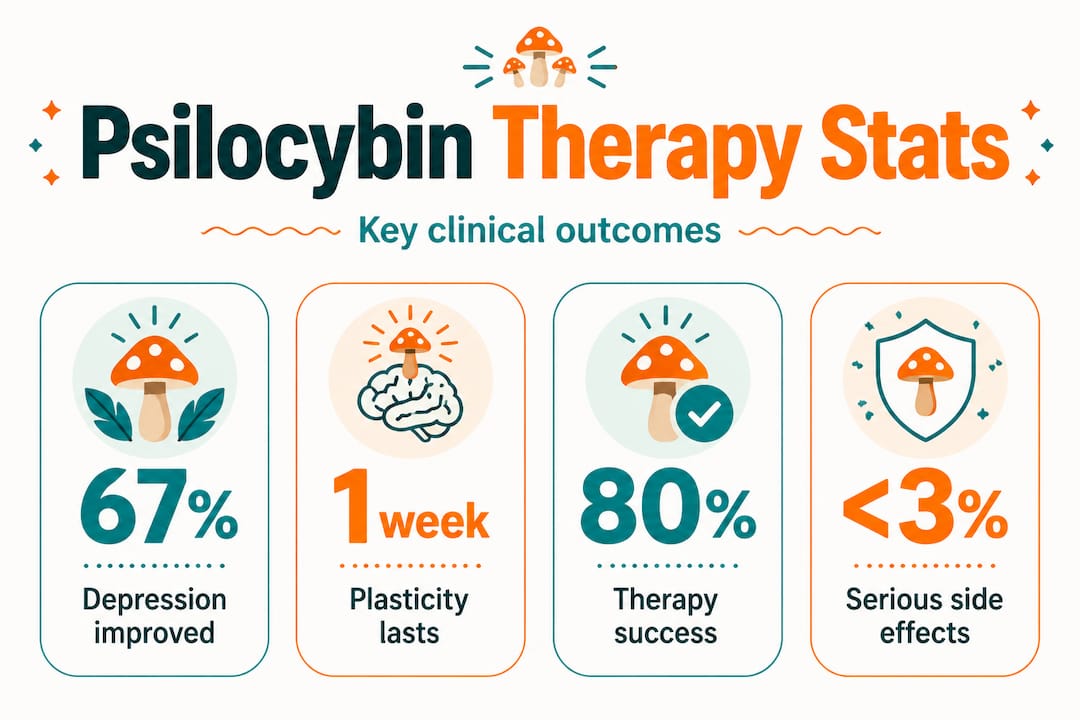
Depression trials tell the most compelling story. Across multiple carefully controlled studies, single or double doses of psilocybin in structured therapeutic settings produce response and remission rates ranging from 50 to 80 percent in treatment-resistant depression. These are numbers that most conventional antidepressants can’t match for the same population. Crucially, these effects emerge rapidly, often within days of a session, and in many participants they persist for weeks or months without repeated dosing.
Here’s what major clinical trials have consistently reported:
- Rapid onset of antidepressant effects, frequently within 1 to 3 days
- Sustained remission in a significant proportion of participants beyond 3 months
- Improvements in emotional openness and psychological flexibility
- Reduced anxiety and improved existential wellbeing in palliative care patients
- Meaningful reductions in alcohol and tobacco dependence
The therapeutic setting turns out to matter enormously. Neuroplasticity outcomes are significantly greater when psilocybin is used in a supported, intentional context compared to passive use, such as an MRI scanner or unstructured environment. This is a critical distinction. The brain’s structural changes are real regardless of context, but whether those changes translate into lasting psychological benefit depends heavily on the environment, support, and integration work surrounding the experience.
“The neurobiological effects of psilocybin are real and measurable, but the clinical benefit depends on the whole therapeutic container. Chemistry is the key, but context is the door.” This is a perspective consistently reinforced by the researchers driving the field forward.
Now for the honest limitations. Microdosing, despite enormous popular enthusiasm, has not fared as well in rigorous trials. Microdosing at 2mg showed no significantly greater reduction in major depressive disorder symptoms compared to placebo in a randomized controlled trial. This doesn’t mean microdosing is worthless for everyone, but it does challenge the widespread assumption that smaller doses are a reliable clinical intervention for diagnosed depression. Some functional plasticity changes may be behavioral rather than structural and can persist independently of measurable spine density increases, which adds complexity to the picture.
| Approach | Evidence strength | Efficacy for depression | Duration of effect |
|---|---|---|---|
| Full-dose therapy (25mg+) | Strong (multiple RCTs) | 50 to 80% response rate | Weeks to months |
| Moderate dose (10 to 20mg) | Moderate | Promising, less studied | Weeks |
| Microdosing (1 to 3mg) | Weak for MDD | Not superior to placebo (RCT) | Unclear |
For a detailed breakdown of the latest findings, the psilocybin depression research page is worth reading alongside a look at mushroom benefits for mental health in the broader wellness context.
Safety, legal status, and best practices for Canadians
Understanding psilocybin’s science is one thing. Navigating its legal landscape in Canada is another, and conflating the two can lead to serious mistakes.
Psilocybin remains a Schedule III controlled substance under the Controlled Drugs and Substances Act. Possession, production, and distribution are illegal in most circumstances. However, Health Canada has created limited pathways for access. These include Section 56 exemptions for clinical research participants and healthcare professionals, and the Special Access Program (SAP), which allows seriously ill patients to apply for access to psilocybin therapy through licensed healthcare providers. These are narrow exceptions, not broad permissions, and they require clinical supervision throughout.
Research consistently shows that the therapeutic value of psilocybin’s neuroplasticity is strongly tied to context, including the quality of psychotherapy provided before, during, and after a session. The neuroplastic window opened by psilocybin is only useful if there’s meaningful psychological work to fill it. Without that, the brain may become more plastic without having any constructive experience to encode.
Clinical oversight is not optional. The research is clear that translation challenges from lab to lived experience are significant, and risks increase substantially outside supervised settings.
Essential safety steps before, during, and after a psilocybin session:
- Before: Full psychological screening for personal or family history of psychosis, schizophrenia, bipolar I disorder, or cardiovascular conditions
- Before: Discuss all medications, particularly SSRIs and MAOIs, with a qualified healthcare provider
- During: Have a trained guide or therapist present; use a comfortable, safe physical environment
- During: Set a clear intention; avoid high-stimulation or unpredictable settings
- After: Engage in structured integration work, journaling, or therapy within 48 to 72 hours
- After: Avoid redosing immediately; allow at least 4 to 6 weeks between full therapeutic sessions
The psilocybin safety protocols that credible researchers use are not optional add-ons. They’re the difference between benefit and harm. For a deeper overview, the mental health benefits guide and safe psilocybin usage tips provide practical, Canada-specific frameworks.
Pro Tip: Never use psilocybin as a direct substitute for therapy or psychiatric medication without medical guidance. The neuroplastic window it opens can be enormously productive, but an experienced guide or therapist dramatically improves outcomes and reduces risk of difficult or destabilizing experiences.
Our take: what most guides miss about psilocybin and neuroplasticity
Most articles in this space focus almost entirely on the chemistry, and they miss the bigger picture. Yes, psilocybin grows dendritic spines. Yes, BDNF goes up. Yes, synaptic density increases are measurable in humans. All of that is real and significant. But the spine density alone doesn’t heal anyone.
What actually produces lasting benefit is the combination of a chemically plastic brain and a carefully supported psychological experience. The integration work that follows a session, the ongoing therapy, the community support, and the quality of intention going in, these factors determine whether the neuroplastic window becomes a genuine therapeutic breakthrough or just an intense experience that fades. This is what most guides skip entirely because it isn’t as shareable as “psilocybin grows new brain connections.”
We’d also push back on the microdosing hype specifically. The popular narrative that small, regular doses of psilocybin are a low-risk, high-reward alternative to full therapeutic doses has not held up to clinical scrutiny for depression. We see many Canadians pinning significant mental health hopes on microdosing without understanding that the evidence, as of 2026, does not support it as a standalone clinical treatment for major depressive disorder. That doesn’t mean microdosing is useless for every purpose, but managing expectations honestly is a form of harm reduction too.
The screening question is also consistently underplayed. Psilocybin is not for everyone. Individuals with family histories of psychosis or schizophrenia face genuine risk, not theoretical risk. Proper pre-screening is as important as any other part of the protocol. If a guide or program skips this step, that’s a red flag.
For Canadians serious about exploring psilocybin responsibly, the path forward starts with credible information. Understanding science and safe access puts you in a much stronger position than chasing anecdotes.
Explore psilocybin resources and safe access options
If this article has clarified what’s possible, the next step is going deeper with resources you can actually trust.
At Three Amigos, we’ve built one of Canada’s most thorough libraries of psychedelic education alongside a carefully curated selection of quality psilocybin products, from dried mushrooms to microdose capsules, chocolates, and teas. Whether you’re beginning to understand the psilocybin science explained or you’re ready for a structured psilocybin experience guide, we make sure you have the knowledge and the access to move forward safely. We believe informed Canadians make better decisions, and better decisions produce better outcomes.
Frequently asked questions
How long do psilocybin’s neuroplastic effects last?
Structural effects like increased dendritic spine density can persist for up to a week after a single dose, while functional plasticity changes including behavioral and emotional improvements have been measured at three months or beyond in some participants.
Is microdosing psilocybin effective for depression?
Controlled clinical evidence shows that microdosing at 2mg does not significantly outperform placebo for major depressive disorder, meaning it should not be relied on as a primary treatment for clinically diagnosed depression.
Does psilocybin actually regrow new brain cells?
Psilocybin reliably increases dendritic spine density and synaptogenesis in key brain regions, but whether it drives true neurogenesis (the creation of entirely new neurons) in humans remains an open and actively studied question.
Is psilocybin legal for therapy in Canada?
Psilocybin is still a controlled substance in Canada, but Health Canada’s Special Access Program and Section 56 exemptions allow seriously ill individuals and licensed healthcare providers to access it legally under closely supervised therapeutic conditions.
Who shouldn’t use psilocybin for neuroplasticity?
Anyone with a personal or family history of schizophrenia, psychosis, or bipolar I disorder should avoid psilocybin, as these conditions significantly increase the risk of a destabilizing or psychotic response even at moderate doses.
Recommended
- Psilocybin science explained: unlock mental health benefits
- Psychedelic neuroscience: Psilocybin’s brain effects explained
- Psilocybin Research Explained: Mental Health Impacts
- Why use psilocybin: benefits, science & safe access

Thomas Wrona is a writer, designer, and wellness coach who believes that nature’s wisdom provides an antidote to the stress of modern life. As a former pro athlete, he’s all about staying in motion! When he’s not writing you’ll probably find Thomas outside.