

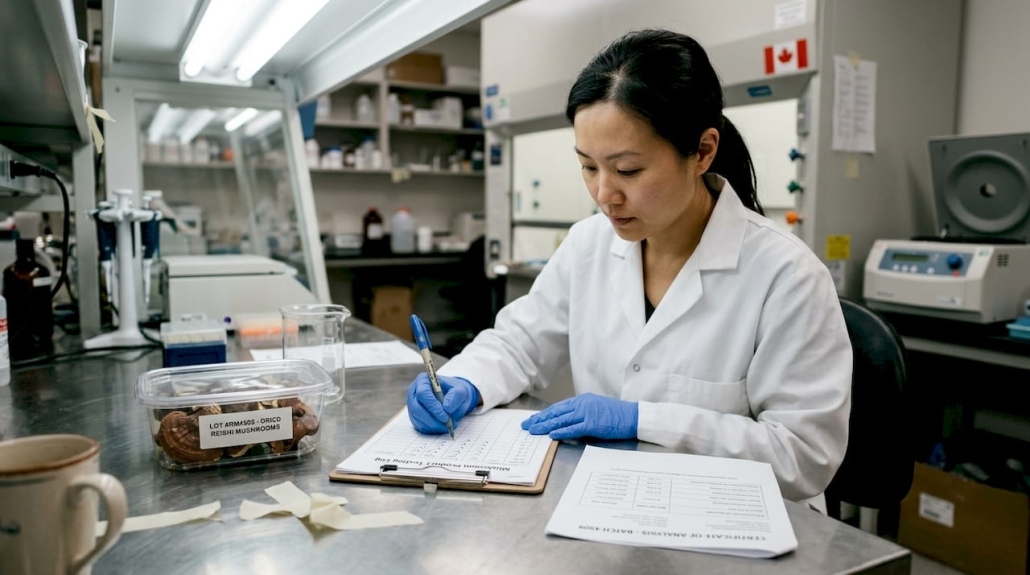
Quality Assurance in Mushroom Products: Safe Choices in Canada
Seeing a “lab-tested” label on a magic mushroom product feels reassuring. It shouldn’t. In Canada, that phrase carries no legal weight outside of Health Canada’s authorized programs, and most gray-market vendors use it loosely, sometimes referring to a single batch tested months ago, sometimes meaning nothing verifiable at all. Real quality assurance is a system, not a sticker. It covers potency verification, contamination screening, and regulated production processes. This guide breaks down what genuine quality assurance looks like for mushroom products in Canada, why it matters for your health and safety, and how to make smarter, more informed choices in a market full of noise.
Table of Contents
- What quality assurance means for mushroom products
- How regulation ensures safety: Canadian legal framework
- Testing methods and what the results mean
- Risks of unregulated and gray-market mushroom products
- Quality assurance and microdosing: real evidence vs. hype
- Why most ‘lab tested’ magic mushrooms aren’t truly safe in Canada
- Explore safe, science-backed mushroom options
- Frequently asked questions
Key Takeaways
| Point | Details |
|---|---|
| Legal sources matter | Only Health Canada-authorized mushroom products in SAP or clinical trials meet true quality assurance standards. |
| Rigorous lab testing | Quality products are tested for potency, heavy metals, mycotoxins, and microbes—protecting your health with proven methods. |
| Unregulated risks | Gray-market and dispensary products are inconsistent and often contaminated, with unreliable dosing and high safety risks. |
| Look for real data | Insist on published, batch-level lab tests and legal transparency before considering any mushroom product. |
| Preliminary evidence | Microdosing appears safe in trials, but reliable benefits require standardized, tested products—not hype or anecdotes. |
What quality assurance means for mushroom products
Quality assurance, in any industry, means building consistent safety and performance into every step of production, not just checking the final product once and hoping for the best. For mushroom products, that means three things: proven potency, absence of harmful contaminants, and accurate labeling. Without all three, you’re guessing.
Here’s why that matters. Psilocybin, the active compound in magic mushrooms, is highly dose-sensitive. A product that’s 0.2% psilocybin by weight delivers a very different experience than one at 2%. Without validated testing, you have no way of knowing which you’re getting. That unpredictability isn’t just inconvenient. It can be genuinely dangerous, especially for people using mushrooms for mental health support.
Formal quality assurance for psychoactive mushroom products involves several lab tests:
- Potency testing: Measures exact psilocybin and psilocin concentrations
- Heavy metal screening: Checks for arsenic, lead, cadmium, and mercury
- Mycotoxin panels: Detects mold-produced toxins that survive drying
- Microbial testing: Identifies harmful bacteria like E. coli or Salmonella
DIY growers and gray-market dispensaries rarely run all of these. Even when they do, one-time testing doesn’t guarantee batch-to-batch consistency. Regulated magic mushrooms require validated potency and contamination testing across every production run, not just a single sample.
“A single clean test result doesn’t make a product safe. Consistent, batch-verified testing across the full panel is what separates quality assurance from quality theater.”
Poor quality control carries real risks: toxic exposure, wildly unpredictable psychedelic effects, and potential legal exposure if you unknowingly purchase from an unregulated source. Follow safe psilocybin usage tips to reduce harm while navigating this landscape.
Pro Tip: If a vendor can’t show you a dated, batch-specific certificate of analysis from an accredited third-party lab, treat their product as untested regardless of what the label says.
How regulation ensures safety: Canadian legal framework
Knowing what quality assurance means, let’s see how Canadian law shapes what’s safe and accessible.
Magic mushrooms are Schedule III controlled substances under Canada’s Controlled Drugs and Substances Act. That means producing, selling, or possessing them is illegal except in very specific circumstances. Two legal pathways exist: participation in a Health Canada-approved clinical trial, or access through the Special Access Program (SAP), which allows seriously ill patients to request unapproved substances when no other treatment works.
Within these channels, products must meet Good Manufacturing Practice (GMP) standards. GMP covers:
- Facility sanitation and controlled production environments
- Validated testing for potency, impurities, and sterility
- Documented batch records and traceability
- Third-party lab verification before distribution
Outside these channels, no such requirements apply. Gray-market dispensaries operate without oversight, and their products reflect that.
| Feature | Regulated supply (SAP/clinical) | Gray-market supply |
|---|---|---|
| Potency verified | Yes, every batch | Rarely, if ever |
| Contamination tested | Yes, full panel | Inconsistent or absent |
| GMP certified | Required | Not applicable |
| Consumer recourse | Legal and documented | None |
| Legal protection | Full | None |
The gap is significant. Regulated products go through rigorous documentation. Gray-market products rely on trust and marketing language. For consumers using mushrooms therapeutically, that difference can directly affect outcomes. Check the legal guide for mushroom edibles to understand what’s permitted and what isn’t before you buy.
Testing methods and what the results mean
So, what happens in quality-controlled labs, and what should you expect from a trustworthy product?
Two analytical methods dominate professional mushroom testing. HPLC (High-Performance Liquid Chromatography) separates compounds in a sample and measures their concentration. LC-MS/MS (Liquid Chromatography with Tandem Mass Spectrometry) goes further, identifying compounds by molecular weight for higher accuracy. Both are considered gold standards. Standard lab tests cover psilocybin and psilocin levels, heavy metals, mycotoxins, and microbes using these validated techniques.

Here’s what a complete lab panel looks like and why each test matters:
| Test type | What it detects | Why it matters |
|---|---|---|
| Potency (HPLC/LC-MS/MS) | Psilocybin, psilocin % | Accurate dosing |
| Heavy metals | Arsenic, lead, cadmium | Toxicity risk |
| Mycotoxins | Aflatoxin, ochratoxin | Liver and kidney damage |
| Microbial | E. coli, Salmonella, yeast | Infection risk |
The contamination risk is not theoretical. Mushroom samples often contain toxic metals, with risk significantly higher in unregulated products. Mushrooms are bioaccumulators, meaning they absorb whatever is in their growing substrate. Contaminated compost, recycled cardboard, or untested grain spawn can all introduce heavy metals into the final product.
- A clean potency result tells you the dose is accurate
- A clean metals result tells you the substrate was safe
- A clean microbial result tells you storage and handling were controlled
- A clean mycotoxin result tells you the mushrooms weren’t improperly dried or stored
Pro Tip: When reviewing a lab report, check the date and lot number. If the report is older than six months or doesn’t match the product batch, it’s not valid for what you’re buying.
For a practical framework on applying this knowledge, the guide on safe and effective shroom use walks through how to evaluate what you’re consuming.
Risks of unregulated and gray-market mushroom products
Understanding lab testing raises an important question: What are the real-world risks if quality steps aren’t followed?
The short answer is: significant. Potency in unregulated dried mushrooms can range from 0.2% to over 2% psilocybin by weight. That’s a tenfold difference. A dose that feels mild from one batch could be overwhelming from the next, even if the weight looks identical. There’s no reliable way to self-correct for that without lab data.

Contamination is the other major concern. Only 9 to 40% of dispensary mushroom products show any lab testing, and almost none meet GMP standards. That means the vast majority of gray-market products have no verified safety profile at all.
Common gray-market marketing claims and what they actually mean:
- “Lab-tested”: Usually refers to one batch, one time, with no ongoing verification
- “Organic”: Unverifiable without certified substrate documentation
- “Standardized dose”: Rarely backed by actual potency data
- “Premium quality”: A marketing term with no regulatory definition
“Illegally supplied capsules are unstandardized in approximately 97% of cases, meaning the labeled dose is almost never what’s actually in the product.”
Wild foraging adds another layer of danger entirely. Several mushroom species closely resemble psilocybin varieties and are deadly. Misidentification has caused fatalities. This isn’t a fringe risk. It’s a documented pattern. Review the safe mushroom consumption workflow before making any purchasing decisions, and understand what distinguishes verified species like Melmac mushrooms from lookalikes.
Quality assurance and microdosing: real evidence vs. hype
With risks in mind, how does quality assurance impact the effectiveness and safety of microdosing and therapy?
Clinical microdosing research uses precisely measured doses, typically around 2mg of psilocybin, verified by lab analysis before administration. Clinical trials with 2mg microdosing show a strong safety profile, but efficacy compared to placebo remains unclear. That’s an important finding. It means the therapeutic benefit, if real, depends heavily on accurate dosing. A product that delivers 0.5mg when you think you’re taking 2mg won’t replicate trial conditions.
Here’s how to approach microdosing with quality in mind:
- Understand the legal pathway: SAP access or clinical trial enrollment are the only legal routes to verified product in Canada
- Avoid unlabeled capsules: If the product doesn’t list exact psilocybin content with a supporting lab report, the dose is unknown
- Track your response carefully: Inconsistent effects often signal inconsistent product, not individual variation
- Separate anecdote from evidence: Testimonials are not clinical data. Wait for published trial results before drawing conclusions
- Consult a healthcare provider: Especially if you’re using mushrooms alongside other medications or for a diagnosed condition
Gray-market microdose capsules are almost never standardized. The dose on the label reflects what went into the capsule during production, not what was verified by a lab. For therapeutic use, that gap matters enormously. The science behind psilocybin’s benefits is promising, but it only applies when the product matches what researchers actually tested.
Pro Tip: Don’t confuse a positive personal experience with proof of product quality. Placebo effects are strong with psychedelics. Real quality assurance removes the guesswork.
Why most ‘lab tested’ magic mushrooms aren’t truly safe in Canada
With all the facts on the table, let’s examine what most people and even many vendors get wrong about “lab-tested” mushrooms.
Here’s the uncomfortable reality: less than 10% of microdose capsules in the gray market are standardized to any official benchmark. That means when a vendor says “lab-tested,” they’re almost certainly describing a one-time check on a single batch, not an ongoing quality system. GMP-certified production requires testing every batch, maintaining records, and submitting to third-party audits. None of that happens in the gray market.
We’ve seen vendors cite a single certificate of analysis from years ago as proof of consistent quality. That’s not quality assurance. That’s a marketing prop. Real quality assurance is a process, not a document.
The average Canadian consumer has no easy way to verify these claims. That’s exactly why Health Canada’s oversight matters so much. Without regulatory infrastructure, “lab-tested” becomes whatever a vendor decides it means. The red flags are consistent: no lot number on the report, no accredited lab name, no date, no full panel results. If any of those are missing, the claim is incomplete at best.
Standardized testing isn’t a premium feature. It’s the minimum bar for product confidence. Until Canada’s regulatory framework expands legal access, the safest approach is to understand exactly what you’re buying and hold vendors to a higher standard of transparency.
Explore safe, science-backed mushroom options
Ready to make safe, informed choices? Start with products that back their claims with science.

At Three Amigos, we take quality seriously because the stakes are real. Whether you’re exploring microdosing capsules for mental wellness or looking for consistent, clearly labeled products, our catalog is built around transparency and education. We also provide in-depth resources on the mental health benefits of psilocybin so you can make decisions grounded in actual science, not hype. If edibles are your preference, browse our selection of magic mushroom edibles with clear product information. Your safety starts with knowing what’s in what you consume.
Frequently asked questions
Are any magic mushroom products legal to buy in Canada?
Legal access for magic mushrooms is limited to authorized programs like clinical trials and the Special Access Program; sales outside these contexts remain illegal under federal law.
What tests should quality mushroom products pass?
High-quality products are tested for potency, metals, mycotoxins, and microbes using validated lab techniques like HPLC and LC-MS/MS on every production batch.
How common is contamination in unregulated mushrooms?
All tested unregulated mushrooms contained at least one toxic metal, making contamination a near-certainty in gray-market products rather than an edge case.
Is microdosing with magic mushrooms proven safe and effective?
2mg microdosing trials show a solid safety profile, but efficacy over placebo remains unclear, and product quality directly affects whether trial conditions can even be replicated.
How can I spot misleading quality claims?
Be skeptical of any product without a dated, batch-specific lab report from an accredited facility. Most gray-market capsules are not properly standardized, making broad claims like “organic” or “lab-tested” essentially unverifiable.
Recommended
- Step-by-step mushroom safety guide for Canadians 2026
- Mushroom edibles: safe use and legal guide Canada 2026
- The Ultimate Guide To Mushroom Capsules Canada
- Magic mushroom safety workflow: a Canadian guide

Thomas Wrona is a writer, designer, and wellness coach who believes that nature’s wisdom provides an antidote to the stress of modern life. As a former pro athlete, he’s all about staying in motion! When he’s not writing you’ll probably find Thomas outside.


