

How to use mushroom microdosing intention for wellness
TL;DR:
- Setting clear intentions enhances the subtle effects of microdosing psilocybin mushrooms.
- Intentional microdosing improves mood, focus, and satisfaction while reducing anxiety and enhancing outcomes.
- Legal and safety considerations in Canada require precise dosing, reputable sources, and responsible use.
Many people start microdosing psilocybin mushrooms expecting automatic results: better focus, lifted mood, sharper creativity. But the reality is more nuanced. The subtle effects of psilocybin often depend as much on your mindset as on the dose itself. Without a clear intention, microdosing can feel directionless, even disappointing. This guide explains what mushroom microdosing intention actually means, how it shapes your experience, what safety and legal realities look like in Canada, and how to build a simple, practical intention-setting practice that gives your microdosing a real purpose.
Table of Contents
- What does microdosing intention mean?
- How intention shapes the microdosing experience
- The Canadian context: Safety, legality, and responsible use
- Practical steps to set and realize your microdosing intention
- A fresh perspective on intention and microdosing: Beyond the hype
- Explore science-backed microdosing with 3 Amigos
- Frequently asked questions
Key Takeaways
| Point | Details |
|---|---|
| Intention is essential | Setting a specific intention maximizes the benefits of mushroom microdosing. |
| Results are individual | Microdosing effects depend on your mindset, goals, and personal context. |
| Safety comes first | Always check the legal status, avoid contraindications, and start with a low dose. |
| Track your progress | Journaling your intention and effects helps you tailor and improve your experience. |
What does microdosing intention mean?
Most people who try microdosing for the first time focus almost entirely on dosage. How much? How often? What strain? These are fair questions, but they miss something foundational. Before any of that matters, you need to know why you’re doing it.
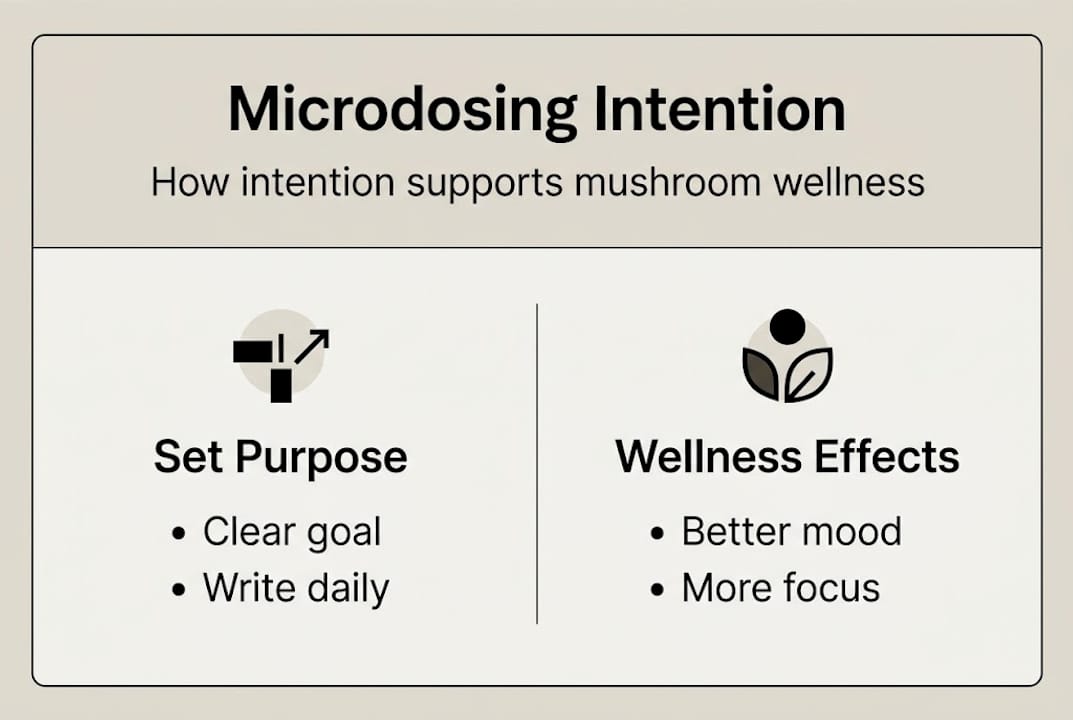
Mushroom microdosing intention refers to setting a clear, purposeful mindset or goal before taking a sub-perceptual dose of psilocybin mushrooms to direct subtle effects toward mental health improvements, personal development, enhanced focus, creativity, or emotional well-being. That definition sounds simple, but it changes everything about how you approach each dose.
Think of it this way: microdosing without intention is like driving without a destination. You might end up somewhere interesting, but you’re just as likely to go in circles.
Intentional microdosing is the deliberate opposite of casual use. Casual use means taking a small dose and hoping something good happens. Intentional microdosing means sitting with a specific goal, naming it clearly, and orienting your awareness toward it before and during your dose day. Understanding why microdose shrooms in the first place is a key part of building that foundation.
Common intention categories include:
- Mental health support: Reducing anxiety, lifting low mood, building emotional resilience
- Emotional healing: Processing grief, past trauma, or relationship patterns
- Focus and productivity: Improving concentration for creative or professional work
- Habit change: Interrupting automatic behaviors like overworking, substance use, or negative self-talk
- Creativity: Opening up new perspectives, artistic flow, or problem-solving ability
“Intention enhances microdosing by directing subtle psilocybin effects, making it crucial for mental health and personal development outcomes.” — Psychology Today
The key insight here is that psilocybin at sub-perceptual doses doesn’t produce dramatic effects on its own. It creates a window of increased neuroplasticity and subtle mood shifts. Intention gives that window a direction. Without it, the window just opens and closes without much happening.
Setting an intention doesn’t require a ritual or a meditation practice. It can be as simple as writing one sentence in a notebook before you dose: Today I want to notice where I feel resistance in my work. That single act of naming shifts your attention and primes your brain to look for what matters.
How intention shapes the microdosing experience
Defining intention is just the start. Understanding how it practically changes your experience is where things get genuinely interesting.
Self-reported outcomes from microdosers consistently show improvements in mood, focus, and a sense of purpose when users set clear goals before each dose. But the picture from controlled research is more complicated. Empirical data on microdosing is mixed: self-reports show mood and productivity gains, but placebo-controlled trials often show results no better than placebo for cognition and mood, suggesting possible placebo amplification. That finding isn’t a reason to dismiss microdosing. It’s actually a strong argument for intention-setting.

If your mindset and expectations shape the outcome as much as the substance, then building a clear, positive, and specific intention before each dose is one of the most powerful tools you have. Explore the microdosing benefits and the microdosing wellness science behind these effects to understand what the research actually supports.
| Factor | With intention | Without intention |
|---|---|---|
| Mood outcomes | Often improved, user-directed | Variable, inconsistent |
| Integration | Active, journaled, reviewed | Passive, easily forgotten |
| Satisfaction | Higher, goal-oriented | Lower, vague |
| Side effect awareness | Better monitored | Easily missed |
| Long-term benefit | More likely | Less likely |
One possible mechanism: intention acts as a priming tool for the brain. When you set a goal before dosing, you activate specific neural networks associated with that goal. Psilocybin’s effect on serotonin receptors may amplify the salience of whatever you’re focused on, making intentional states more noticeable and more actionable.
Statistic to know: Up to 20% of microdosers report mild side effects like anxiety or insomnia. Setting a clear, calm intention before dosing may help reduce the likelihood of anxiety-driven experiences.
The practical takeaway is that intention doesn’t just make microdosing feel more meaningful. It may genuinely improve outcomes by directing your attention, reducing anxiety, and giving you a framework for evaluating whether the practice is actually working for you.
The Canadian context: Safety, legality, and responsible use
With intention clear, it’s vital to look at the realities of safe and legal use in Canada.
Psilocybin remains a controlled substance under Canadian federal law. Legal risks in Canada are real: psilocybin is classified as a Schedule III substance, with limited exemptions granted by Health Canada for medical and research purposes. Recreational microdosing falls outside those exemptions. For a full breakdown, the psilocybin legal guide and psilocybin legality in Canada are worth reading before you make any decisions.
Safety is equally important. Here’s who should avoid microdosing entirely:
- Pregnant or breastfeeding individuals
- Anyone under 19 years old
- People with a personal or family history of psychosis, schizophrenia, or bipolar disorder
- Those with serious cardiac conditions
- Anyone currently taking SSRIs, MAOIs, or lithium
| Risk area | Details | Safe practice |
|---|---|---|
| Side effects | Anxiety, insomnia (~20%) | Start low, journal reactions |
| Drug interactions | SSRIs, MAOIs, lithium | Consult a doctor first |
| Legal risk | Controlled substance in Canada | Understand exemptions |
| Product quality | Unregulated market | Use lab-tested sources |
| Dosing accuracy | Easy to overshoot | Use a precise milligram scale |
Product quality matters more than most people realize. In an unregulated market, potency can vary significantly between batches and strains. Using a precise milligram scale and sourcing from reputable, lab-tested suppliers reduces the risk of accidentally taking more than intended. The microdosing essentials guide covers this in practical detail.
Pro Tip: Keep a dedicated journal for your microdosing practice. Log your intention before each dose, note how you feel during and after, and track any side effects. This record becomes your personal safety net and your most honest feedback on whether microdosing is actually serving your goals.
Practical steps to set and realize your microdosing intention
Armed with knowledge about risks and benefits, let’s move into how you can put intention-setting into practice.
The Fadiman protocol is one of the most widely used beginner frameworks: dose one day, rest two days, repeat. It’s a good starting point because it avoids tolerance buildup and gives you clear dose days to anchor your intention practice. Starting at 0.1g dried mushrooms is the standard recommendation for beginners. That’s a genuinely sub-perceptual amount for most people, which means you should feel subtle shifts but remain fully functional.
Here’s a simple step-by-step process:
- Define your goal. Write one specific intention in plain language. Not “feel better” but “notice when I avoid difficult conversations today.”
- Choose your method. Capsules offer precise dosing and are easy to integrate into a morning routine. Teas work well if you prefer a slower onset.
- Start low and measure accurately. Use a milligram-accurate scale. Never eyeball a dose.
- Set your intention before dosing. Read your written intention aloud or silently. Take a few slow breaths. This takes 60 seconds and matters more than most people expect.
- Journal your experience. Note mood, focus, energy, and any unexpected reactions throughout the dose day.
- Assess weekly. Review your journal entries at the end of each week. Is the intention still relevant? Are you seeing any shifts? Adjust your goal or your protocol based on what you actually observe.
For a more detailed walkthrough, the psilocybin experience steps guide and psilocybin science resource both offer evidence-grounded frameworks.
Pro Tip: Schedule a 10-minute weekly review every Sunday. Look back at your journal, refine your intention for the coming week, and note whether your microdosing approach needs any adjustment. Consistency in reflection is what separates people who get results from those who don’t.
A fresh perspective on intention and microdosing: Beyond the hype
Here’s something most guides won’t tell you: for a lot of people, the intention is more powerful than the mushroom.
We’ve seen this pattern repeatedly. Someone starts microdosing with high hopes, no clear goal, and a vague sense that the substance will “do something.” A few weeks later, they’re frustrated. Nothing changed. They blame the dose, the strain, or the protocol. But the real issue is that they never gave their brain a direction to move in.
The uncomfortable truth is that psilocybin at microdose levels is not a fix. It’s a nudge. And a nudge without a direction is just noise. The microdosing realities are clear: real growth comes from sustained, mindful effort over time, not from any single dose or even a single protocol.
What actually works is treating intention as the primary tool and psilocybin as a supporting one. When you flip that relationship, the whole practice becomes more honest, more effective, and far less likely to lead to disappointment or unsafe use.
Explore science-backed microdosing with 3 Amigos
If you’re ready to integrate intention with safe and effective microdosing, here are some next steps.
At Three Amigos, we believe that education and product quality go hand in hand. You can’t build a meaningful microdosing practice on unreliable products, and you can’t get real results without understanding what you’re doing and why.
Our microdosing capsules are lab-tested, precisely dosed, and designed for Canadians who want a consistent, intention-driven practice. Pair them with our microdosing capsules science guide to understand exactly what you’re working with. For those exploring mental health applications, our therapeutic uses resource offers a grounded, research-informed starting point.
Frequently asked questions
Can I legally microdose psilocybin mushrooms in Canada?
Psilocybin is federally controlled in Canada with limited exemptions for medical and research use; recreational microdosing carries real legal risk.
What is a typical beginner psilocybin microdose?
Most protocols start at 0.1g of dried mushrooms; always measure precisely with a milligram scale and increase slowly if needed.
How do I set an effective microdosing intention?
Write one specific, actionable goal before each dose and direct subtle effects toward it by reading your intention aloud and journaling your experience afterward.
Are the benefits of mushroom microdosing scientifically proven?
Self-reports show gains in mood and productivity, but placebo-controlled trials often show results no better than placebo, which makes mindset and intention especially important.
Are there risks or side effects with microdosing?
About 20% of users report mild side effects like anxiety or insomnia, and those with psychiatric history, cardiac conditions, or on certain medications should avoid it entirely.
Recommended
- Microdosing for Wellness: What Science Says in 2026
- Safe mushroom consumption workflow for mental health 2026
- 6 Ways to Use Mushroom Edibles for Wellness and Growth
- Why Microdose Shrooms: Unlocking Focus and Wellbeing

Thomas Wrona is a writer, designer, and wellness coach who believes that nature’s wisdom provides an antidote to the stress of modern life. As a former pro athlete, he’s all about staying in motion! When he’s not writing you’ll probably find Thomas outside.