

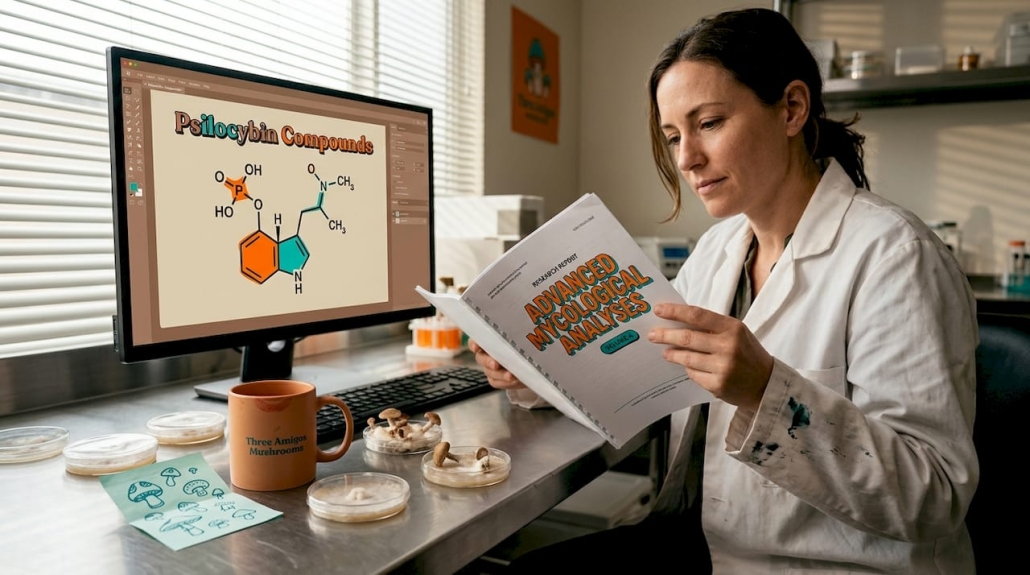
Psilocybin’s entourage effect and mental health benefits
TL;DR:
- Psilocybin mushrooms contain multiple bioactive compounds that work synergistically for enhanced therapeutic effects.
- The entourage effect involves compounds like baeocystin and beta-carbolines modulating serotonin receptors and prolonging effects.
- Whole mushroom extracts may offer longer-lasting and richer experiences compared to isolated synthetic psilocybin.
Most people who explore magic mushrooms assume psilocybin is the whole story. One compound enters the brain, flips a switch, and the experience unfolds. That assumption is understandable but incomplete. Emerging research shows that psilocybin mushrooms contain a rich network of bioactive molecules, and the way these compounds interact with each other may be what makes the whole experience more therapeutically powerful than any isolated ingredient could achieve on its own. For Canadians navigating mental health challenges and exploring psilocybin’s potential, understanding this synergy could fundamentally change how you think about dosing, product selection, and long-term outcomes.
Table of Contents
- What is the entourage effect in psilocybin?
- How does the psilocybin entourage effect work in the brain?
- Whole mushroom extract vs. synthetic psilocybin: Evidence of enhanced effects
- Mental health implications for Canadians: Opportunities and cautions
- Our perspective: The overlooked power and limits of psilocybin synergy
- Explore psilocybin products, science, and educational guides in Canada
- Frequently asked questions
Key Takeaways
| Point | Details |
|---|---|
| Synergy drives effects | Psilocybin’s entourage effect results from multiple mushroom compounds working together for enhanced therapeutic outcomes. |
| Whole extract performs better | Animal studies show whole mushroom extracts outperform synthetic psilocybin alone in reducing anxiety and compulsive behaviors. |
| Complex mechanisms | Synergistic compounds interact with serotonin receptors and enzymes, prolonging and deepening effects on the brain. |
| Canadian context | Legal pathways in Canada include clinical trials and exemptions, but more human safety data is needed for whole extracts. |
| Expert guidance matters | Personal and clinical use should be guided by professional advice, especially with whole mushroom extracts. |
What is the entourage effect in psilocybin?
The term “entourage effect” originally gained traction in cannabis research, describing how cannabinoids and terpenes work together to produce effects stronger than THC or CBD alone. The same principle now applies to psilocybin mushrooms. Synergistic interactions in psilocybin mushroom compounds show that psilocybin does not act in isolation. Instead, it works alongside baeocystin, norbaeocystin, aeruginascin, and beta-carbolines to produce effects that exceed what any single compound delivers by itself.
Here is a quick breakdown of the key players in a typical psilocybin mushroom:
- Psilocybin: The primary psychoactive compound, converted to psilocin in the body, which then acts on serotonin receptors.
- Baeocystin: A structural analog of psilocybin, less studied but thought to contribute to mood and perceptual effects.
- Norbaeocystin: Found in smaller amounts, with potential activity at serotonin-related sites.
- Aeruginascin: An ammonium compound theorized to influence the emotional tone of a psychedelic experience, potentially reducing anxiety.
- Beta-carbolines: Natural MAOA inhibitors present in some mushroom species that can extend the duration and intensity of effects.
What ties this together is the concept of psilocybin benefits and science showing that isolating one molecule strips away a natural chemical context that likely evolved over millions of years. Each compound modulates different receptors and pathways, and their combined activity creates effects that feel qualitatively different from what synthetic psilocybin alone produces.
“The entourage effect in psilocybin refers to the synergistic interaction of psilocybin with other bioactive compounds in psilocybin-producing mushrooms, such as baeocystin, norbaeocystin, aeruginascin, and beta-carbolines, leading to enhanced therapeutic efficacy compared to isolated psilocybin.” — Nature, 2026
This is not fringe thinking. It aligns with a broader pharmacological understanding that whole-plant and whole-fungi medicines frequently outperform their isolated constituents. The full chemical profile of a mushroom is, in this framing, a feature, not noise.
How does the psilocybin entourage effect work in the brain?
Understanding what the entourage effect is leads naturally to a bigger question: how exactly do these compounds interact within the brain itself? The mechanism is more precise than you might expect.
Researchers have used network pharmacology, molecular docking, and molecular dynamics simulations to map these interactions. Here is what that research reveals in practical terms:
- Receptor binding at HTR2A: Psilocin (the active form of psilocybin) and its companion compounds bind to the serotonin 2A receptor, known as HTR2A. They form stable salt bridges mimicking serotonin, effectively sitting in the same molecular seat as your brain’s own serotonin. This is what drives the perceptual and emotional shifts associated with the psychedelic experience.
- MAOA inhibition: Beta-carbolines and other compounds inhibit monoamine oxidase A (MAOA), an enzyme that normally breaks down serotonin, dopamine, and related neurotransmitters. When MAOA is blocked, these neurotransmitters stay active longer, amplifying and extending the effects of psilocin in the brain.
- Multi-target engagement: Unlike a pharmaceutical drug designed to hit one receptor with precision, the mushroom compound network engages multiple biological targets simultaneously. This distributed approach is what makes the psilocybin effects and benefits feel broader and, according to patient reports, more emotionally textured than clinical synthetic psilocybin alone.
- Neuroplasticity signaling: The combined receptor activation promotes BDNF (brain-derived neurotrophic factor) release and downstream neuroplasticity pathways. This is the brain’s ability to rewire itself, which is central to lasting recovery from depression, PTSD, and anxiety disorders.
- Extended effect windows: MAOA inhibition, combined with the delayed metabolism of companion compounds, means the therapeutic window stays open longer. This matters practically: more time processing emotions and insights during a session could translate to more durable mental health improvements afterward.
Pro Tip: The extended duration created by MAOA inhibition is one reason whole mushroom experiences often feel more complete than clinical accounts of synthetic psilocybin. If you are working with a therapist or guide, this longer window can create more space for meaningful psychological work.
Research into psilocybin’s brain effects continues to reveal that the mushroom’s chemistry is more strategically layered than scientists initially assumed. Each compound appears to contribute a different piece of a larger neurochemical picture.
Whole mushroom extract vs. synthetic psilocybin: Evidence of enhanced effects
With a grasp of brain mechanics, we can look at real-world and scientific outcomes comparing whole mushrooms to isolated compounds. The evidence is not yet definitive for humans, but what exists is striking.
The most compelling data currently comes from animal models. Mushroom extract reduces compulsive behavior more effectively than synthetic psilocybin in rodent OCD models. Specifically, psychedelic mushroom extract (PME) produced more pronounced reductions in compulsive grooming and anxiety-like behaviors than the same dose of synthetic psilocybin alone, with effects lasting up to seven weeks. Seven weeks. That is not a small difference in an acute pharmacology study. That is the kind of sustained change that matters clinically.

On the clinical trial side, the picture is more nuanced. Synthetic psilocybin in clinical trials is preferred because it allows precise dosing and regulatory compliance. Trials showing rapid antidepressant effects in treatment-resistant depression typically use 25mg synthetic doses. This is not because synthetic is better, but because it is easier to standardize, measure, and defend in a regulatory context. The science favoring whole extracts exists, but the infrastructure lags behind.
Patient and anecdotal reports bridge some of that gap. Many users who have tried both formats describe whole mushroom experiences as emotionally richer, more integrative, and more likely to produce lasting shifts in perspective. The texture of the experience, not just its peak intensity, seems to change.
| Feature | Whole mushroom extract | Synthetic psilocybin |
|---|---|---|
| Compound profile | Full spectrum (psilocybin, baeocystin, beta-carbolines, etc.) | Single isolated molecule |
| Duration of effects | Potentially longer due to MAOA inhibition | More predictable, shorter window |
| Animal model evidence | Stronger, longer-lasting behavioral effects | Effective but shorter duration |
| Clinical trial use | Limited, harder to standardize | Preferred for regulatory compliance |
| Patient preference | Often reported as richer, more emotional | Described as more clinical |
| Dosing precision | Variable by species and batch | Highly precise and consistent |
“Most clinical trials use synthetic psilocybin with limited direct data on whole extracts; anecdotal and patient reports prefer mushrooms for richer, more emotionally resonant experiences.” — Nature, 2026
This does not mean synthetic psilocybin is inferior as a medicine. It means the tools we are using to study psychedelics were designed for single-molecule pharmaceuticals, and whole fungi do not fit neatly into that model. Looking at psilocybin depression remission research illustrates just how promising even the synthetic data is, which makes the whole-extract findings even more worth paying attention to.
Mental health implications for Canadians: Opportunities and cautions
Having weighed scientific and patient evidence, let’s connect these findings to mental health opportunities and safety considerations for Canadians specifically.

The therapeutic implications for mental health suggest that whole mushroom extracts may enhance neuroplasticity, improve emotional processing, and sustain benefits longer than isolated compounds, through synergistic modulation of serotonin pathways. For Canadians dealing with depression, anxiety, PTSD, or addiction, these are meaningful clinical possibilities.
Opportunities the entourage effect may open up:
- Enhanced neuroplasticity: The multi-receptor engagement from full-spectrum mushroom compounds may support more robust brain rewiring during and after a session, accelerating therapeutic progress.
- Deeper emotional processing: Aeruginascin in particular is theorized to soften the anxiety component of psychedelic experiences, making difficult emotional material more accessible and workable during therapy.
- Sustained symptom relief: Animal data suggesting seven-week lasting effects, if it translates to humans, would represent a substantial improvement over current antidepressant medications that require daily dosing.
- Broader symptom coverage: Multi-target pharmacology may address overlapping conditions simultaneously, relevant for Canadians who often present with comorbid depression, anxiety, and trauma.
Canadian legal context: Canada has established legal pathways for therapeutic psilocybin access. Health Canada’s Section 56 exemptions allow certain patients and practitioners to access psilocybin outside normal regulatory restrictions. Clinical trials are also underway at several Canadian institutions. These pathways exist for synthetic psilocybin primarily, but they represent the opening of a door that could eventually include whole-extract products as evidence accumulates.
Understanding psilocybin effects and mental health in the Canadian context means recognizing that the regulatory environment is moving, even if slowly. For those exploring psilocybin now, the entourage effect is a reason to think carefully about product form, not just dose.
Safety cautions you should know:
- Sex-specific effects and cardiovascular checks have been flagged as necessary for companion compounds like beta-carbolines. Women and individuals with cardiovascular conditions may respond differently to full-spectrum extracts.
- There are no established human benchmarks for many of the companion compounds. Baeocystin and norbaeocystin, for example, have been barely studied in human subjects despite being present in most psilocybin mushrooms.
- Computational models predict stronger and longer effects from extracts, which is promising but also means the risk profile scales upward. This is not a reason to avoid whole mushrooms, but it is a reason to approach them with respect and preparation.
Pro Tip: If you are considering whole mushroom extracts for therapeutic purposes, working with a medical professional, ideally one familiar with psilocybin mental health research in the Canadian context, provides an important safety layer. This is especially true for those with cardiovascular concerns or complex mental health histories. See the psilocybin mental health guide Canada for a deeper look at what to consider before you start.
Our perspective: The overlooked power and limits of psilocybin synergy
Here is something the mainstream conversation about psychedelic therapy consistently misses: the molecule is not the medicine. The molecule is a key, but the whole mushroom is the lockpicking set.
We have watched the psychedelic renaissance focus almost entirely on psilocybin as a single compound because that is what fits into the pharmaceutical development pipeline. Isolate it, standardize it, patent delivery mechanisms around it, run double-blind trials. That process is necessary for regulatory approval, and it has produced real results. But it has also created a cultural assumption that purified psilocybin is the gold standard, and that whole mushrooms are somehow a crude approximation.
The entourage effect evidence challenges that assumption directly. When animal models show whole mushroom extracts outperforming synthetic psilocybin on duration and intensity of therapeutic effects, that is not a minor footnote. That is a signal that the reductive pharmaceutical approach may be leaving meaningful therapeutic value on the table.
In Canada, this matters practically. The legal gray zone that many Canadians navigate when accessing mushroom products is real, and it exists partly because the regulatory system is built around single molecules, not whole fungi. As the therapeutic uses of dried mushrooms landscape evolves, we expect the conversation to shift toward extract quality, compound ratios, and species selection as much as dose in milligrams.
Our hard-won lesson from years in this space: quality of source and method of preparation matter more than most users realize. Two products labeled “psilocybin mushrooms” can have vastly different compound profiles depending on species, growing conditions, drying method, and storage. The entourage effect is only as powerful as the integrity of the compounds in your product. Accessing good psilocybin science and mental health education before choosing a product format is not optional, it is foundational.
The limits are real too. We do not yet have human clinical data specifically on whole extract entourage effects. The animal model evidence is compelling but not definitive. Approaching whole mushrooms with curiosity and caution is not contradictory, it is wise.
Explore psilocybin products, science, and educational guides in Canada
The science of the entourage effect is exactly why product quality and educational grounding matter so much for Canadian users exploring psilocybin for mental health or personal growth.

At Three Amigos, we carry a curated selection of dried mushrooms, microdose capsules, psilocybin edibles, and educational resources built specifically for the Canadian community. Whether you are reading the research and considering your first microdose, or you are an experienced user looking to understand the full compound picture behind your practice, our guides and product range are designed to meet you where you are. Every product we offer is selected with quality and compound integrity in mind, because we understand that the entourage effect only works when the whole mushroom chemistry is intact and consistent. Visit 3amigos.co to explore our full range of psilocybin products and science-backed educational guides.
Frequently asked questions
Can the entourage effect make psilocybin therapy more effective for depression?
Evidence strongly suggests yes. Mushroom extracts reduce depression-like behaviors longer than synthetic psilocybin in animal models, and the multi-receptor mechanism suggests a broader antidepressant reach than isolated compounds achieve.
Are there risks or downsides to the entourage effect in psilocybin?
Yes, there are legitimate cautions. Sex-specific effects and cardiovascular safety concerns exist for some companion compounds, and no human benchmarks have been established yet for several key molecules in the entourage.
Is psilocybin legal for mental health use in Canada?
Psilocybin remains a controlled substance, but exemptions and clinical trials offer legal pathways for therapeutic access in Canada, particularly under Health Canada’s Section 56 exemption framework.
Do all psilocybin mushrooms produce the same entourage effect?
No. Baeocystin, norbaeocystin, and beta-carbolines vary significantly by species and even by growing conditions, meaning the strength and character of the entourage effect differs across mushroom varieties and product formats.
Recommended
- Psilocybin Research Explained: Mental Health Impacts
- Psilocybin effects: mental health and personal growth
- Psilocybin science explained: unlock mental health benefits
- Therapeutic uses of dried mushrooms: mental health 2026

Thomas Wrona is a writer, designer, and wellness coach who believes that nature’s wisdom provides an antidote to the stress of modern life. As a former pro athlete, he’s all about staying in motion! When he’s not writing you’ll probably find Thomas outside.


