

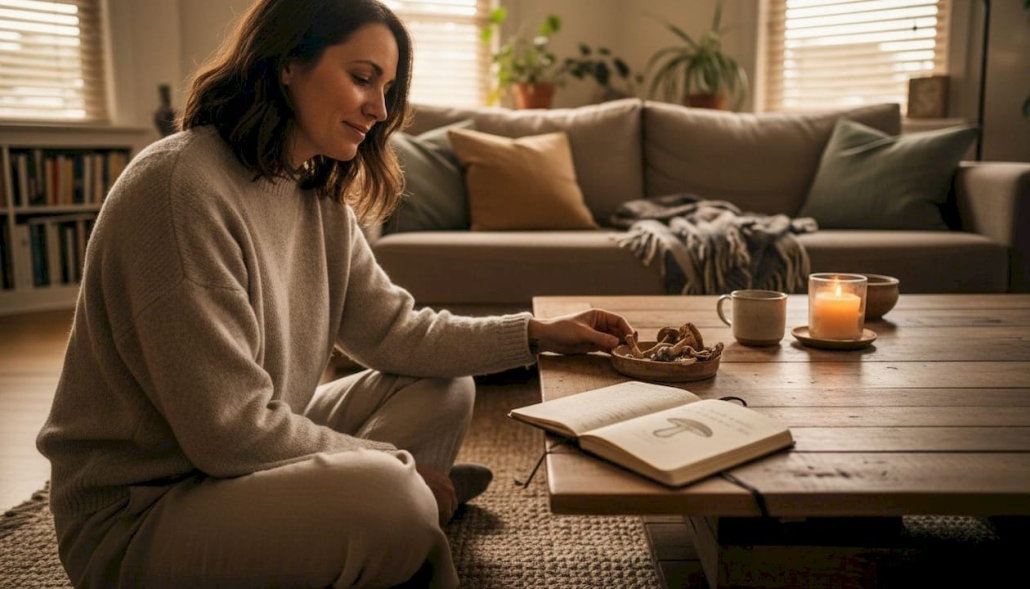
Ritual and psilocybin: 5 keys to deeper mushroom use
TL;DR:
- Rituals provide structure and intention, essential for meaningful psilocybin experiences.
- Structured rituals enhance therapeutic and spiritual outcomes by creating safety and supporting integration.
- Indigenous and modern practices emphasize respect, support, and purpose to maximize healing benefits.
Psilocybin experiences are rated among the most spiritually significant events in people’s lives, producing lasting positive changes that rival decades of conventional therapy. Yet many Canadians exploring mushrooms for personal growth or healing still treat the substance as the whole story. They focus on dose, strain, and timing while completely ignoring the container that holds the experience together: the ritual. Research and centuries of Indigenous practice both point to the same truth. How you approach a psilocybin session shapes what you get out of it just as much as what you consume. This article breaks down the science, the tradition, and the practical steps for building rituals that actually work.
Table of Contents
- What are rituals in psilocybin use?
- How rituals enhance therapeutic and spiritual outcomes
- Key components of effective mushroom rituals
- Diverse ritual traditions: From Indigenous ceremony to modern therapeutic practice
- Practical guidance: Creating your own meaningful mushroom ritual
- Why the true power of mushrooms lies in the ritual, not the substance
- Explore safe, supported mushroom rituals with 3 Amigos
- Frequently asked questions
Key Takeaways
| Point | Details |
|---|---|
| Rituals reshape outcomes | Using intentional rituals makes psilocybin experiences safer, deeper, and longer-lasting. |
| Empirical evidence supports rituals | Research shows rituals are linked to greater spiritual and therapeutic improvement in Canadian and global studies. |
| You can create your own | Anyone can design meaningful mushroom rituals with preparation and safe guidance for personal growth. |
| Respect tradition and safety | Drawing from Indigenous and therapeutic frameworks promotes ethical, informed, and transformative use. |
What are rituals in psilocybin use?
A ritual is not a candle and some incense, though those can certainly be part of one. In the context of psilocybin, a ritual is an intentional framework designed to support safe, meaningful, and repeatable outcomes during a mushroom session. It gives structure to an experience that can otherwise feel overwhelming or directionless.
The roots of mushroom ritual run deep. Mazatec healers in Oaxaca, Mexico have used psilocybin mushrooms in ceremonial healing contexts for centuries. These veladas, or night vigils, involve prayers, songs, and careful guidance from a trained curandera. The mushrooms were never taken casually. They were approached with reverence, purpose, and community support.
Modern therapeutic and personal-growth contexts have adapted these principles without copying them wholesale. Today, a ritual might include:
- Intention setting: Clarifying what you hope to explore, heal, or understand
- Preparation: Physical, emotional, and logistical readiness in the days before a session
- Ceremony conduct: The structure of the session itself, including music, posture, and guidance
- Integration: Processing insights and applying them to daily life after the session
What separates ritual from casual recreational use is purpose and structure. Recreational use is not inherently wrong, but it operates without the scaffolding that makes transformative outcomes more likely. Mystical experiences during guided sessions consistently correlate with positive, lasting life change. That correlation is not accidental. It reflects the power of context.
“The mushroom is the teacher. The ritual is the classroom.”
For those curious about how structured approaches connect to healing, the therapeutic uses of dried mushrooms offer a solid starting point for understanding what intentional use can look like in practice.
How rituals enhance therapeutic and spiritual outcomes
The evidence for ritual-supported psilocybin use is no longer anecdotal. Clinical research now shows that psilocybin with psychological support yields rapid and sustained benefits for depression, anxiety, and addiction, with mystical experiences being among the strongest predictors of positive outcomes.
Here is a snapshot of what the research shows:
| Condition | Reported improvement | Session type |
|---|---|---|
| Major depression | Significant reduction in symptoms | Guided, ritualized |
| Anxiety (cancer-related) | Lasting relief up to 6 months | Supported ceremony |
| Addiction (tobacco/alcohol) | High abstinence rates | Structured protocol |
| Spiritual well-being | Increased sense of meaning | Facilitated group or solo |
Rituals contribute to these outcomes in several ways. They create a sense of psychological safety, which allows the nervous system to relax and the mind to open. They establish belonging, whether that means connection to a guide, a group, or a personal tradition. And they provide a container for intensity, so that difficult emotions can be processed rather than suppressed or panicked over.

The psilocybin mental health benefits documented in clinical settings almost always emerge from structured, supported experiences. The substance alone does not guarantee healing. The ritual is what makes healing accessible.
Pro Tip: Add a simple grounding ritual before and after your session, such as three deep breaths with a stated intention at the start and a short journaling practice at the end. This small structure dramatically increases the likelihood of integrating what you experience.
For a detailed walkthrough of how to structure a safe session, the safe mushroom consumption workflow covers the full process from preparation to aftercare.
Key components of effective mushroom rituals
Knowing that rituals matter is one thing. Building one that actually works is another. Here are the core components that research and practice consistently identify as essential.
- Intention: Before anything else, get clear on why you are doing this. Are you seeking emotional healing, spiritual insight, creative expansion, or something else? Write it down. Revisit it the morning of your session.
- Education and preparation: Understand what psilocybin does physiologically and psychologically. Know your dose range. Avoid mixing with medications that carry risk. Prepare your body with good sleep and light eating.
- Support network: Tell at least one trusted person what you are doing. Ideally, have a sober sitter or experienced guide present, especially for higher doses.
- Set and setting: Your mindset going in and your physical environment matter enormously. A calm, familiar, comfortable space with meaningful objects, soft lighting, and a curated playlist creates a very different experience than a chaotic or unfamiliar one.
- Integration plan: Decide in advance how you will process the experience. Schedule time for rest, reflection, and conversation after the session.
Research on clergy participants found profound and sustained spiritual change following supported psilocybin sessions, with effects persisting over a year later. That kind of durability does not happen by accident. It comes from intentional preparation and follow-through.

Pro Tip: Journal immediately after your session while the experience is still vivid. Even rough notes help your brain consolidate insights that might otherwise fade within hours.
For a broader look at what intentional use can offer, magic mushrooms benefits in Canada covers the therapeutic landscape in a Canadian context.
Diverse ritual traditions: From Indigenous ceremony to modern therapeutic practice
Mushroom rituals are not a new invention. They are a rediscovery. Different cultures have developed their own frameworks for working with psilocybin, and modern practitioners have a lot to learn from them, provided they approach that learning with respect.
Traditional Indigenous approaches (such as Mazatec veladas) emphasize:
- Community and collective healing
- Experienced ceremonial leadership
- Spiritual and cosmological context
- Specific songs, prayers, and protocols
Modern therapeutic approaches tend to emphasize:
- Individual psychological goals
- Clinical or trained facilitator support
- Evidence-based preparation and integration
- Harm reduction and safety protocols
| Feature | Traditional ceremony | Modern therapeutic ritual |
|---|---|---|
| Setting | Community or sacred space | Clinical or private setting |
| Guide | Curandera or elder | Therapist or trained facilitator |
| Purpose | Healing, divination, community | Mental health, personal growth |
| Duration | All-night vigil | 4 to 8 hours |
| Integration | Communal and oral | Written, therapeutic, solo |
For Canadians, the ethical path involves learning from these traditions without appropriating them. That means acknowledging their origins, avoiding exploitative tourism, and focusing on principles rather than surface aesthetics. Supported psilocybin use has shown improvements in PTSD, shame, and connectedness, outcomes that reflect the healing power of intentional, culturally grounded approaches.
For those wanting to engage with these ideas responsibly, ethical frameworks for psychedelic use provide practical guidance for navigating this space with integrity.
Practical guidance: Creating your own meaningful mushroom ritual
You do not need a ceremonial space or a trained shaman to create a meaningful ritual. You need clarity, care, and a commitment to taking the experience seriously. Here is a practical checklist to get you started.
Ritual design checklist:
- Set a clear, written intention before the session
- Choose a safe, comfortable, and familiar environment
- Arrange for a trusted sober sitter or guide
- Prepare a music playlist that supports emotional openness
- Remove distractions: silence your phone, clear your schedule
- Plan for integration: rest, journaling, and a follow-up conversation
- Know your dose and source your mushrooms responsibly
- Be aware of Canadian legal guidelines and your personal health context
For solo sessions, keep the dose conservative and have a check-in plan with someone you trust. For group ceremonies, agree on shared intentions and roles in advance. The group container can be powerful, but only if everyone is aligned.
“The most profound changes I’ve seen come not from the peak of the experience, but from the weeks of integration that follow.”
Structured rituals can sustain positive behavioral and attitudinal change up to 16 months after a single session. That kind of long-term impact depends entirely on what happens before and after the experience, not just during it.
For harm reduction resources and step-by-step session planning, the safe mushroom consumption guidance is a practical companion for anyone designing their first or next ritual.
Why the true power of mushrooms lies in the ritual, not the substance
Here is something the psychedelic conversation often gets wrong: people assume psilocybin does the work automatically. Take the mushroom, have the experience, come out changed. But that is not how transformation reliably happens.
We have seen this pattern repeatedly. Someone takes a high dose in an unstructured setting, has an intense experience, and walks away confused or unsettled. Someone else takes a moderate dose with clear intention, a supportive guide, and a solid integration plan, and reports one of the most meaningful experiences of their life. The difference is not the substance. It is the ritual.
The science of psilocybin confirms what Indigenous healers have always known: context is not a bonus feature. It is the mechanism. Without ritual, psilocybin is a powerful but unguided force. With ritual, it becomes a precise tool for personal growth and healing.
The uncomfortable truth is that many people want the shortcut. They want the mushroom to do the heavy lifting. But real integration, the kind that changes how you relate to yourself and others, begins when you place the ritual at the center of the experience, not as an afterthought.
Explore safe, supported mushroom rituals with 3 Amigos
If this article has sparked your interest in approaching psilocybin with more intention and structure, you are already thinking about it the right way. At Three Amigos, we believe education is the foundation of every meaningful mushroom experience.

Our psilocybin experience step by step guide walks you through every phase of a session, from preparation to integration. If you are exploring the mental health angle, our deep dive into psilocybin mental health benefits covers the latest research in plain language. And if microdosing feels like the right starting point for your ritual practice, browse our selection of microdosing magic mushroom capsules for a gentle, structured entry point. We are here to support every step of your journey.
Frequently asked questions
How do rituals make psilocybin experiences more effective?
Rituals structure your mindset and environment, which enhances the likelihood of positive and meaningful results. Mystical experiences in ritual settings consistently correlate with life-changing outcomes across multiple studies.
What are essential elements of a safe psilocybin ritual?
Key elements include intention setting, a supportive environment, trusted guidance, and integration of insights afterward. Session preparation and integration are major factors in sustaining positive change over time.
Are rituals part of clinical psilocybin therapy in Canada?
Yes, clinical protocols often incorporate rituals such as preparation, support, and post-session integration to improve outcomes. Psilocybin with psychological support yields strong and sustained therapeutic results across multiple conditions.
Can I create my own mushroom ritual safely at home?
With research, intention, and safety measures in place, you can design a home ritual, but seeking guidance is strongly recommended. Safe and structured use amplifies the benefits and meaningfully reduces the risks involved.
Recommended
- Safe mushroom consumption workflow for mental health 2026
- Best practices for shroom use: safe and effective guidance
- Magic mushroom life cycle: growth, potency & therapy
- Therapeutic uses of dried mushrooms: mental health 2026

Thomas Wrona is a writer, designer, and wellness coach who believes that nature’s wisdom provides an antidote to the stress of modern life. As a former pro athlete, he’s all about staying in motion! When he’s not writing you’ll probably find Thomas outside.


