
Dried Shrooms vs Edibles: Effects, Safety, and Use
Choosing between dried shrooms and psilocybin edibles can feel confusing for Canadians curious about mental health support through psychedelics. With options ranging from earthy mushroom bites to sweet, hidden psilocybin treats, the differences matter for safety and how your body responds. This guide breaks down how consumption method impacts effects and dosing so you can make informed decisions that fit your needs and lifestyle.
Table of Contents
Key Takeaways
| Point | Details |
| Dried Shrooms vs. Edibles | Dried shrooms offer longer shelf life and more precise dosing, while edibles provide a milder taste and easier consumption methods. |
| Consumption Methods | Psilocybin can be consumed through direct ingestion of dried mushrooms, brewed tea, or edibles, with absorption rates varying significantly across methods. |
| Dosage Control | Dried shrooms allow for more predictable dosing by weight, while edibles present challenges due to varying potency and distribution. |
| Legal Considerations in Canada | Psilocybin remains a controlled substance, but exceptions for medical use exist; users should stay informed about evolving regulations. |
What Are Dried Shrooms and Edibles?
Psilocybin mushrooms, commonly known as magic mushrooms or dried shrooms, are natural psychedelic fungi containing powerful compounds that alter perception and consciousness. These mushrooms typically belong to genera like Psilocybe and contain psilocybin and psilocin as their primary active ingredients. Hallucinogenic mushrooms represent a complex botanical category with significant psychological effects.
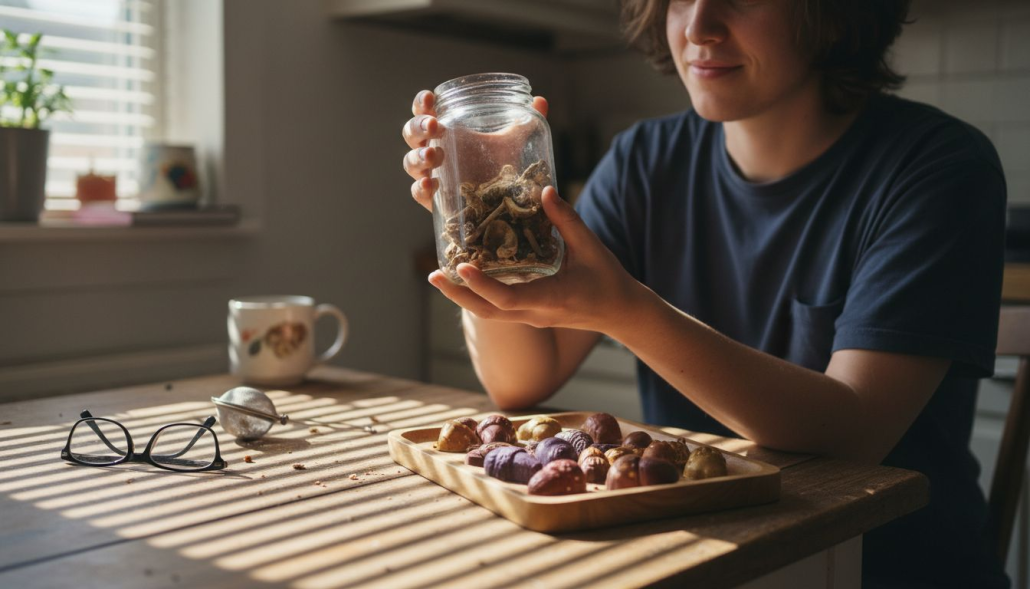
Dried shrooms differ from fresh mushrooms in several key aspects. The drying process concentrates psilocybin, making dosage more consistent and preservation easier. When mushrooms are dehydrated, their chemical composition becomes more stable, allowing for more predictable experiences. Users typically prefer dried varieties because they:
-
Have longer shelf life
-
Enable more precise dosing
-
Reduce potential bacterial contamination
-
Are easier to store and transport
Edibles, in contrast, represent processed mushroom products designed for more palatable consumption. Mushroom edibles can take multiple forms, including:
-
Chocolate bars infused with mushroom extract
-
Gummy candies containing psilocybin
-
Capsules with measured mushroom powder
-
Teas and beverage mixes
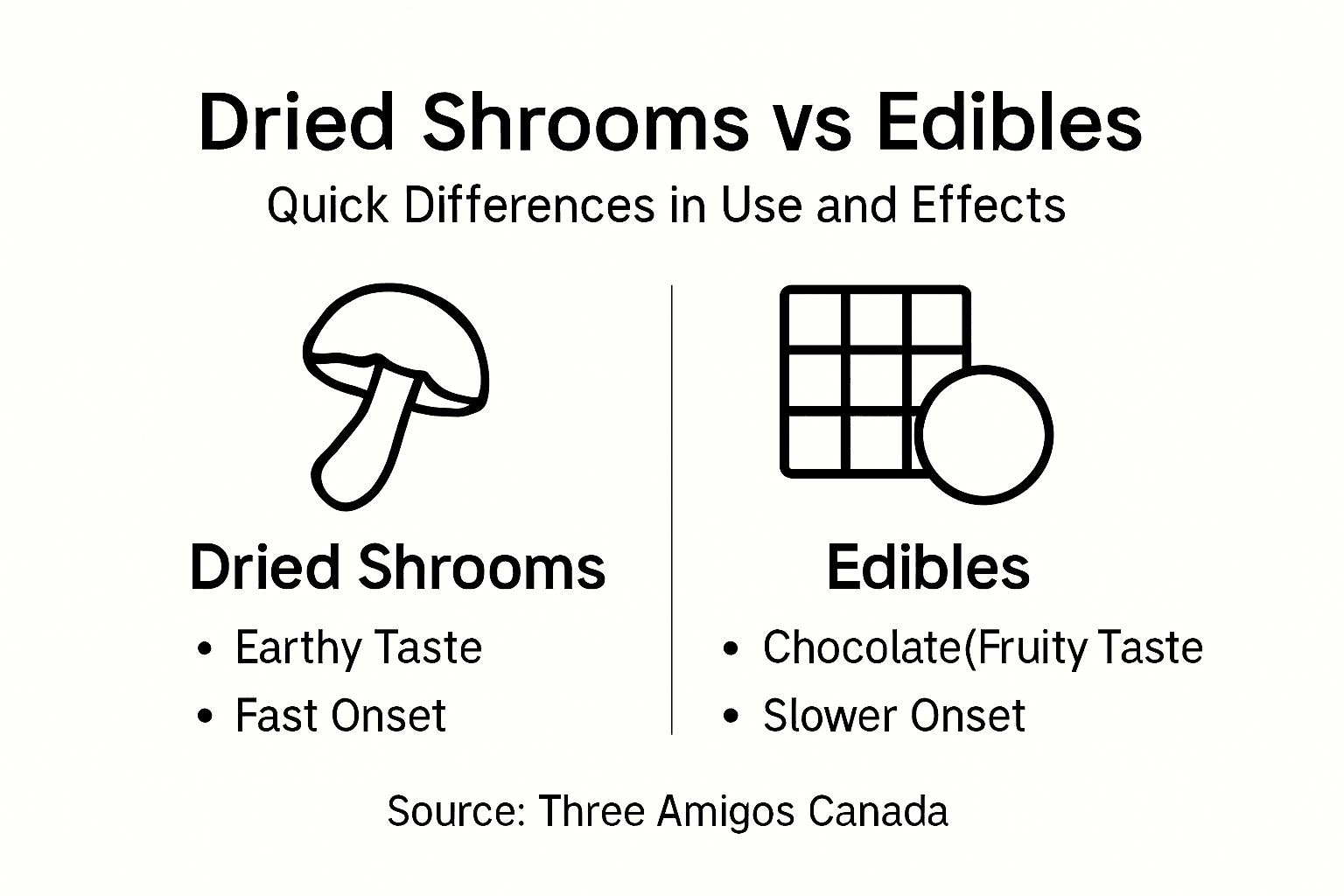
The primary difference between dried shrooms and edibles lies in preparation and consumption method. While dried mushrooms are consumed directly or brewed into tea, edibles mask the fungal taste and provide a more controlled ingestion experience. This variation allows users to choose consumption methods that best suit their preferences and comfort levels.
Here’s a summary of how dried shrooms and mushroom edibles compare across key attributes:
| Attribute | Dried Shrooms | Mushroom Edibles |
| Taste | Earthy, fungal flavor | Usually masked, sweeter |
| Dosage Control | Measured by weight, more precise | Based on product ingredients, can be variable |
| Onset Time | Typically 20-40 minutes | Often 30-90 minutes |
| Shelf Life | Long, stable when dry | Depends on food ingredients, may be shorter |
| Preparation | Minimal, often just dried | Processed, usually mixed into foods |
| Portability | Easy to carry and store | Can be discreet, may require special packaging |
| Risk of Contaminants | Lower if well dried | Possible additives or manufacturing risks |
Pro tip: Always verify the source and quality of your mushroom products, and start with low doses to understand your individual response.
How Psilocybin Is Consumed and Absorbed
Psilocybin consumption involves multiple methods, with oral ingestion being the most common approach for experiencing psychedelic effects. Psilocybin absorption mechanisms reveal a complex metabolic process where the compound transforms into its active form, psilocin, after entering the bloodstream. This transformation occurs primarily in the liver, where enzymes convert the prodrug into a psychoactive compound capable of crossing the blood-brain barrier.
The primary consumption methods for psilocybin include:
-
Direct oral consumption of dried mushrooms
-
Brewing mushrooms into tea
-
Consuming mushroom-infused edibles
-
Ingesting capsules containing mushroom powder
-
Mixing ground mushrooms into food or beverages
Absorption and onset of effects vary significantly depending on the consumption method. Dried mushrooms consumed directly typically produce faster effects compared to edibles, which must first navigate the digestive system. The metabolic process involves:
-
Initial ingestion
-
Breakdown in the digestive tract
-
Conversion of psilocybin to psilocin
-
Absorption into the bloodstream
-
Interaction with serotonin receptors in the brain
Bioavailability plays a crucial role in how effectively psilocybin is absorbed. Psilocybin edible variations demonstrate that different preparation methods can significantly impact the compound’s absorption rate and overall psychedelic experience.
Factors like stomach contents, individual metabolism, and preparation method can dramatically alter psilocybin absorption and effect intensity.
Pro tip: Always consume psilocybin on an empty stomach to optimize absorption and minimize potential digestive interference.
Comparing Effects, Onset, and Duration
Psilocybin effects and onset demonstrate significant variations between dried shrooms and edible consumption methods. The psychedelic experience can differ dramatically based on the form of ingestion, with each method presenting unique characteristics in terms of intensity, duration, and sensory perception.
Key differences in effects between dried shrooms and edibles include:
-
Onset time
-
Peak intensity
-
Duration of experience
-
Metabolic processing
-
Sensory alterations
Dried mushrooms typically produce faster and more direct effects, with onset occurring within 20-40 minutes. The experience tends to be more intense and immediate, as the compounds are absorbed more quickly through direct consumption. In contrast, edibles often require longer metabolic processing, which can result in:
-
Delayed onset (30-90 minutes)
-
More gradual peak experience
-
Potentially more extended duration
-
Potentially softer initial transition
-
More controlled release of active compounds
The method of consumption significantly impacts the psychological and physiological experience of psilocybin.
Individual factors like metabolism, body weight, and tolerance also play crucial roles in determining the specific effects and duration of the psychedelic experience. Bioavailability and metabolic efficiency can vary widely between individuals, making each experience unique.

Pro tip: Start with lower doses and choose your consumption method carefully, considering your personal sensitivity and desired intensity of experience.
Dosing Differences and Practical Considerations
Psilocybin edible dosing challenges reveal significant complexity in accurately measuring psychedelic compound intake. Dried mushrooms and edibles present distinctly different approaches to dosage control, with each method requiring careful consideration and nuanced understanding.
Key dosing considerations for different consumption methods include:
-
Variability in active compound concentration
-
Potential for inconsistent potency
-
Individual metabolic differences
-
Preparation and extraction methods
-
Potential presence of adulterants
Dried mushrooms offer more predictable dosing through direct weight measurement, allowing users to calculate approximate psilocybin content more reliably. In contrast, edibles introduce several complications:
-
Inconsistent compound distribution
-
Potential synthetic additive variations
-
Complex manufacturing processes
-
Less transparent ingredient profiles
-
Higher risk of unexpected potency
Accurate dosing requires comprehensive understanding of product composition and individual physiological responses.
Microdosing and macrodosing strategies differ significantly between dried shrooms and edibles, with edibles often presenting more challenges in precise measurement. Individual factors like body weight, metabolism, and tolerance further complicate dosage recommendations, necessitating a cautious and personalized approach.
Pro tip: Always start with the lowest possible dose and incrementally adjust, paying close attention to your body’s unique response and tolerance levels.
This table summarizes practical dosing differences and tips for both dried mushrooms and edibles:
| Dosing Feature | Dried Mushrooms | Edibles |
| Typical Dose Measurement | By mushroom weight (grams) | By portion size or labeling |
| Potency Variability | Can exist by species or batch | May be affected by uneven mixing |
| Microdosing Feasibility | Easy to divide small amounts | May require splitting edibles, harder to adjust |
| Overdose Risk | Higher if mismeasured | Possible if product strength is unclear |
| Recommended Starting Approach | Use scale for accurate dosing | Begin with small portion if product is new |
Legality and Safety Protocols in Canada
Mushroom legality in Canada represents a complex landscape of regulatory nuance and evolving legal perspectives. While psilocybin remains a controlled substance, recent shifts in medical and therapeutic research have created unique exceptions and potential pathways for legal consumption.
Key legal considerations for Canadian users include:
-
Federal controlled substance regulations
-
Medical exemption protocols
-
Research and therapeutic use provisions
-
Provincial variations in enforcement
-
Potential therapeutic use frameworks
The current legal environment surrounding psilocybin in Canada involves several critical distinctions:
-
Possession remains technically illegal for recreational purposes
-
Medical and therapeutic exceptions exist
-
Research institutions can obtain special permits
-
Some medical professionals can request special access
-
Ongoing legal challenges continue to reshape regulations
Legal interpretations of psilocybin use remain fluid, with increasing recognition of potential therapeutic benefits.
Harm reduction and personal safety become paramount when navigating these complex legal territories. Users must remain informed about current regulations, potential legal risks, and evolving medical research that might impact future legal frameworks.
Pro tip: Always consult current legal resources and medical professionals before considering any psilocybin-related activities to understand your specific legal and health risks.
Discover Your Ideal Psilocybin Experience with Three Amigos
Navigating the differences between dried shrooms and edibles can feel overwhelming when you want a safe and controlled psychedelic journey. This article highlights important challenges like dosing accuracy, onset times, and the impact of different consumption methods on your experience. Whether you prioritize precise measurement with dried mushrooms or prefer the discreet and palatable nature of edibles, understanding these factors is key to maximizing benefits and minimizing risks.
At Three Amigos, we specialize in providing high-quality dried shrooms, mushroom edibles, and microdosing capsules designed to meet your unique needs. Our curated selection ensures consistent potency and trustworthy sourcing so you can approach your psychedelic experience with confidence. Explore detailed guides, safety tips, and the latest scientific research to empower your journey. Take control of your mental health and personal growth today by visiting Three Amigos to find the perfect product and gain knowledge that matters.
Frequently Asked Questions
What are the key differences between dried shrooms and mushroom edibles?
Dried shrooms are natural, psychedelic fungi consumed directly or brewed into tea, while edibles are processed products designed for easier consumption, such as chocolates or gummies. Dried shrooms have an earthy flavor, while edibles often mask the taste for a sweeter experience.
How do the effects of dried shrooms compare to those of mushroom edibles?
Dried shrooms typically produce faster and more intense effects, with onset occurring in 20-40 minutes. In contrast, edibles have a delayed onset (30-90 minutes) and usually provide a more gradual peak experience, impacting the overall intensity and duration of the psychedelic effects.
What factors affect the dosing of dried shrooms and edibles?
Dosing varies due to factors such as active compound concentration, individual metabolism, and preparation methods. Dried mushrooms offer more consistent dosing based on weight, while edibles can present challenges due to potential uneven mixing and ingredient variability.
What safety protocols should I consider when using psilocybin products?
Ensure you verify the source and quality of your mushroom products, start with low doses to understand your response, and always consume psilocybin on an empty stomach to optimize absorption and minimize potential digestive issues.
Recommended

Thomas Wrona is a writer, designer, and wellness coach who believes that nature’s wisdom provides an antidote to the stress of modern life. As a former pro athlete, he’s all about staying in motion! When he’s not writing you’ll probably find Thomas outside.