

Psilocybin Safety Workflow: Step-by-Step Guide for Canada
TL;DR:
- Psilocybin use in Canada is illegal outside authorized clinical and exemption pathways, posing legal risks.
- Safety depends on thorough preparation, understanding set and setting, and using trusted sources and protocols.
- Post-experience integration and a structured workflow are essential for maximizing benefits and minimizing adverse outcomes.
Psilocybin use in Canada carries real stakes. Psilocybin is Schedule III under the Controlled Drugs and Substances Act, meaning personal use outside authorized programs is illegal. Yet thousands of Canadians are exploring it anyway, often without a plan. Skipping even one safety step can mean a terrifying experience, a psychiatric crisis, or legal trouble. This guide walks through every protocol in a logical order: legal context, screening, session execution, risk management, and post-experience integration. Whether you’re considering microdosing or a full macrodose session, the workflow here is grounded in current research and harm reduction principles.
Table of Contents
- Understanding the legal and safety foundation
- Preparing for safe psilocybin use: Screening and protocols
- Executing a safe psilocybin session: Step-by-step workflow
- Managing risks and ensuring post-experience safety
- Why a workflow mindset beats one-off advice
- Start your safe psilocybin journey with trusted resources
- Frequently asked questions
Key Takeaways
| Point | Details |
|---|---|
| Legal access is limited | Psilocybin is illegal in Canada outside of clinical trials or authorized programs. |
| Preparation prevents harm | Screening for health risks, substance testing, and setting intention are crucial before any use. |
| Workflow improves safety | A systematic, step-by-step workflow greatly reduces avoidable risks versus ad hoc usage. |
| Clinical support is ideal | Supervised use in authorized settings offers the safest environment for therapeutic exploration. |
Understanding the legal and safety foundation
Before anything else, you need to understand what you’re working within. Psilocybin is illegal in Canada except under three narrow pathways: participation in Health Canada-approved clinical trials, access through the Special Access Program (SAP), or a subsection 56(1) exemption granted to specific individuals or institutions. Outside these routes, possession and use carry criminal penalties.
That legal reality shapes everything about safety. When you source psilocybin outside authorized channels, you have no guarantee of purity, potency, or even what substance you’re actually getting. That’s not a small risk. Contaminated or misidentified substances are a genuine cause of emergency room visits.
Beyond legality, the psychological risks are real and specific. Set and setting, a term coined by psychedelic researcher Timothy Leary and later formalized by clinical researchers, refers to your mindset going in and the physical and social environment around you. Both dramatically affect outcomes. Research from Johns Hopkins guidelines shows that structured preparation and support reduce the incidence of adverse reactions, including bad trips, by up to 70%.
Here’s a quick breakdown of the core risk categories:
| Risk category | Examples | Mitigation |
|---|---|---|
| Legal | Arrest, criminal record | Use only authorized access routes |
| Purity/potency | Contamination, wrong dose | Lab testing, verified sources |
| Psychological | Panic, psychosis, HPPD | Screening, set and setting |
| Physical | Elevated heart rate, nausea | Health screening, low dose start |
| Social/environmental | Unsafe location, no support | Sober sitter, controlled setting |
“Safety is not a checklist you follow once. It’s a framework you build before, during, and after every session.”
Following psilocybin safety protocols consistently is what separates harmful outcomes from beneficial ones. Supervised clinical use remains the gold standard, but understanding the framework behind it helps you make safer choices regardless of your access route. If you want a broader view of how these principles fit together, the safer mushroom consumption workflow covers the full picture in detail.
Preparing for safe psilocybin use: Screening and protocols
Preparation isn’t exciting, but it’s where safety is actually won or lost. Most negative outcomes trace back to something skipped in this phase, not to the session itself.
Start with health screening. Certain conditions significantly elevate your risk. These include a personal or family history of psychosis or schizophrenia, bipolar disorder with a history of mania, active cardiac conditions, and use of medications like SSRIs, MAOIs, or lithium. Polydrug use can triple emergency risk, and certain populations face sharply increased psychiatric risks even from a single dose. If any of these apply to you, supervised clinical access isn’t just the safer option, it may be the only responsible one.
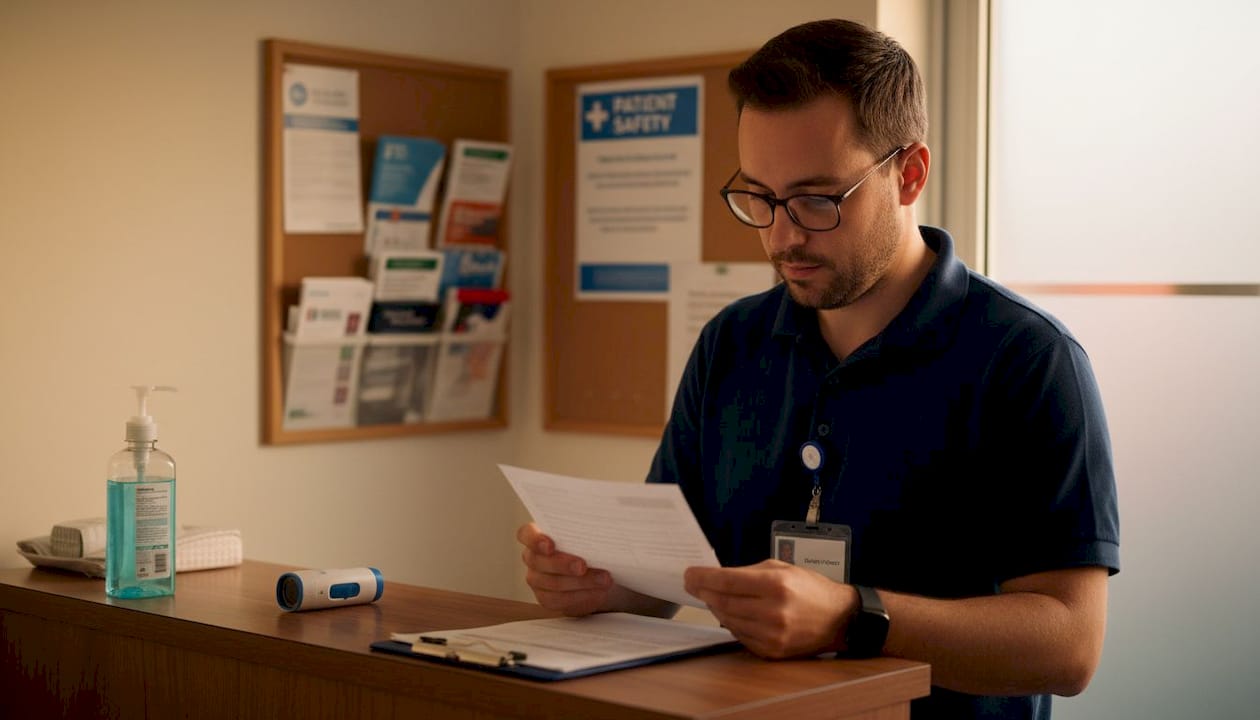
Next, verify your source and test your substance. Reagent test kits (like Ehrlich’s reagent) can confirm the presence of indole alkaloids, which psilocybin is. They don’t confirm dose, but they rule out dangerous substitutes. If you can access lab testing, do it.
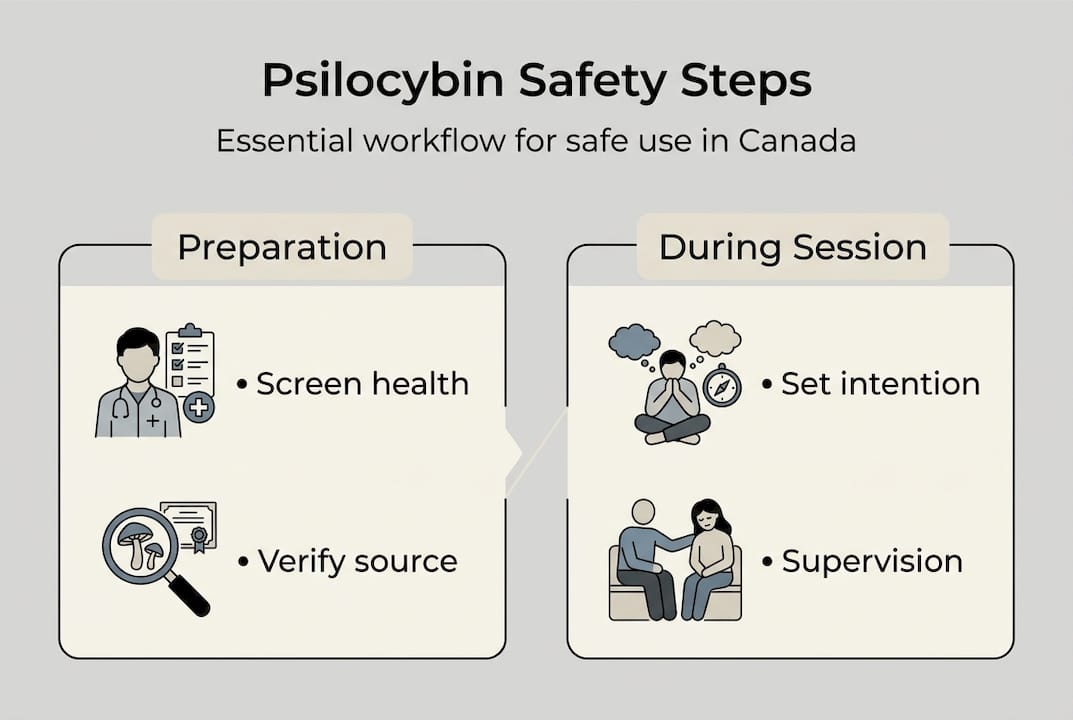
The core workflow from Johns Hopkins research outlines these preparation steps clearly: screen for contraindications, verify and lab-test your source, set a clear intention, plan your dose, arrange a sober sitter or support person, and commit to post-use integration. That’s not a suggestion. It’s the framework that clinical outcomes are built on.
Here’s a pre-session checklist you can actually use:
- Complete a health and medication screening
- Research psilocybin drug interactions specific to your situation
- Test your substance with a reagent kit or lab service
- Write down your intention for the session (one clear sentence works)
- Choose your setting: quiet, private, familiar, comfortable
- Confirm your sitter: sober, trusted, briefed on what to expect
- Plan your dose using safe dosing for psilocybin guidelines
- Clear your schedule for 24 hours minimum
Pro Tip: Write your intention before you dose, not during. Your ability to reflect clearly drops fast once psilocybin kicks in. A single written sentence like “I want to understand my anxiety better” keeps you anchored if things get overwhelming.
Executing a safe psilocybin session: Step-by-step workflow
Microdosing and macrodosing are fundamentally different experiences that require different protocols. Treating them the same is a common mistake.
| Protocol | Microdosing | Macrodosing |
|---|---|---|
| Dose range | 0.1–0.5g dried mushrooms (1–3mg psilocybin) | 2–5g dried mushrooms |
| Duration of effect | Subtle, 4–6 hours | Intense, 4–8 hours |
| Sitter required | Optional but helpful | Essential |
| SSRI/MAOI caution | Yes, avoid | Yes, avoid |
| Integration required | Journaling, light reflection | Deep processing, multiple days |
| Risk level | Low if screened | Moderate to high without support |
For microdosing, tolerance builds quickly, which is why most protocols use structured schedules like one day on, two days off. You should feel subtle shifts in mood or cognition, not impairment. If you feel “high,” your dose is too high.
For macrodosing, the experience can be profoundly disorienting. Having a sober sitter isn’t a luxury. It’s a safety anchor. Your sitter should know not to try to talk you out of what you’re experiencing, but to offer calm reassurance if you become distressed.
Key safety steps that apply to both:
- Take your dose in a seated or reclined position
- Have water, a blanket, and an eye mask nearby
- Remove dangerous objects or tripping hazards from the space
- Silence your phone and avoid screens for at least the first two hours
- Don’t redose if you think it’s not working. It likely is, and redosing is a leading cause of overwhelming experiences
Physical toxicity of psilocybin is remarkably low. The LD50 (the dose that would be lethal for 50% of subjects) exceeds 280 mg/kg, and organ safety has been confirmed across more than 1,000 clinical trial participants. Your main risks are psychological, not physical, which is exactly why the sitter and environment matter so much.
Pro Tip: Explore microdosing benefits before committing to a macrodose. Starting with sub-perceptual doses helps you learn how your body responds to psilocybin with minimal risk.
Managing risks and ensuring post-experience safety
Even with careful preparation and a solid session workflow, things can go sideways. Knowing what’s normal, what’s a warning sign, and what to do afterward is the final layer of your safety plan.
Common side effects that are typically not cause for alarm:
- Nausea in the first 30–60 minutes
- Elevated heart rate and mild blood pressure changes
- Visual distortions and enhanced sensory perception
- Emotional intensity, including crying or laughing
- Time distortion
Red-flag reactions that need immediate action:
- Severe chest pain or difficulty breathing
- Signs of mania or psychosis: paranoid delusions, loss of contact with reality that persists after the session
- Suicidal ideation that feels urgent
- Accidental injury due to disorientation
Bad trips occur in roughly 23% of recreational psilocybin uses, with rates climbing in unsupervised settings and in individuals with vulnerability factors. That’s not a small number. It’s a one-in-four chance if you skip the preparation workflow.
“Integration is not optional. It’s where the value of the experience actually lives.”
Post-session integration is what turns a powerful experience into lasting benefit. Clinical microdosing trials in major depressive disorder show safety and tolerability, and macrodosing shows real promise, but only when supported by proper follow-through. Without integration, even a smooth session can leave you confused, emotionally raw, or more anxious than before.
Practical integration steps:
- Journal within 24 hours while the experience is still vivid
- Avoid major decisions for 48–72 hours post-session
- Talk to a therapist or trusted person about what arose
- Use psilocybin safety tips to guide your reflection process
- Give yourself at least two weeks before your next session
If you’re experiencing ongoing distress after a session, contact a mental health professional who is familiar with psychedelic experiences. This is not rare, and there is no shame in seeking support.
Why a workflow mindset beats one-off advice
Here’s something most safety articles won’t say directly: a list of tips is nearly useless on its own. You might read that you should “stay calm” or “have a sitter,” but without a workflow that sequences these steps logically, those tips become noise the moment things get intense.
What clinical programs get right isn’t just expertise. It’s procedural rigor. The reason supervised sessions have dramatically better outcomes is that every step is structured, sequenced, and checked. No one improvises. That’s not because researchers are smarter than you. It’s because they use systematic safety protocols that don’t depend on memory or mood in the moment.
Most accidents and negative outcomes we hear about happen at the seams: between preparation and dosing, between the session and real life reentry. Those are the gaps a workflow closes. Whether you’re a first-timer or someone with multiple experiences, treating each session as a complete process with defined inputs and outputs is the only approach that scales safely. Scattered advice can’t do that. A workflow can.
Start your safe psilocybin journey with trusted resources
Knowing the steps is one thing. Having the right resources to act on them is another.
At Three Amigos, we’ve built our entire platform around harm reduction and informed access for Canadians. Whether you’re starting with microdosing capsules to ease into psilocybin safely, or deepening your understanding through psilocybin science explained, our resources are designed to support every step of your journey. If you’re ready to move from reading to doing, our step-by-step experience guide walks you through each phase with clarity. Safety isn’t a barrier to access. It’s the foundation for it.
Frequently asked questions
Is psilocybin legal for personal use in Canada?
No, psilocybin remains illegal for personal use in Canada except via clinical trials, the Special Access Program, or subsection 56(1) exemptions granted by Health Canada.
What is the safest way to try psilocybin if I qualify?
Enroll in a supervised clinical study or apply through the Special Access Program, as clinical trials and SAP provide professional oversight and evidence-based safety protocols throughout the process.
What are the main risks of unsupervised psilocybin use?
Unsupervised use raises the risk of psychiatric events, accidental injury, and legal consequences, and unverified source purity means you can’t confirm what or how much you’re actually consuming.
How much psilocybin counts as a microdose?
A standard microdose is 0.1–0.5g of dried mushrooms, equivalent to roughly 1–3mg of psilocybin, typically taken on a structured schedule such as one day on and two days off.
Should I have a trip sitter for macrodosing?
Yes. A sober, experienced sitter is considered essential for macrodose sessions because they reduce bad trip risk and can intervene calmly if the experience becomes destabilizing.
Recommended
- Psilocybin Safety Protocols: Protecting Wellness in Canada
- Psilocybin mushroom checklist: safe steps for Canadians
- Magic mushroom safety workflow: a Canadian guide
- Psilocybin intake process in Canada: safe, legal guide 2026
Thomas Wrona is a writer, designer, and wellness coach who believes that nature’s wisdom provides an antidote to the stress of modern life. As a former pro athlete, he’s all about staying in motion! When he’s not writing you’ll probably find Thomas outside.