

Mushroom Harm Reduction Workflow for Safe Use
Taking psilocybin mushrooms for mental health or personal growth can feel empowering, but many Canadian microdosers overlook the details that keep their journey safe. From mindset and environment to mushroom quality and dosing, every step shapes your experience and risk level. By focusing on set and setting principles, you gain practical control and reduce harm, making your exploration more meaningful and resilient to unexpected challenges.
Table of Contents
- Step 1: Assess Set and Setting for Safety
- Step 2: Select and Verify Mushroom Quality
- Step 3: Calculate and Prepare Your Dose
- Step 4: Monitor and Respond During Use
- Step 5: Evaluate Outcomes for Harm Reduction
Quick Summary
| Key Point | Explanation |
|---|---|
| 1. Assess Mindset and Environment | Evaluate your emotional state and physical surroundings to ensure a safe psilocybin experience. This impacts your entire journey significantly. |
| 2. Choose Quality Mushrooms | Select mushrooms from reliable sources to avoid contamination and ensure potency. Quality greatly influences your safety and experience consistency. |
| 3. Start with Low Doses | Begin with a small amount, such as 1 to 2 grams, to gauge your response. This is crucial for harm reduction and understanding personal tolerance. |
| 4. Monitor Your Experience | Stay aware of physical and mental states during use. If any distress occurs, intervene quickly by changing your surroundings or seeking support. |
| 5. Reflect after Use | Take time to evaluate your experience, noting what worked and what didn’t. Reflection aids in improving future psilocybin sessions and personal growth. |
Step 1: Assess Set and Setting for Safety
Before you consume psilocybin mushrooms, take time to evaluate your mental state and physical environment. These two factors shape your entire experience and directly impact your safety. Understanding set and setting principles gives you control over what happens next.
Your mindset matters first. Are you feeling anxious, stressed, or dealing with recent trauma? If yes, reconsider timing. Your mental state going in determines how you interpret sensations during the journey. Someone in a calm, curious headspace will navigate the experience differently than someone feeling unstable.
Ask yourself these key questions:
- Am I emotionally stable right now, or am I running from something?
- Do I have unresolved conflicts or major stressors pressing on me?
- Am I taking this for genuine exploration or to escape problems?
- Do I feel physically well and rested?
Your environment demands equal attention. The space you choose should feel safe, comfortable, and free from interruptions. Loud noises, chaotic visuals, or unexpected visitors can derail your experience quickly.
Create the right physical conditions:
- Choose a quiet, private space where you won’t be disturbed
- Control the temperature and lighting to match your preferences
- Remove clutter and potential hazards from your surroundings
- Have water and comfortable seating or a bed nearby
- Silence your phone or set it to do-not-disturb mode
Your social setting matters too. Decide whether you want a trusted person present or prefer solitude. If someone’s with you, they should understand what you’re doing and remain calm if things feel intense. Canadian microdosers often underestimate this factor, but having the right person nearby can mean the difference between a grounded experience and a difficult one.
The combination of a clear mindset and a safe environment reduces harm significantly and creates space for meaningful exploration.
Take at least 24 hours before your planned session to assess both factors honestly. Don’t rush this step. Your preparation directly influences your safety and the quality of what you learn.
Pro tip: Create a written checklist of your mental and environmental conditions, review it the morning of your session, and only proceed if everything aligns.
Step 2: Select and Verify Mushroom Quality
Choosing quality mushrooms is non-negotiable for your safety. Poor quality mushrooms carry contamination risks, inconsistent potency, and potential toxic species. This step teaches you how to identify reliable products and verify what you’re actually getting.
Start by understanding that mushroom quality varies widely due to species, strain, and individual potency differences. You need to know exactly what you’re consuming. Avoid mushrooms from random sources or people who can’t explain their origin. A reliable source should have transparency about growing conditions and testing.
Look for these quality indicators:
- Consistent appearance and color throughout the batch
- Dry texture without moisture or visible mold
- No ammonia smell or signs of contamination
- Clear labeling with strain name and potency information
- Documentation of source or growing methods
When selecting your mushrooms, consider format as part of your quality assessment. Different formats affect purity and dosage consistency. You might explore dried mushrooms versus gummies to understand which option provides better quality control for your needs. Capsules and teas are also reliable because they’re easier to verify and portion accurately.
To help you select the safest and most reliable mushroom format, here’s a quick comparison:
| Format | Purity Control | Dose Consistency | Ease of Use |
|---|---|---|---|
| Dried Whole | Challenging to verify | Variable, depends on size | Must chew, taste strong |
| Capsules | High, lab-tested | Precise, easy to measure | Swallow like medicine |
| Gummies | Usually consistent | Each gummy pre-measured | Easy, tasty option |
| Tea | Simple preparation | Dose controlled by recipe | Mild taste, quick onset |
Avoid mushrooms that seem unusually cheap or come from sellers who won’t answer questions about potency or origin. Contaminated mushrooms can cause serious harm. If you’re buying online in Canada, verify the retailer’s reputation through community feedback and their commitment to testing standards.
Mushroom quality directly determines your safety, consistency, and ability to accurately gauge your experience.
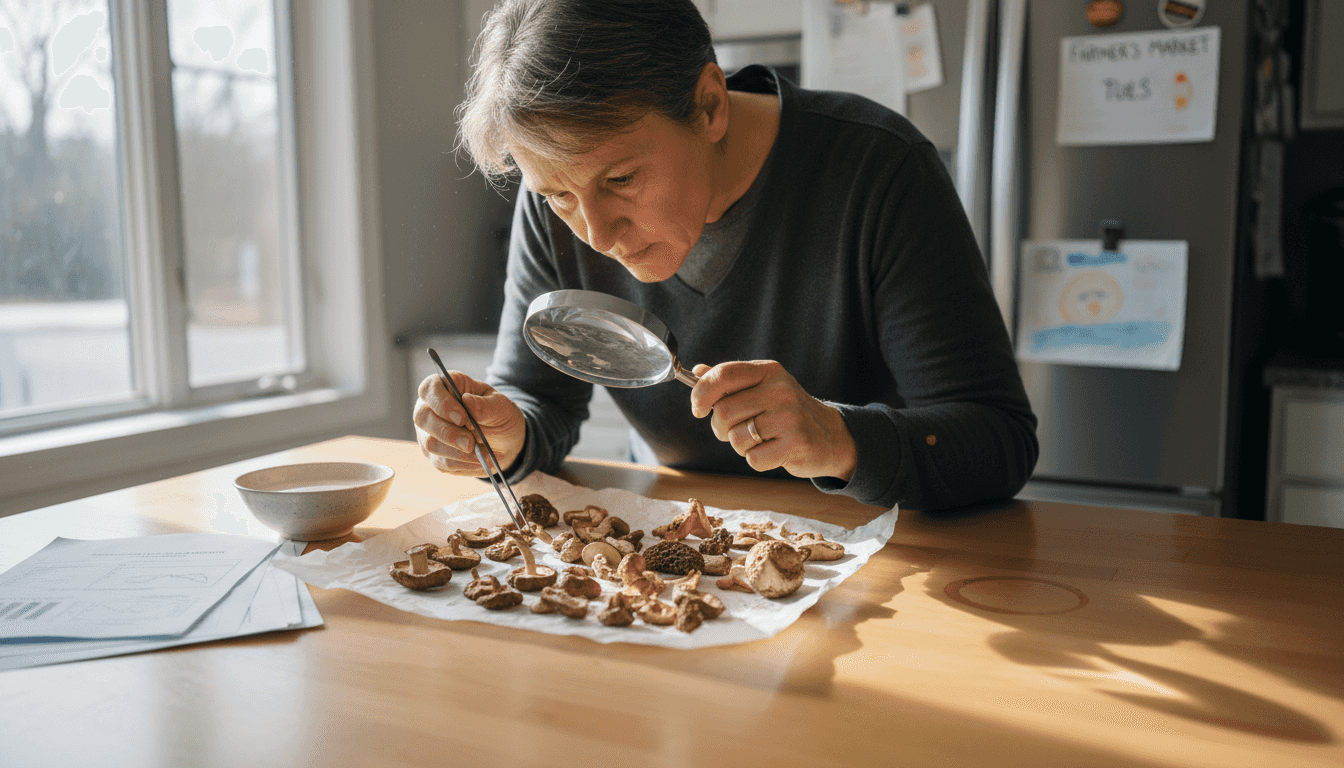
Take time to inspect your mushrooms before consumption. Check for visible contaminants, unusual discoloration, or signs of decomposition. Store them in a cool, dry place to maintain quality until use.
Pro tip: Request documentation of testing results from your source, and start with a small test dose to verify potency before committing to a full session.
Step 3: Calculate and Prepare Your Dose
Dosing is where precision matters most. Get this wrong and your experience becomes unpredictable or uncomfortable. This step guides you through calculating the right amount for your body and preparing it safely.
Start low. This is the golden rule of harm reduction. Safe dosing involves understanding mushroom species variability and individual potency, so beginning with 1 to 2 grams of dried mushrooms lets you assess your sensitivity before exploring higher amounts. Everyone metabolizes differently based on body weight, tolerance, and individual brain chemistry.
Understand the dosing range so you can choose what fits your goals:
- Threshold dose: 0.25 grams (barely noticeable effects)
- Microdose: 0.1 to 0.5 grams (subtle cognitive benefits)
- Low dose: 1 to 2 grams (gentle exploration)
- Standard dose: 2 to 3.5 grams (full experience)
- Strong dose: 3.5 grams or more (intense journey)
For Canadian microdosers specifically, the low to microdose range is where most benefit occurs without disrupting daily life. You’re not chasing intensity. You’re calibrating a tool for mental clarity and emotional balance.
Now prepare your dose. Choose your method based on what appeals to you:
- Grind dried mushrooms and place in empty capsules for easy swallowing
- Brew into tea to mask taste and speed absorption
- Mix finely ground mushrooms with food or juice
- Consume whole dried mushrooms if you can tolerate the taste
Weigh your mushrooms on a digital scale accurate to 0.1 grams. Don’t estimate. Consistency matters for understanding how your body responds. Write down your exact dose before consuming so you can reference it later when reflecting on your experience.
Start with your lowest planned dose, wait at least 5 to 7 days before increasing, and adjust only after understanding how your body responds.
Prepare everything before you consume. Have water nearby, set a timer if needed, and eliminate distractions. Rushing this step leads to mistakes.
Pro tip: Use the same mushroom strain and preparation method for at least three sessions before changing variables, so you can accurately identify what actually works for you versus external factors.
Step 4: Monitor and Respond During Use
Once you consume psilocybin, your job shifts from preparation to presence. You need to stay aware of what’s happening in your body and mind so you can respond appropriately if anything feels off. This step teaches you what to watch for and how to handle challenges.
Monitoring during psychedelic use involves observing your physical and psychological states closely while ensuring your environment remains supportive. You’re not passively waiting for effects to happen. You’re actively tracking how you feel so you can intervene early if needed.
In the first 30 to 60 minutes, pay attention to these physical signs:
- Heart rate and breathing patterns
- Nausea or stomach discomfort
- Muscle tension or jaw clenching
- Changes in body temperature
- Dizziness or balance shifts
Some physical sensations are normal. Mild nausea, temperature shifts, and muscle relaxation happen frequently. Severe chest pain, extreme difficulty breathing, or seizure-like activity require immediate medical attention.
Your mental state matters equally. Notice your thought patterns without judgment. Are you feeling calm curiosity or mounting anxiety? Can you redirect your thoughts, or do they spiral? If anxiety builds, change your environment, drink water, or focus on slow breathing.
Having a trusted sober person nearby transforms your safety dramatically. This person should understand what you’re doing, remain calm, and provide reassurance without pushing you to interact. They’re not a party guest. They’re your safety net. They watch for signs of serious distress and know when to seek help.
Recognize warning signs that require intervention:
- Panic or inability to calm down
- Confused thoughts about harming yourself
- Severe dissociation where you lose touch with reality
- Uncontrollable paranoia or fear
A calm, present sober person and your own awareness are your strongest tools for navigating challenging moments safely.
If distress occurs, reassure yourself first. Remember that psilocybin doesn’t cause permanent harm. The discomfort is temporary. Change your surroundings, shift your focus, or contact your sober person. Professional help is available if needed.
Pro tip: Set gentle phone reminders every 30 minutes during your first few hours to check in with yourself honestly, and text your sober person a simple “OK” so they know you’re stable.
Step 5: Evaluate Outcomes for Harm Reduction
Your experience doesn’t end when the effects wear off. What you do in the days after matters just as much as preparation. This step teaches you how to reflect meaningfully so you can make safer, smarter choices next time.
Post-use evaluation is critical in psychedelic harm reduction, involving reflection on your experience relative to your original intent, mental state, and environment. You’re looking for patterns. Did the experience match what you expected? Did anything surprise you negatively or positively? Did your set and setting actually support what you needed?
Wait at least 24 hours before formal reflection. Your brain needs time to integrate the experience. Trying to make sense of it immediately while still processing neurologically leads to confused conclusions.
When you’re ready, answer these evaluation questions:
- Did I achieve what I intended with this session?
- What physical sensations or challenges emerged?
- How was my emotional state during and after?
- Did my environment support the experience I wanted?
- Would I change anything about dose, timing, or setting next time?
- Did anything feel unsafe or concerning?
Document your findings in writing. A simple journal entry or note in your phone captures details you’ll forget otherwise. Over time, patterns emerge. You’ll notice which doses work best, what time of day suits you, and whether solo or accompanied sessions serve you better.
Integration is the next layer. Evaluating adverse or positive outcomes informs adjustments in future use. Connect with trusted friends or communities who understand psychedelic exploration. Sharing your experience helps you process it and learn from others’ insights. Many Canadian microdosers find that community support prevents isolation and reduces misunderstanding.
If anything felt concerning, take longer before your next session. If something went beautifully, note exactly what created that success so you can replicate it.
Honest reflection transforms each experience into data that makes future use safer and more aligned with your actual goals.
This evaluation cycle is how harm reduction actually works. You’re not just taking mushrooms. You’re building expertise about yourself.
For a streamlined harm reduction process, here’s a summary of each step and its main focus:
| Step | Main Goal | Key Action |
|---|---|---|
| Assess Set and Setting | Ensure emotional/environmental safety | Reflect honestly before session |
| Verify Mushroom Quality | Avoid contamination and unpredictability | Inspect and request documentation |
| Calculate and Prepare Dose | Prevent adverse effects | Use digital scale accurately |
| Monitor During Use | Respond before issues escalate | Check physical and mental state |
| Evaluate Outcomes | Learn and improve future use | Journal and adjust process |
Pro tip: Create a simple spreadsheet tracking dose, date, strain, set, setting, and outcome, so you have a searchable record that reveals your personal patterns over months and years.
Ensure Your Mushroom Experience is Safe and Empowering with Three Amigos
Navigating psilocybin use safely requires attention to set and setting, exact dosing, and verified mushroom quality as outlined in the Mushroom Harm Reduction Workflow for Safe Use. You deserve products that align with these harm reduction principles so you can explore confidently without worrying about contamination, inconsistent potency, or unsafe sources. Three Amigos offers premium dried shrooms, microdosing capsules, gummies, and teas that come with transparent quality assurance and clear potency information to support your harm reduction goals.
Take control of your journey by starting with trusted products from Three Amigos. Explore our carefully curated selection today and equip yourself with the safety, precision, and education you need for meaningful psychedelic experiences. Visit Three Amigos now to shop high-quality magic mushroom products and deepen your understanding with our educational resources on microdosing and harm reduction.
Frequently Asked Questions
What should I consider when assessing my mental state before using psilocybin mushrooms?
Before consuming psilocybin mushrooms, evaluate your emotional stability. Reflect on whether you are feeling anxious, stressed, or dealing with unresolved issues. If any concerns arise, consider postponing your session to ensure a more positive experience.
How can I create a safe environment for my psilocybin experience?
To ensure a safe setting, choose a quiet, private space free from disruptions. Control factors like lighting and temperature, remove clutter, and have comforting items like water or a bed nearby. These actions help create an atmosphere conducive to a meaningful exploration.
What indicators should I look for when verifying mushroom quality?
When selecting psilocybin mushrooms, inspect for consistent appearance, dry texture, and proper labeling. Check for clear information regarding strain and potency. Look for documentation on growing methods to ensure you are consuming safe and reliable products.
How do I determine the appropriate dosage of psilocybin mushrooms for my first experience?
Start with a low dose of 1 to 2 grams of dried mushrooms to gauge your sensitivity. Use a digital scale for precise measurement, and document your dose to reference after your experience. Adjust your dosage based on how your body responds in future sessions.
What should I do if I start feeling anxious or unwell during my psilocybin experience?
If you notice anxiety or discomfort, immediately focus on calming your breath and changing your environment if possible. Have a trusted sober person nearby who can provide reassurance and support. Monitor your physical sensations closely, and seek medical attention if severe distress happens.
How can I reflect on my psilocybin experience to improve future sessions?
After your experience, wait at least 24 hours before evaluating it. Review your intentions, physical sensations, and emotional state. Document your findings in a journal to identify patterns and insights that can inform safer, more effective use in the future.
Recommended
- 6 Practical Examples of Mushroom Growing Methods
- How to Dose Psilocybin Safely for Best Results
- Can You Overdose On Mushrooms? Exploring The Risks | 3 Amigos Mushrooms
- The Ultimate Guide to a Perfect Magic Mushroom Trip

Thomas Wrona is a writer, designer, and wellness coach who believes that nature’s wisdom provides an antidote to the stress of modern life. As a former pro athlete, he’s all about staying in motion! When he’s not writing you’ll probably find Thomas outside.