

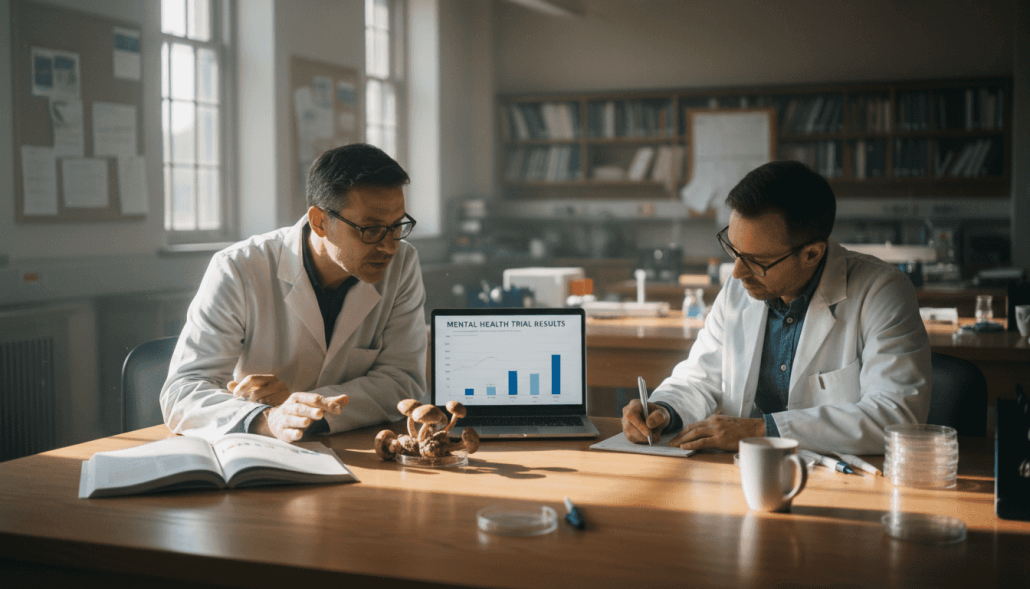
Psilocybin Research Explained: Mental Health Impacts
Finding reliable information about psilocybin can be a challenge for Canadians who want safe, legal options for mental health support. Myths about addiction and brain damage linger, making it hard to separate fear from fact. By exploring the naturally derived psychedelic roots of psilocybin and how research guides safe microdosing and macrodosing, you’ll gain clarity on what matters most for therapeutic use in Canada.
Table of Contents
- Psilocybin Basics And Common Misconceptions
- Major Areas Of Current Psilocybin Study
- Therapeutic Mechanisms And Health Applications
- Legal Landscape And Regulatory Challenges
- Risks, Safety Protocols, And What To Avoid
Key Takeaways
| Point | Details |
|---|---|
| Psilocybin is a Natural Compound | Psilocybin is not synthetic; it occurs naturally in over 200 mushroom species and is used in cultural practices. |
| Misconception on Addiction | Psilocybin has no addiction potential, with no evidence of physical dependence or withdrawal symptoms. |
| Therapeutic Applications | Current research focuses on psilocybin’s potential to treat depression, anxiety, PTSD, and addiction in structured settings. |
| Legal Considerations in Canada | While psilocybin is illegal for recreational use in Canada, there are pathways for accessing it through therapeutic research programs under federal exemptions. |
Psilocybin basics and common misconceptions
Psilocybin is a naturally occurring compound found in certain mushroom species, not a synthetic drug manufactured in laboratories. This naturally derived psychedelic has been used in ceremonial and spiritual practices for thousands of years, particularly among Indigenous cultures in Mesoamerica.
Understanding what psilocybin actually is matters because myths and misconceptions have shaped public perception for decades. Let’s separate fact from fiction.
What psilocybin really is
Psilocybin is an alkaloid compound that your body converts into psilocin, the active form that affects your brain chemistry. Current research on psilocybin’s effects shows it interacts with serotonin receptors, influencing mood, perception, and cognitive function.
The compound occurs naturally in over 200 mushroom species worldwide. When you consume psilocybin, your digestive system breaks it down, and the psilocin crosses the blood-brain barrier within 20 to 90 minutes.
Canadian researchers and international labs now study psilocybin’s potential effects on depression, anxiety, PTSD, and end-of-life distress using rigorous clinical protocols.
Top misconceptions debunked
Misconception 1: Psilocybin is addictive
Scientific evidence shows psilocybin has no addiction potential. Your body doesn’t develop physical dependence, and repeated use doesn’t create cravings or withdrawal symptoms. The chemical nature of psilocybin differs fundamentally from addictive substances.

Misconception 2: All magic mushrooms are the same
Different species contain varying psilocybin concentrations. A dried specimen of Psilocybe cubensis differs significantly from Psilocybe semilanceata. Potency varies by growing conditions, harvest timing, and storage methods.
Misconception 3: Psilocybin causes permanent brain damage
No credible evidence supports this claim. Research indicates psilocybin may actually promote neuroplasticity—your brain’s ability to form new neural connections. Some studies suggest it supports nerve growth and mental health recovery in specific contexts.
Misconception 4: One experience determines lifelong effects
Psilocybin’s impact depends on set, setting, dosage, and individual biology. A single experience provides data, not destiny. Therapeutic benefits often emerge through structured, intentional use.
Misconception 5: Psilocybin is purely recreational
While some use it recreationally, clinical research demonstrates legitimate therapeutic applications. Health professionals worldwide now investigate psilocybin-assisted therapy for treatment-resistant conditions.
Key distinctions for Canadian users
- Legal status: Psilocybin remains illegal for recreational use in Canada, but therapeutic research programs operate under federal exemptions
- Microdosing vs. macrodosing: Microdoses (0.1-0.5g) produce subtle cognitive shifts; macrodoses (1.5g+) create profound perceptual changes
- Individual variation: Body weight, metabolism, mental health history, and medications all influence your experience
Psilocybin’s effects depend heavily on your mindset, environment, and dose—not just the compound itself.
Pro tip: If you’re considering psilocybin for mental health, start by understanding your baseline mental state and researching proper preparation techniques before any experience.
Here’s a concise comparison of psilocybin dosing approaches and their characteristics:
| Dosing Type | Typical Dose (grams) | Effects | Common Use |
|---|---|---|---|
| Microdosing | 0.1–0.5 | Subtle mental clarity, no hallucinations | Mood, creativity, anxiety |
| Macrodosing | 1.5+ | Profound perceptual changes, intense experience | Spiritual, therapeutic sessions |
This helps clarify differences for new users.
Major areas of current psilocybin study
Researchers worldwide are investigating psilocybin’s potential across multiple mental health conditions and neurological disorders. The field has moved beyond curiosity—clinical trials are now underway in hospitals, research centers, and therapeutic facilities across North America, Europe, and beyond.
Canadian researchers contribute significantly to this emerging body of evidence, studying how psilocybin interacts with brain chemistry to alleviate suffering from treatment-resistant conditions.
Primary research focus areas
The most extensively studied applications include:
Explore how psilocybin research focus areas differ in objectives and target populations:
| Research Area | Main Goal | Primary Population | Key Outcome Measured |
|---|---|---|---|
| Depression | Mood improvement | Treatment-resistant patients | Sustained relief |
| Addiction | Substance cessation | Alcohol/tobacco users | Success rates |
| End-of-life distress | Reduce anxiety | Terminally ill patients | Emotional comfort |
| PTSD & Trauma | Neuroplasticity | Trauma survivors | Psychological recovery |
This gives context on how studies are designed in various domains.
- Treatment-resistant depression (TRD): Patients who haven’t responded to conventional antidepressants show promising results in psilocybin-assisted therapy trials
- Major depressive disorder: Clinical studies explore psilocybin’s mechanism for rapidly improving mood and cognitive flexibility
- Anxiety disorders: Generalized anxiety, social anxiety, and panic disorder are being investigated through structured therapeutic protocols
- Addiction and substance abuse: Psilocybin for alcohol use disorders and tobacco dependence show measurable improvement rates in research settings
- End-of-life distress: Cancer patients experiencing existential anxiety benefit from guided psilocybin sessions
- PTSD and trauma: Clinical researchers explore how psilocybin supports neural rewiring in trauma processing
How researchers study psilocybin
Scientists examine pharmacokinetics—how your body absorbs and metabolizes psilocybin—and pharmacodynamics—how the compound affects your brain cells and neural pathways. Psilocybin’s neurobiological mechanisms include promoting neuroplasticity and affecting serotonin receptor systems.
Rigorous clinical trials measure outcomes using standardized depression and anxiety scales, neuroimaging, and self-reported psychological shifts. Researchers control for set (your mindset), setting (environment), and dosage variations.
Emerging research directions
Beyond immediate symptom relief, scientists now investigate long-term neural changes and whether benefits persist months after treatment ends. Interest is growing in understanding how psilocybin-assisted therapy compares to traditional psychotherapy alone.
Canadian institutions are exploring treatment protocols specifically adapted for Indigenous therapeutic traditions, recognizing psilocybin’s historical cultural significance.
Current research suggests psilocybin works best when combined with professional therapeutic support, not as a standalone treatment.
New studies examine optimal dosing, frequency, and integration strategies. Researchers also investigate which patient populations benefit most and how to minimize psychological risks through proper preparation and integration support.
Pro tip: If you’re interested in participating in clinical research, look for Health Canada-approved trials in your province—participation provides access to professional-grade psilocybin with medical supervision at no cost.
Therapeutic mechanisms and health applications
Psilocybin doesn’t simply mask symptoms like some medications do. Instead, it appears to work at a deeper level—rewiring how your brain processes emotions, connects neural networks, and responds to stress.
Understanding these mechanisms helps explain why Canadian users and researchers are increasingly interested in psilocybin as a tool for lasting mental health recovery rather than temporary relief.
How psilocybin affects your brain
When psilocybin enters your system, it binds primarily to serotonin receptors, particularly the 5-HT2A receptor. This interaction triggers a cascade of neurological events that extend far beyond simple mood elevation.

The compound stimulates neuroplasticity—your brain’s ability to form new neural connections and reorganize existing pathways. Think of your brain as a network of roads; psilocybin creates new routes between destinations that previously had limited access.
Psilocybin’s antidepressant effects correlate with increased neural connectivity and reduced rigidity in brain networks associated with depression. Neuroimaging studies show measurable changes in how different brain regions communicate after psilocybin sessions.
Specific health applications
Research demonstrates effectiveness across multiple conditions:
- Depression and treatment-resistant depression: Patients report sustained mood improvements weeks and months after psilocybin sessions
- Anxiety disorders: Existential anxiety, end-of-life distress, and general anxiety show significant reduction
- Addiction recovery: Psilocybin-assisted therapy supports alcohol and tobacco cessation with higher success rates than conventional treatment alone
- Emotional regulation: Users demonstrate improved ability to process difficult emotions and respond adaptively to stress
- Cognitive flexibility: Enhanced capacity to shift perspectives and consider alternative viewpoints
Beyond symptom relief
Longitudinal research finds that psilocybin produces lasting improvements in psychological wellbeing, spiritual fulfillment, and life satisfaction. These aren’t temporary effects that fade after weeks—benefits often persist for months or years.
Users report increased psychological empowerment and enhanced sense of meaning. These shifts correlate with the neurobiological changes occurring in your brain.
The therapeutic relationship matters
Psilocybin works optimally within structured therapeutic contexts with trained professionals. Set (your mindset), setting (your environment), and integration (processing the experience afterward) significantly influence outcomes.
Psilocybin isn’t a magic solution—it’s a catalyst that works best with intentional therapeutic support and psychological preparation.
The compound reduces psychological barriers and increases openness, but a skilled therapist helps you direct that openness toward healing and growth.
Pro tip: If exploring psilocybin for mental health, prioritize working with professionals trained in psychedelic-assisted therapy rather than approaching it alone—the therapeutic relationship is as crucial as the substance itself.
Legal landscape and regulatory challenges
Psilocybin sits in legal limbo across most of the world. While scientific evidence for mental health benefits accumulates, the legal frameworks haven’t caught up, creating friction between research potential and regulatory restrictions.
For Canadians, understanding the current legal status is essential before exploring psilocybin for any purpose, whether therapeutic or personal.
Canada’s current legal status
Psilocybin remains a Schedule III controlled substance under Canada’s Controlled Drugs and Substances Act. Possession, production, and distribution without authorization are illegal.
However, Health Canada has introduced Section 56 exemptions, allowing select patients with terminal illnesses to access psilocybin-assisted therapy through approved clinics and practitioners. This represents a significant shift from complete prohibition.
Some Canadian municipalities have moved toward decriminalization or deprioritization of enforcement, though possession remains technically illegal nationwide.
International regulatory challenges
Psilocybin’s legal status varies dramatically across jurisdictions. Key variations include:
- United States: Schedule I classification (most restrictive), though some states have decriminalized or approved therapeutic use
- European countries: Mix of strict prohibition and decriminalization, with some nations permitting medical research
- Australia and New Zealand: Scheduled substances with limited research exemptions
- Jamaica and Netherlands: Relatively permissive frameworks allowing certain psilocybin products or research
Why legal restrictions exist
Psilocybin’s classification stems from 1970s drug scheduling policies, not contemporary science. International drug treaties, public perception, and political momentum have locked the substance into restrictive categories despite evolving research.
Schedule I status creates obstacles for researchers seeking federal funding, conducting clinical trials, or accessing the compound for legitimate study. This regulatory barrier slows scientific progress.
Emerging policy shifts
Momentum is building toward legal reform. Several U.S. jurisdictions have decriminalized psilocybin, and major research institutions are pursuing clinical trials under federal exemptions.
Canada’s Section 56 exemptions signal recognition that psilocybin has legitimate medical applications. As research evidence strengthens, policy may continue evolving.
Legal status and medical efficacy are separate issues—psilocybin’s therapeutic potential doesn’t depend on current laws, but access does.
The gap between what research supports and what law permits creates challenges for patients seeking legitimate mental health treatment.
What this means for you
If you’re a Canadian interested in psilocybin for mental health, your current options include:
- Accessing approved clinical trials through Health Canada
- Pursuing Section 56 exemptions if terminally ill
- Exploring legal ketamine or other approved psychedelic-assisted therapies
- Monitoring policy developments closely
Pro tip: Stay informed about Health Canada’s evolving exemption criteria and clinical trial opportunities by checking official Health Canada resources regularly—legal pathways for therapeutic access are expanding, and you may qualify for approved programs.
Risks, safety protocols, and what to avoid
Psilocybin isn’t risk-free. While research shows it’s not addictive and has low toxicity, psychological risks exist—especially without proper preparation and support. Understanding these risks helps you make informed decisions about whether psilocybin is right for you.
Canadian users need realistic expectations about both physical and psychological safety considerations.
Physical safety concerns
Psilocybin produces measurable physiological effects. Common physical reactions include:
- Increased heart rate and blood pressure
- Nausea and mild gastrointestinal discomfort
- Dilated pupils and changes in visual perception
- Muscle weakness or tremors
- Altered temperature regulation
These effects typically resolve within 4 to 6 hours as your body metabolizes the compound. For most healthy individuals, physical risks are minimal.
However, psilocybin poses serious risks for people with heart conditions, uncontrolled hypertension, or certain neurological disorders. Medication interactions can also create complications.
Psychological risks requiring caution
Psychological distress represents the primary risk, particularly in unsupervised settings. Intense emotional experiences, difficult memories, or existential anxiety can surface during sessions.
Vulnerable populations face elevated risks:
- People with family histories of schizophrenia or psychosis
- Those with untreated bipolar disorder
- Individuals currently experiencing acute mental health crises
- People with dissociative disorders
- Those in unstable life circumstances
Psilocybin can precipitate psychological episodes in susceptible individuals, even at microdoses. This isn’t addiction—it’s psychological sensitivity.
Critical safety protocols
Controlled therapeutic settings significantly reduce risks. Essential safety measures include:
- Professional screening: Comprehensive assessment of mental health history and contraindications
- Proper dosing: Starting with moderate doses in supervised environments, not guessing amounts
- Set preparation: Mental readiness, clear intentions, and realistic expectations
- Setting optimization: Safe, comfortable environment with trained professionals present
- Integration support: Post-experience processing with qualified therapists
- Medication review: Identifying potential interactions before consumption
What to absolutely avoid
- Solo use without professional support or experienced guides
- Mixing psilocybin with other substances, particularly SSRIs or stimulants
- Driving, operating machinery, or managing responsibilities during or shortly after use
- Use during untreated mental health crises or psychological instability
- Forcing experiences on unwilling participants
- Underground or unvetted sources where purity and potency are unknown
Safety in psilocybin use depends entirely on preparation, setting, supervision, and support—not the compound itself.
Unsupervised use in unstable circumstances creates preventable psychological risks.
Pro tip: Before considering psilocybin, get a psychological evaluation from a mental health professional familiar with psychedelic-assisted therapy—they’ll identify contraindications and help you determine if you’re genuinely safe for this experience.
Unlock the Potential of Psilocybin for Your Mental Health Journey
If you are intrigued by the promising research revealing psilocybin’s impact on mood, neuroplasticity, and mental wellness you are not alone. Many Canadians face challenges like treatment-resistant depression, anxiety, or emotional stagnation and seek safe and informed ways to explore psilocybin’s benefits. Understanding proper dosing, set and setting, and therapeutic support is critical to a positive experience. That is why combining education with access to high-quality products matters.

At Three Amigos, we are dedicated to supporting your path with a wide selection of carefully curated dried shrooms, microdosing capsules, and edibles alongside comprehensive guides covering microdosing, safety protocols, and recent scientific developments. Discover how responsible use integrated with professional knowledge can transform your mental health approach. Start now with confidence and explore our trusted collection designed for your wellness goals. Visit Three Amigos and take the first step toward a more balanced mindset today.
Frequently Asked Questions
What is psilocybin and how does it work?
Psilocybin is a naturally occurring compound found in certain mushrooms. It is converted in the body to psilocin, which interacts with serotonin receptors in the brain, influencing mood, perception, and cognitive function.
Is psilocybin addictive?
No, scientific evidence shows that psilocybin has no addiction potential. It does not cause physical dependence, cravings, or withdrawal symptoms like many addictive substances do.
What are the different dosing approaches for psilocybin?
There are two main dosing approaches: microdosing (0.1-0.5 grams) for subtle cognitive shifts, and macrodosing (1.5 grams or more) for profound perceptual changes and intense experiences. The choice depends on individual goals and experiences.
What are the psychological risks associated with psilocybin use?
Psychological risks mainly include distress during the experience, particularly for individuals with a history of mental health issues or instability. Proper preparation, professional support, and a controlled environment are crucial to safety.
Recommended
- The Ultimate Guide to a Perfect Magic Mushroom Trip
- Complete Magic Mushroom Dosage Information Guide | 3 Amigos
- Psychedelic Therapy | 3 Amigos
- Psilocybin, Nerve Growth, and Mental Health: A Deep Dive

Thomas Wrona is a writer, designer, and wellness coach who believes that nature’s wisdom provides an antidote to the stress of modern life. As a former pro athlete, he’s all about staying in motion! When he’s not writing you’ll probably find Thomas outside.


